What Is the Best Humidity Percentage for Your Home?
Aim for 30% to 50% relative humidity (RH) indoors. Around 40% to 50% is a useful target for many homes. In cold weather, aim closer to 30% to 40% if you see condensation on windows. In warm, damp weather, try to stay below 50%.
There is no perfect number for every room or season. Too little moisture can dry your skin and nose. Too much can make rooms feel sticky and help mold and dust mites thrive. A simple hygrometer can show you where your home stands.
Comfort Temp HVAC & Plumbing provides residential HVAC and plumbing in Gainesville, and commercial HVAC and plumbing in Jacksonville and Orlando. Its technicians are licensed for both residential and commercial plumbing work.
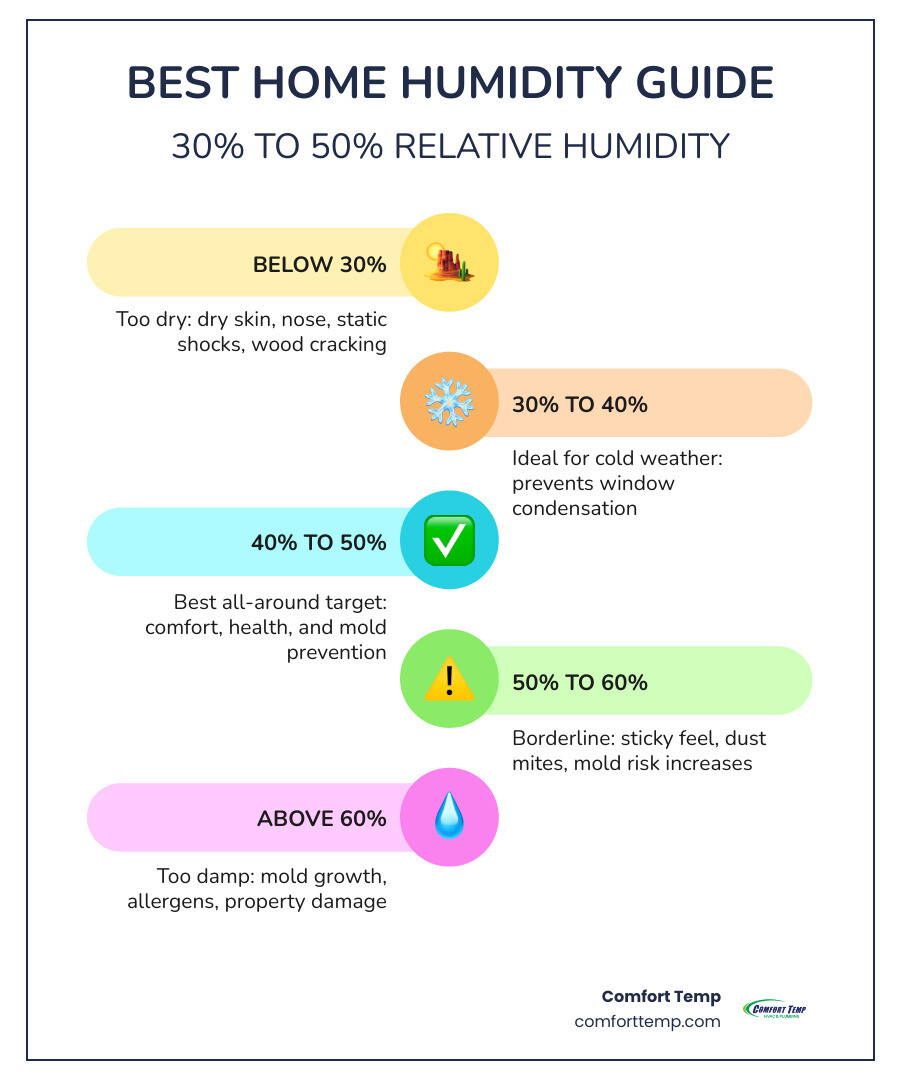
Basic best percentage of humidity in home terms:
Determining the Best Percentage of Humidity in Home Spaces
Finding the right moisture level in your living space is about balancing comfort, human biology, and building science. Relative humidity represents the amount of water vapor present in the air expressed as a percentage of the amount needed for saturation at that same temperature. Warm air can hold significantly more moisture than cold air, which explains why indoor humidity levels fluctuate as seasonal weather patterns shift.
Major public health and building engineering organizations have established clear parameters for indoor moisture. The Environmental Protection Agency (EPA) recommends maintaining indoor relative humidity between 30% and 50%, advising homeowners never to allow sustained levels to exceed 60%. Similarly, ASHRAE Standard 55—the benchmark for thermal environmental conditions for human occupancy—identifies 30% to 60% RH as the broader comfort zone for occupied buildings.
The scientific foundation for these guidelines dates back to landmark research, including the widely cited 1986 Sterling Chart published in Environmental Health Perspectives. This research demonstrated that biological hazards, chemical interactions, and respiratory pathogens are minimized when indoor air stays between 30% and 60% RH. When indoor moisture drops below 30%, airborne viruses survive longer, ozone production increases, and respiratory irritation accelerates. Conversely, when moisture climbs above 60%, mold colonization, fungal growth, dust mite reproduction, and chemical off-gassing accelerate dramatically.
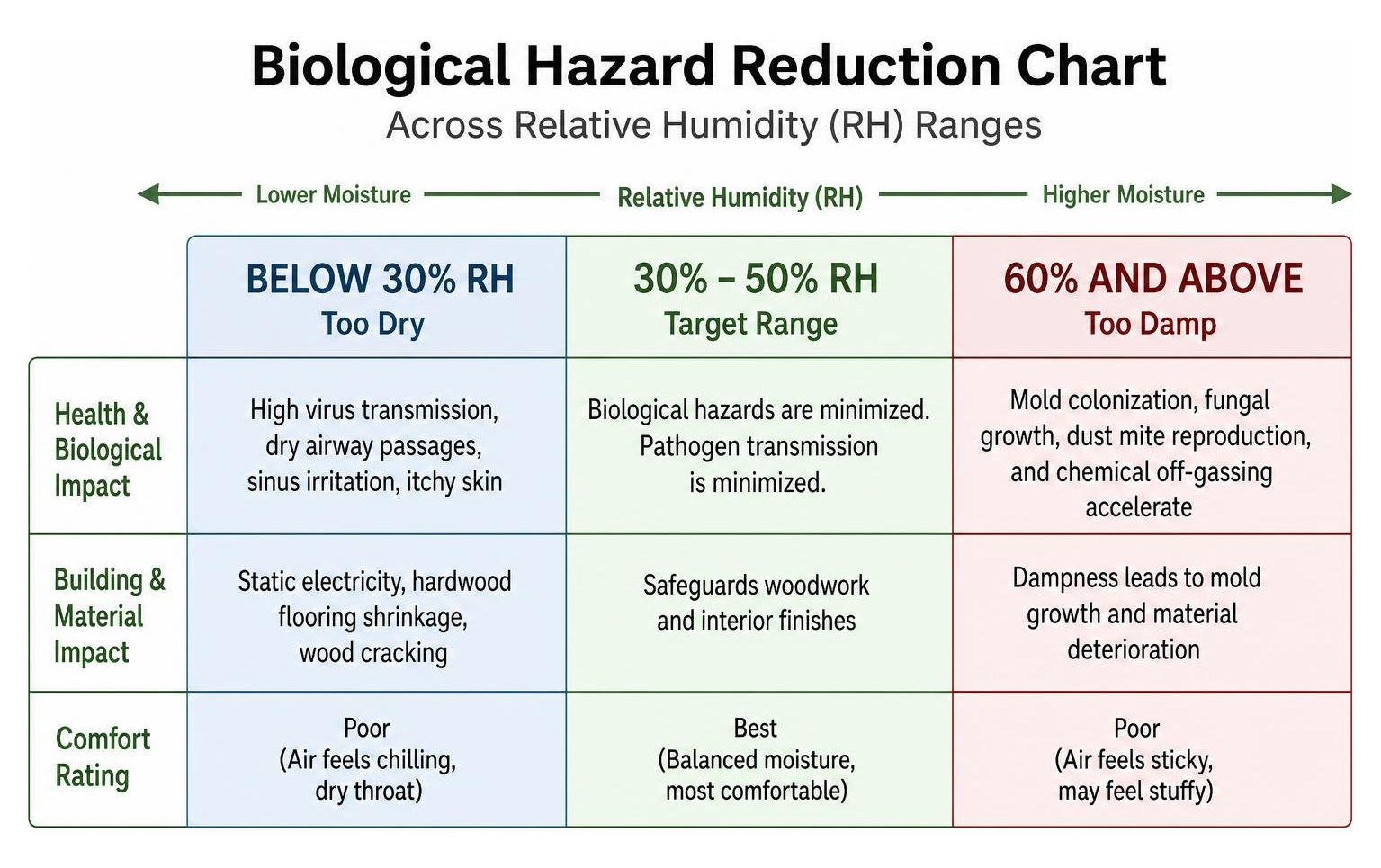
A 40 percent humidity level is often considered the ideal operational baseline for whole-home balance. Maintaining this level minimizes pathogen transmission while safeguarding woodwork and interior finishes.
| Relative Humidity Range | Health & Biological Impact | Building & Material Impact | Comfort Rating |
|---|---|---|---|
| Below 30% (Too Dry) | High virus transmission, dry airway passages, sinus irritation, itchy skin | Static electricity, hardwood flooring shrinkage, wood cracking | Poor (Air feels chilling, dry throat) |
| 30% – 50% (Optimal) | Minimal pathogen survival, dust mites suppressed, healthy mucus membranes | Stable wood dimensions, zero window condensation, paint protected | Excellent (Balanced, breathable air) |
| 51% – 60% (Moderate) | Acceptable for most adults, though allergy sufferers may notice symptoms | Slight condensation potential on cold surfaces | Fair (Can feel slightly heavy on warm days) |
| Above 60% (Too Damp) | Active mold spore release, dust mite infestation, asthma exacerbations | Structural rot, peeling paint, warped flooring, musty odors | Poor (Clammy, muggy, stuffy) |
Best Percentage of Humidity in Home Living Areas and Bedrooms
Living areas and bedrooms require careful attention to relative humidity because your body spends hours in these spaces resting and recovering. During sleep, your respiratory tract relies on healthy mucociliary clearance—the natural defense mechanism where microscopic cilia sweep dust, viruses, and allergens out of your airways. When indoor air is too dry (under 30% RH), airway tissues dry out, leading to morning sore throats, dry coughs, and heightened vulnerability to respiratory infections.
Conversely, elevated bedroom humidity disrupts thermoregulation. Because our bodies rely on sweat evaporation to cool down at night, excessive ambient moisture traps heat against the skin, causing restless tossing and turning. Managing humidity in your home ensures you get restorative rest while limiting common nighttime allergens.
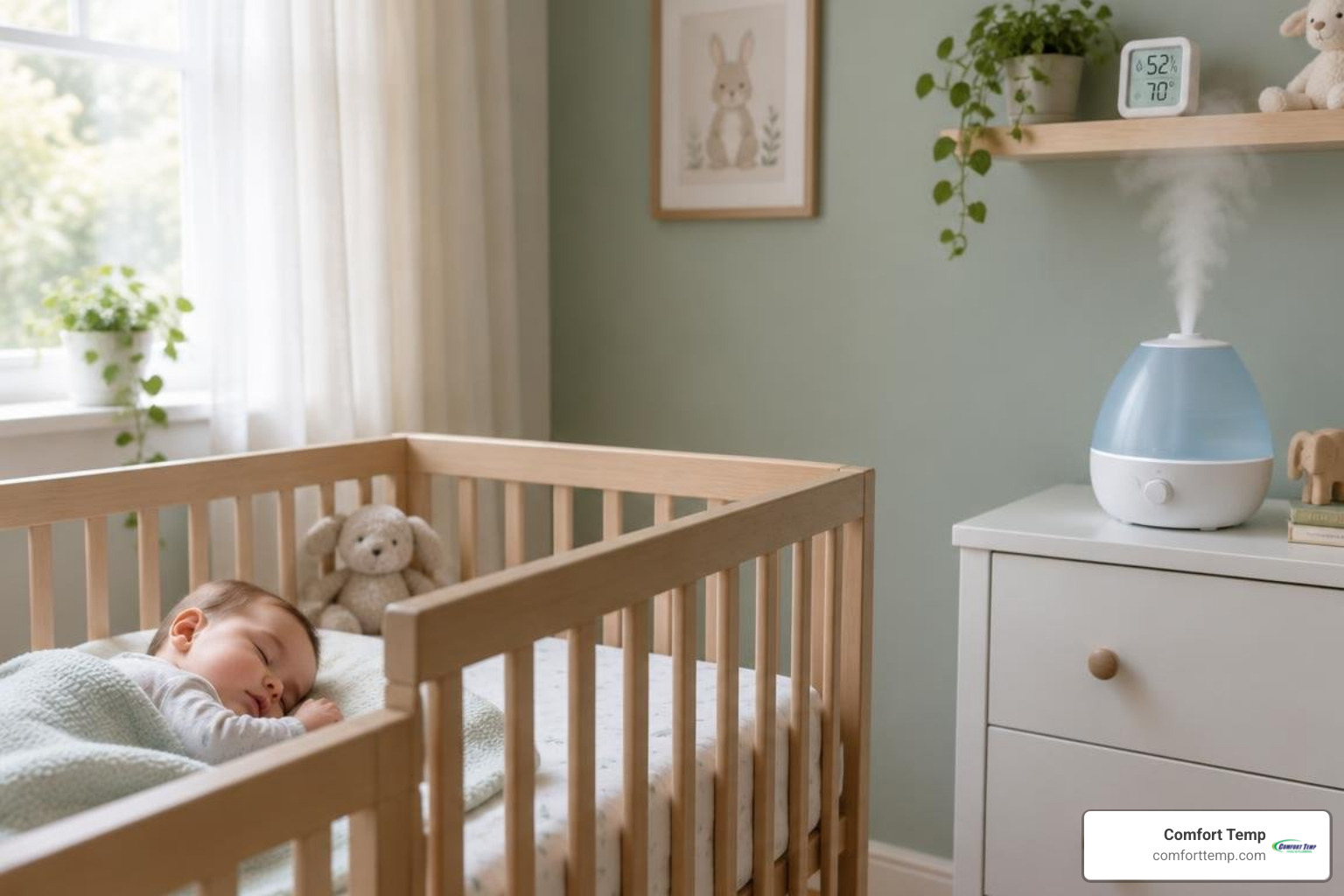
For nurseries and children’s rooms, maintaining 40% to 50% RH helps protect delicate infant respiratory passages from drying out without creating an environment where allergens thrive. A single sleeping adult naturally releases up to a pint of water into the air overnight through breathing and perspiration, while a family of four introduces two to three pints before anyone even starts breakfast. Keeping a balanced baseline prevents these normal daily moisture spikes from tipping bedrooms into mold territory.
Target Levels for High-Moisture Rooms: Bathrooms, Basements, and Kitchens
High-moisture zones introduce heavy pulses of localized humidity that can overwhelm adjacent living areas if left unmanaged:
- Bathrooms: A standard hot shower can spike relative humidity above 90% in minutes. The key is ensuring your mechanical exhaust ventilation removes this moisture rapidly, returning the room below 55% RH within 20 to 30 minutes.
- Kitchens: Boiling water, simmering sauces, and washing dishes release substantial steam into open living spaces. Running a dedicated range hood during and after cooking vents moisture before it diffuses through your living areas.
- Basements & Crawl Spaces: Below-grade spaces and crawl spaces constantly absorb moisture migrating through porous concrete foundations and surrounding soil. Keeping basements and crawl spaces below 50% RH is critical for preventing fungal colonization and musty odors from drifting upward.
When interior moisture levels remain stubbornly elevated across these utility spaces, utilizing proven strategies to lower home humidity protects subfloors, joists, and drywall from hidden moisture accumulation.
Seasonal and Outdoor Temperature Humidity Targets
Indoor humidity targets cannot remain static throughout the entire year; they must respond directly to outdoor temperatures and building envelope physics. When outdoor air drops during winter, interior window surfaces become cold. If your indoor humidity is set too high, that warm indoor air hits the cold window pane, instantly condensing into liquid water droplets.
Over time, winter window condensation rots wooden window sills, damages drywall, and breeds localized mold colonies. The type of window glazing in your home determines the maximum indoor humidity you can safely maintain without triggering condensation:

- Single-Pane Glass: At an outdoor temperature of 0°F, single-pane glass forces your safe indoor humidity ceiling down to roughly 10% RH before condensation forms.
- Standard Double-Pane Glass: Allows approximately 30% RH at 0°F outdoor temperatures.
- High-Efficiency Low-E Double-Pane: Accommodates up to 40% RH under identical freezing conditions.
- Triple-Pane Windows: Can easily sustain 45% RH without moisture pooling on the glass.
Reviewing guidelines for acceptable home moisture alongside comprehensive indoor relative humidity standards helps you understand how outdoor climate trends dictate safe indoor setpoints.
Best Percentage of Humidity in Home Environments During Winter Freezes
When freezing winter temperatures arrive, your central heating system runs longer cycles to keep rooms warm. Heating cold outdoor air expands its volume and drops its relative humidity, creating dry indoor environments that often dip below 20% RH.
This extreme dryness leads to classic winter complaints: dry skin, chapped lips, painful static electricity shocks, and nosebleeds. To alleviate these symptoms without causing window condensation, target 30% to 40% RH during moderate cold snaps, and lower your humidistat setting down to 25% to 30% RH during hard freezes.
Managing Summer Humidity and Cooling Load
Summer in North Central Florida brings heavy outdoor humidity and high cooling loads. Your central air conditioning system serves as your home’s primary dehumidifier, pulling warm, damp indoor air across cold evaporator coils where moisture condenses and drains away.
However, if an air conditioning system is oversized for the home, it will cool the interior air too quickly and shut off before it has run long enough to pull out sufficient moisture. This short-cycling leaves the indoor air cold and clammy—registering 72°F but hovering at an uncomfortable 65% RH. This elevated moisture raises the indoor heat index, making you feel sticky while providing prime conditions for mold spores.
Learning how to control room humidity effectively helps keep summer moisture safely capped between 45% and 50% RH.
Impact on Health, Materials, and Home Preservation
Maintaining balanced relative humidity is just as important for protecting your home’s structural integrity and interior materials as it is for personal comfort.
Understanding normal indoor humidity baselines protects several critical areas of your health and property:
- Respiratory & Immune Health: Balanced moisture preserves the mucus layer in your nasal passages, trapping pathogens before they enter your lungs. A 2019 study published in PLOS ONE demonstrated that the survival of airborne influenza viruses drops significantly when indoor relative humidity is maintained above 43%.
- Asthma and Allergy Relief: The American Lung Association emphasizes keeping indoor relative humidity below 50% to control asthma triggers. Dust mites and mold spores—two primary indoor allergens—reproduce rapidly once humidity crosses 55% to 60%.
- Hardwood Flooring & Millwork: Wood is hygroscopic, naturally absorbing and releasing moisture from the surrounding air. The National Wood Flooring Association recommends maintaining 35% to 55% RH year-round. Dropping below 35% causes planks to shrink, leaving unsightly gaps, while climbing above 55% causes wood fibers to expand, resulting in cupping, crowning, and buckled floorboards.
- Musical Instruments and Furniture: Acoustic guitars, pianos, and fine wood furniture feature delicate soundboards and tight glue joints. Wide humidity swings cause wooden instrument soundboards to crack or distort, throwing instruments out of tune and risking permanent structural damage.
- Electronics & Static Electricity: Low humidity (under 25% RH) creates an environment where static electrical charges build up on carpets and fabrics, posing a risk of electrostatic discharge that can damage sensitive computer chips and home electronics.
How to Measure, Balance, and Maintain Indoor Humidity
You cannot manage what you do not measure. Relying on how your skin feels is rarely accurate, as temperature changes often mask shifts in moisture. Placing standalone digital hygrometers at breathing height on interior walls—away from direct sunlight, drafts, supply vents, and exterior doors—provides clear, accurate readings of your baseline humidity.
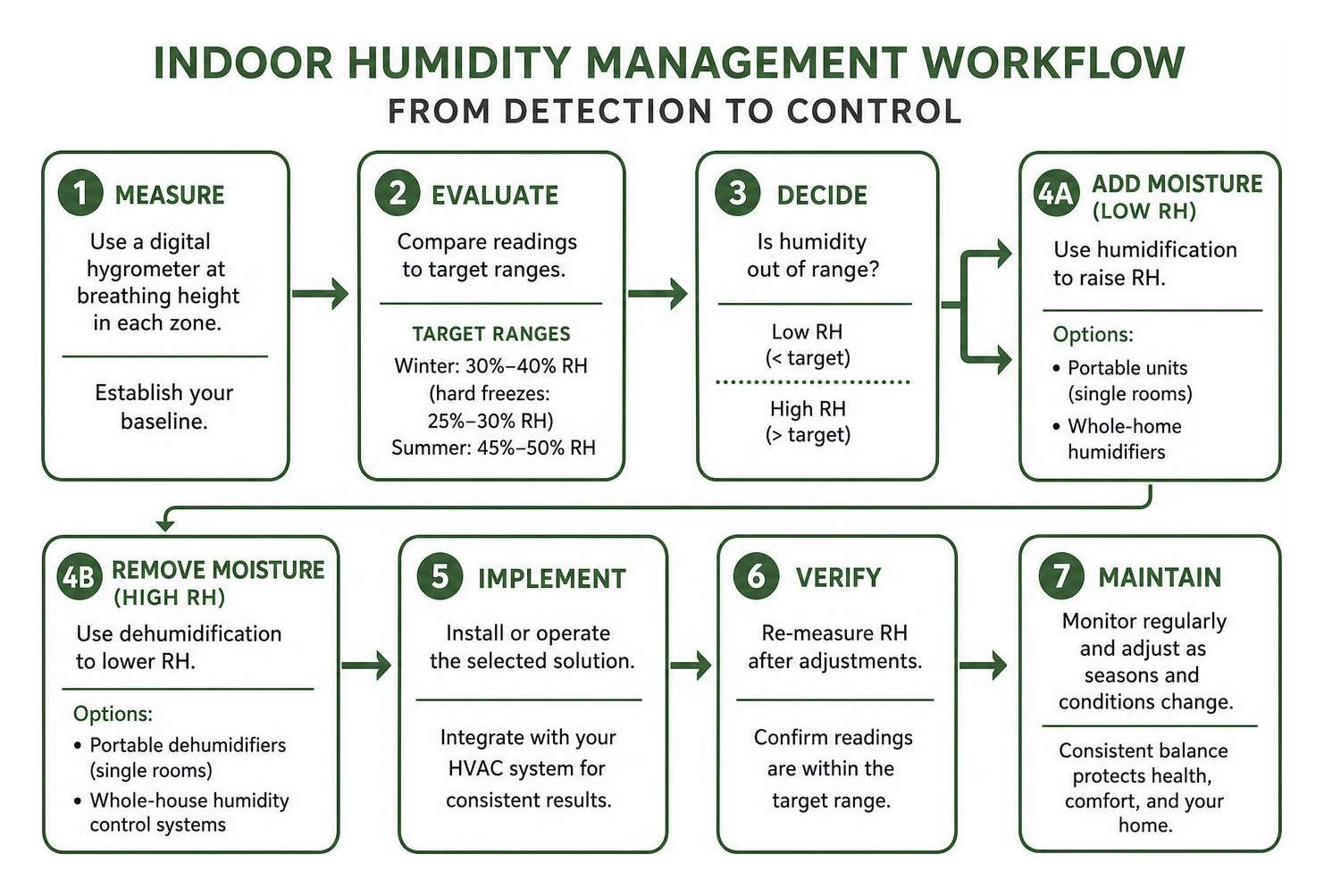
When your readings show that your indoor air is consistently out of balance, mechanical systems provide reliable correction:
- Assessing Moisture Levels: Use accurate tools and methods to check indoor humidity across different zones of your home to pinpoint whether your moisture imbalance is localized or house-wide.
- Adding Moisture (Low RH): When winter heating leaves your home dry, choosing between humidifiers and dehumidifiers helps you decide on the right supplemental equipment. Portable ultrasonic or evaporative units work well for single rooms, while whole-home evaporative or steam humidifiers integrate into your central ductwork to treat all rooms evenly.
- Removing Moisture (High RH): During muggy seasons, dedicated dehumidifiers pull gallons of water out of the air daily. In high-humidity climates, installing dedicated whole-house humidity control equipment alongside your central HVAC ensures continuous moisture removal even when the cooling system is not running.
- Targeted Mechanical Ventilation: Ensure kitchen range hoods and bathroom exhaust fans vent directly outdoors rather than into attics, and run bathroom fans for at least 20 minutes following every shower.
For complex moisture issues or equipment additions, consult a qualified HVAC professional to properly calculate airflow rates and size whole-home systems.
Frequently Asked Questions About Indoor Humidity
What humidity level kills dust mites permanently?
Dust mites cannot drink liquid water; they absorb ambient water vapor directly through their bodies. When relative humidity drops and stays below 50%, dust mites become unable to maintain their water balance and eventually desiccate. Maintaining indoor humidity at or below 45% RH for four to six consecutive weeks significantly lowers active dust mite populations and cuts allergen levels throughout carpets and bedding.
Is 60% humidity too high for a house?
Yes, 60% relative humidity sits at the absolute upper boundary of acceptable indoor comfort and serves as a clear trigger for action. When relative humidity reaches or exceeds 60%, surface condensation risks climb and mold spores can germinate within 24 to 48 hours on organic building materials like drywall, carpet backing, and baseboards. Keeping indoor levels below 50% provides a safe operational buffer against biological growth.
What is the healthiest humidity percentage for sleeping?
The healthiest relative humidity range for sleeping is between 40% and 50% RH, paired with a cool bedroom temperature around 65°F to 68°F. This range keeps nasal airway tissues hydrated, supports normal breathing, and prevents night sweats caused by high ambient moisture.
Conclusion
Mastering the best percentage of humidity in home interiors comes down to maintaining a balanced 30% to 50% RH range. Keeping your moisture levels in this sweet spot protects your respiratory health, promotes restful sleep, prevents mold growth, and safeguards wood floors and furniture. Checking your rooms with a simple digital hygrometer and adjusting your ventilation across seasonal transitions keeps your living space comfortable year-round.
If you are dealing with persistent moisture imbalances, high indoor humidity, or uneven cooling, our team at Comfort Temp HVAC & Plumbing is ready to help. We provide residential HVAC and residential plumbing in Gainesville, as well as commercial HVAC and plumbing in Jacksonville and commercial HVAC and plumbing in Orlando. Our technicians are fully licensed for both residential and commercial plumbing work, providing reliable diagnoses and installations. Contact us today to explore our professional indoor air quality products and find the right solution for your indoor comfort.