A Normal Average Humidity Inside a Home Is 30% to 50% RH
For most homes, the best average humidity inside a home is 30% to 50% relative humidity (RH). A practical target for many North Central Florida households is around 40% to 50% RH.
Use a digital hygrometer to check several living areas, not just one room. If readings stay above 60%, focus on moisture control. If they stay below 30%, the air may be too dry.
Humidity is more than a comfort number. Too much moisture can support mold and dust mites, while very dry air can lead to static shocks, dry skin, irritated eyes, and sore nasal passages. It can also affect wood flooring, furniture, paint, and other building materials.
A home’s reading will change with weather, air conditioning use, showers, cooking, occupancy, and room temperature. That is why a single humidity reading is helpful, but a pattern over several days is far more useful.
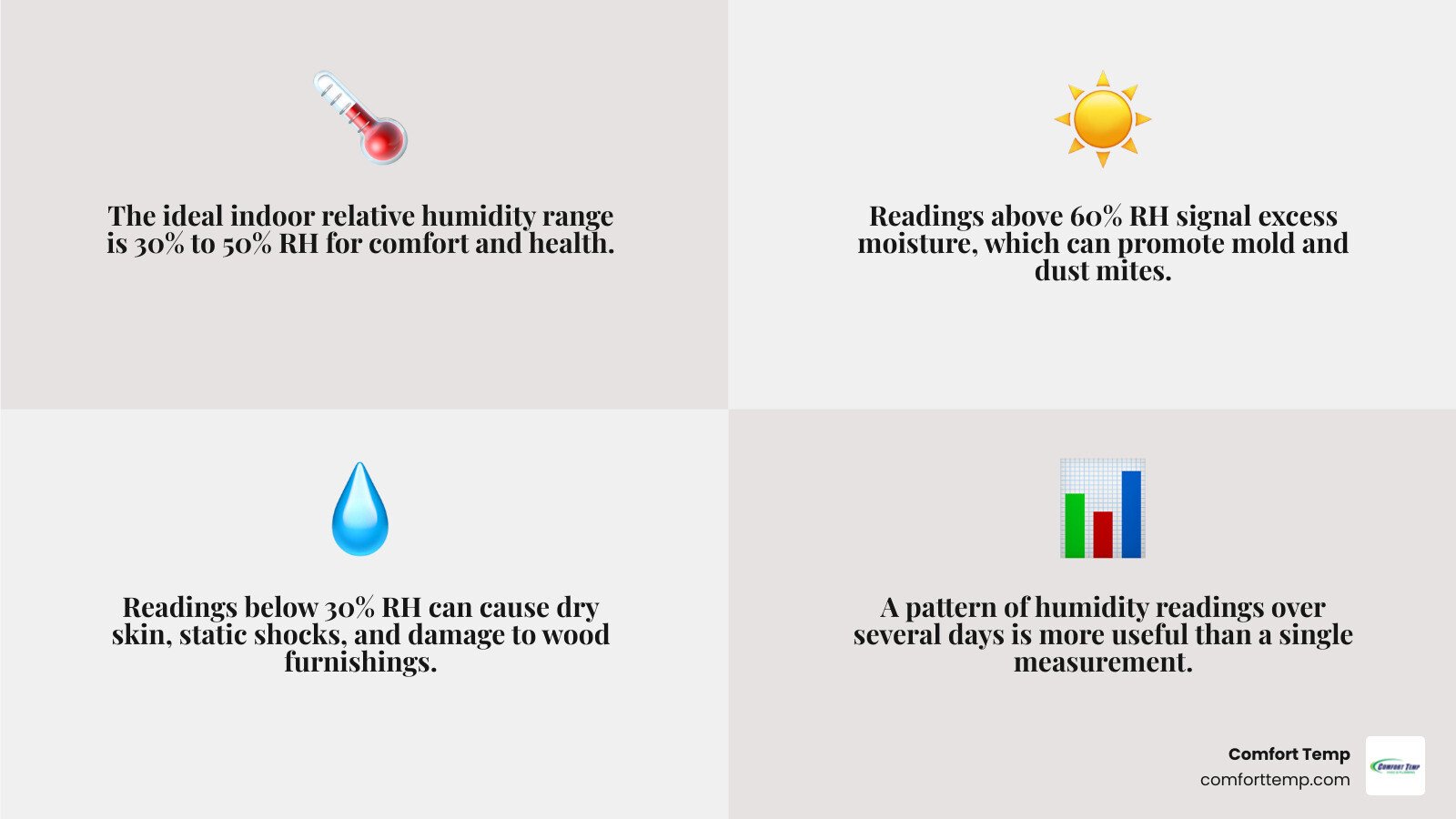
Simple guide to average humidity inside a home:
What Is the Ideal Indoor Humidity Range?
When we talk about indoor humidity, we are measuring relative humidity—the percentage of moisture the air holds relative to the maximum amount it could hold at that specific temperature.
Leading public health and building science authorities set clear parameters for indoor air. The Environmental Protection Agency (EPA) recommends maintaining indoor relative humidity between 30% and 50%. Meanwhile, the American Society of Heating, Refrigerating and Air-Conditioning Engineers (ASHRAE) Standard 55 establishes 60% RH as the upper comfort ceiling.
Staying inside this window is critical for managing biological contaminants. When humidity pushes past 55% to 60%, conditions become favorable for fungal germination. Modern building science has evaluated how internal loads influence these targets; for example, (Martin et al., 2024) evaluates how occupant activities interact with mechanical ventilation and structural buffering in energy-efficient residences. To maintain long-term balance, mastering humidity control throughout your living spaces is vital.
Health and Comfort Implications of Relative Humidity
Indoor moisture directly dictates how your body regulates temperature, fights airborne pathogens, and manages allergies.
Maintaining roughly a 40 percent humidity benchmark provides multiple wellness advantages:
- Pathogen Control: Studies demonstrate that mid-range humidity (40% to 60%) significantly decreases the survival and transmission of airborne viruses like influenza. Very dry air allows tiny aerosol droplets to remain suspended longer, while dry mucous membranes weaken your body’s natural respiratory defenses.
- Respiratory Comfort: Overly dry air pulls moisture from your eyes, throat, and sinus passages, leading to persistent irritation and nighttime coughing fits.
- Allergen Mitigation: Dust mites cannot survive without ambient moisture; keeping relative humidity below 50% disrupts their reproduction cycle.
- Everyday Comfort: When humidity is balanced, indoor air feels neither muggy and heavy nor parched and static-prone.
Structural Risks: Dry Air vs. Excess Moisture
Relative humidity impacts the physical structure of your house just as much as your personal comfort. Porous building materials—including wood framing, hardwood flooring, cabinetry, and drywall—constantly absorb and release ambient water vapor to reach equilibrium moisture content (EMC).
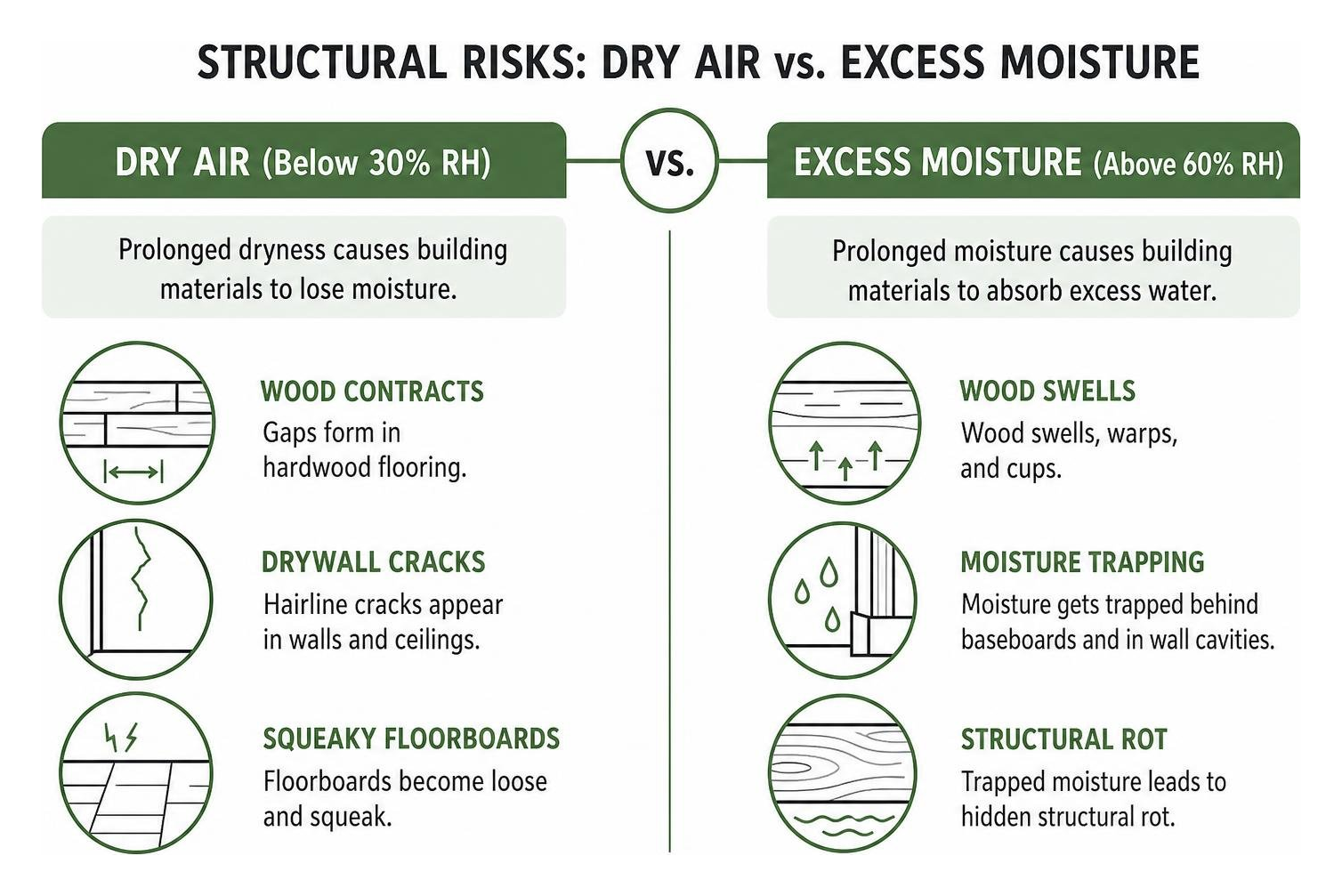
When air drops below 30% RH for extended periods, structural wood contracts, leading to gaps in hardwood planks, hairline drywall cracks, and squeaky floorboards. Conversely, prolonged exposure to moisture above 60% causes wood to swell, warp, and cup, while trapped moisture behind baseboards or wall cavities invites hidden structural rot.
Understanding the Average Humidity Inside a Home Across the US
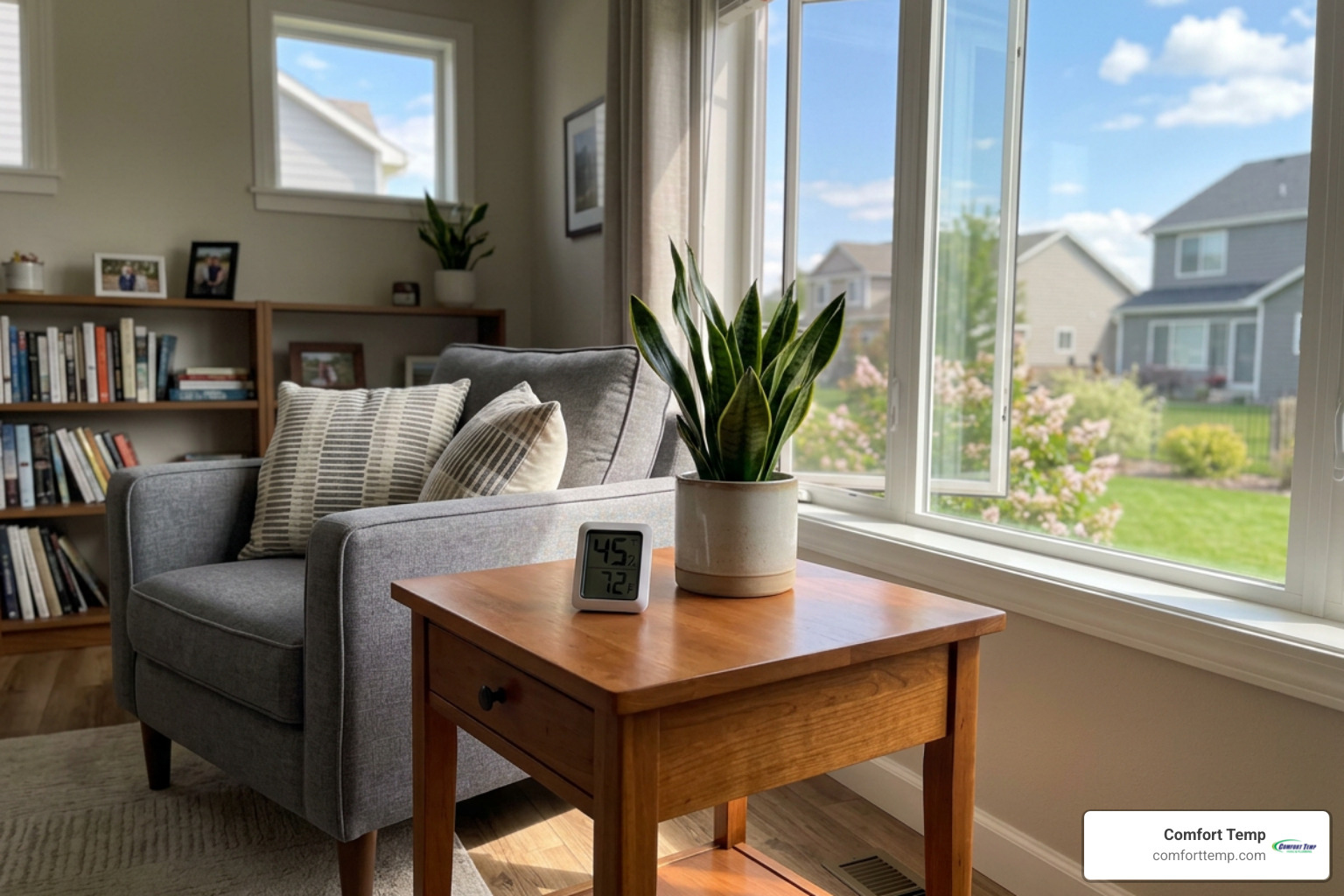
While the national indoor target sits comfortably between 40% and 50% RH under ideal conditions, real-world data reveals significant geographic and seasonal disparities.
Research evaluating indoor loads (Martin et al., 2024) reveals that typical homes can fluctuate from 18% RH in freezing continental winters to well above 70% RH in unconditioned, humid regions. Nationally:
- Roughly 35% of U.S. residences spend substantial portions of the year above 60% RH.
- Approximately 20% to 25% of homes drop below 30% RH during dry spells.
- Only about 40% to 45% of homes consistently remain within the ideal 30% to 50% window year-round.
Why the Average Humidity Inside a Home Changes Room by Room
A single hygrometer reading in your living room does not represent your entire house. Relative humidity varies widely across rooms due to localized water generation, differences in airflow, and temperature gradients.
| Room Type | Ideal Target RH | Primary Moisture Sources | Target Recovery Time After Spikes |
|---|---|---|---|
| Living Spaces | 40% – 50% | Occupant respiration, houseplants | Baseline stable |
| Primary Bedroom | 40% – 50% | Overnight breathing, perspiration | Recovers during daytime HVAC cycles |
| Nursery | 40% – 55% | Humidifiers, localized heaters | Continuous steady monitoring |
| Bathroom | 40% – 50% (base) | Showers, baths, standing water | Under 30 minutes post-shower |
| Kitchen | 40% – 50% | Boiling, simmering, dishwashing | Under 20 minutes post-cooking |
| Attic / Crawl Space | < 55% (conditioned) | Roof infiltration, ground dampness | Continuous management |
Bathrooms regularly spike above 80% RH during hot showers. What matters most is the recovery time—a well-ventilated bathroom should drop back below 55% within 20 to 30 minutes after the shower is turned off.
How Climate Zones Impact the Average Humidity Inside a Home
Climate zones dictate how your home’s envelope interacts with the outdoor air. In North Central Florida communities like Gainesville, Alachua County, and High Springs, our warm-humid subtropical climate introduces heavy latent loads for most of the year.
Outdoor dew points frequently surpass 70°F during the extended summer months. Under these conditions, opening windows or allowing outdoor air to infiltrate introduces gallons of moisture daily. In contrast, colder northern zones face the opposite issue in winter, where sub-freezing outdoor air contains minimal moisture, resulting in bone-dry indoor air once heated.
Signs Your Indoor Moisture Levels Are Out of Balance
Balancing indoor moisture is an ongoing process. Learning to spot visual and physical warning signs allows you to address imbalances before structural damage or health issues escalate:
- Signs of High Moisture (> 60% RH): Condensation or fogging on the inside of window panes, a damp or musty odor in closets, visible black or green spots along baseboards and ceilings, sticky flooring, and peeling paint or bubbling wallpaper.
- Signs of Low Moisture (< 30% RH): Frequent static electricity shocks when touching doorknobs, itchy skin, cracked lips, nosebleeds, separating wood floor seams, and increased dust accumulation.
Reviewing our guide on how to lower humidity in house helps pinpoint why these symptoms occur and how to correct them.
The Dangers of High Indoor Humidity and Mold Growth
Consistently high indoor moisture creates severe biological risks. Dust mites—one of the most common indoor allergens—cannot drink liquid water and rely entirely on ambient humidity. Their populations multiply rapidly when relative humidity reaches 70% or higher, especially at indoor temperatures between 68°F and 77°F.
Furthermore, mold spores, which are naturally present everywhere in the air, require only moisture and an organic food source (like drywall paper or wood) to colonize. While mold can begin growing at relative humidity levels above 55%, sustained 70% RH accelerates germination into full colonies within 24 to 48 hours. Vulnerable individuals, including newborns and people with asthma, face elevated risks of respiratory infections, chronic coughing, and allergy flare-ups in these environments.
The Impact of Chronic Low Humidity
Air that is too dry creates its own set of health and structural problems. When relative humidity dips below 30%, the protective mucous membranes lining your nasal passages and throat dry out, making it easier for viruses and bacteria to bypass your immune defenses. In addition to physical discomfort like chapped skin and irritated eyes, dry air causes natural materials in your home to shrink and become brittle.
How to Accurately Measure and Manage Indoor Humidity
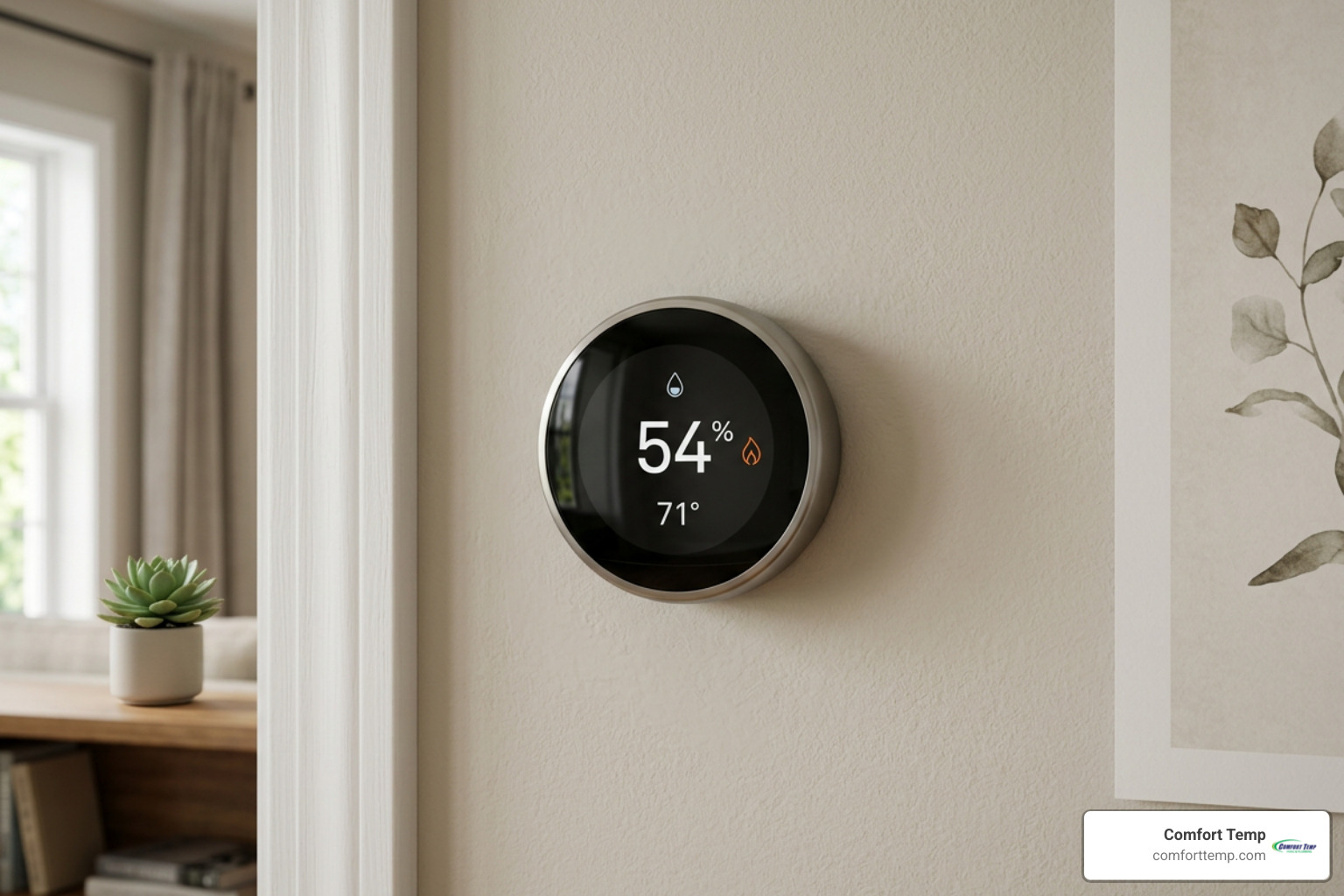
Accurate measurement is the first step toward effective humidity management.
To track your moisture levels accurately:
- Choose the Right Tool: Invest in digital hygrometers with an accuracy rating of ±3% RH, or integrate a smart thermostat equipped with built-in humidity sensors.
- Proper Placement: Position sensors on interior walls at eye level (4 to 5 feet off the floor). Keep them away from supply air vents, direct sunlight, exterior doors, and steam-producing appliances.
- Monitor Trends: Track readings over several consecutive days rather than reacting to a single temporary spike.
For a broader overview of balanced indoor environments, explore our guide on how to improve indoor air quality.
Lowering High Indoor Moisture Effectively
Air conditioning systems remove moisture as a byproduct of cooling, but standard single-stage systems may short-cycle during mild, humid days—cooling the air before enough moisture has condensed out.
To manage stubborn humidity effectively:
- Variable-Speed Cooling: Upgrading to a variable-speed air conditioning system allows the equipment to run at lower capacities for longer durations, extracting significantly more moisture from the air without over-cooling your living space.
- Dedicated Whole-Home Dehumidification: Installing a dedicated whole-home dehumidifier works alongside your HVAC system to pull moisture directly from the return air stream, ensuring exact RH control even when your air conditioner isn’t actively running. Explore our whole house humidity control options to see how these systems integrate.
- Spot Ventilation: Always run kitchen range hoods when boiling liquids, and operate bathroom exhaust fans during showers and for 20 minutes afterward.
- Professional Assessment: If your home consistently feels damp, we recommend calling a specialist or contacting Comfort Temp to inspect your equipment sizing, ductwork integrity, and moisture loads. Homeowners seeking residential HVAC service in Gainesville can rely on our experienced team for comprehensive diagnostics.
Safely Raising Humidity During Dry Periods
In areas or seasons where indoor air becomes excessively dry, adding controlled moisture restores balance:
- Central Humidifiers: Whole-home evaporative or steam humidifiers integrate into your central duct system to deliver regulated, hygienic moisture across every room.
- Passive Moisture Strategies: Air-drying clean laundry indoors or allowing warm bathwater to cool before draining can provide temporary moisture boosts during minor dry spells.
- Air vs. Water Purification Note: While adding humidity or purifying air enhances breathing comfort, always keep air purification and water purification clearly distinguished. Air purification removes airborne particulates and biological contaminants using mechanical filtration (like MERV-13 media) or active electronic purification, whereas water purification treats liquid drinking water supplies.
Frequently Asked Questions About Indoor Humidity
Is 70% humidity inside a home dangerous?
Yes, maintaining 70% indoor humidity is problematic. At 70% RH, mold can germinate on organic building materials within 24 to 48 hours, and dust mite populations expand rapidly. For infants, the elderly, and individuals with asthma, this level of moisture significantly increases the risk of respiratory distress and allergic reactions.
Should you open windows when it is humid outside?
In humid climates like Florida, you should generally avoid opening windows if outdoor relative humidity is high or the outdoor dew point exceeds 55°F. Opening windows introduces substantial latent heat and moisture into your home. This moisture is absorbed by drywall, upholstery, and flooring, driving up indoor humidity and forcing your air conditioning system to work much harder to restore comfort.
Why does my hygrometer reading differ from moisture in the walls?
A standard hygrometer measures water vapor suspended in the air. However, building materials like drywall, framing lumber, and concrete possess their own moisture levels, governed by equilibrium moisture content (EMC). If a wall surface is cold (such as exterior corners or uninsulated surfaces), the local relative humidity right against that cold wall can reach 80% to 100%, causing condensation and mold growth even if the hygrometer in the center of the room reads a safe 45% RH.
Conclusion
Maintaining a consistent indoor relative humidity between 30% and 50% is essential for protecting your family’s health, preserving your home’s structural materials, and ensuring day-to-day comfort. By monitoring your living spaces with accurate hygrometers and utilizing balanced ventilation and dedicated humidity control systems, you can easily prevent biological growth and static-filled, dry air.
If you are struggling to keep your indoor humidity in check or want to optimize your HVAC performance, Comfort Temp is here to help. We provide 24/7 emergency service and a team of experienced technicians licensed for both HVAC and plumbing services. Homeowners in Gainesville can explore our comprehensive residential air quality solutions to achieve clean, perfectly balanced indoor air all year round.
References
Eric Martin, Tanvir Khan, Bereket A. Nigusse, Charles R. Withers. “Estimating internal moisture generation rates in recently constructed, occupied homes in the southeastern United States.” Science and Technology for the Built Environment, 2024. DOI 10.1080/23744731.2024.2327976.