How to Identify a Commercial Blocked Drain
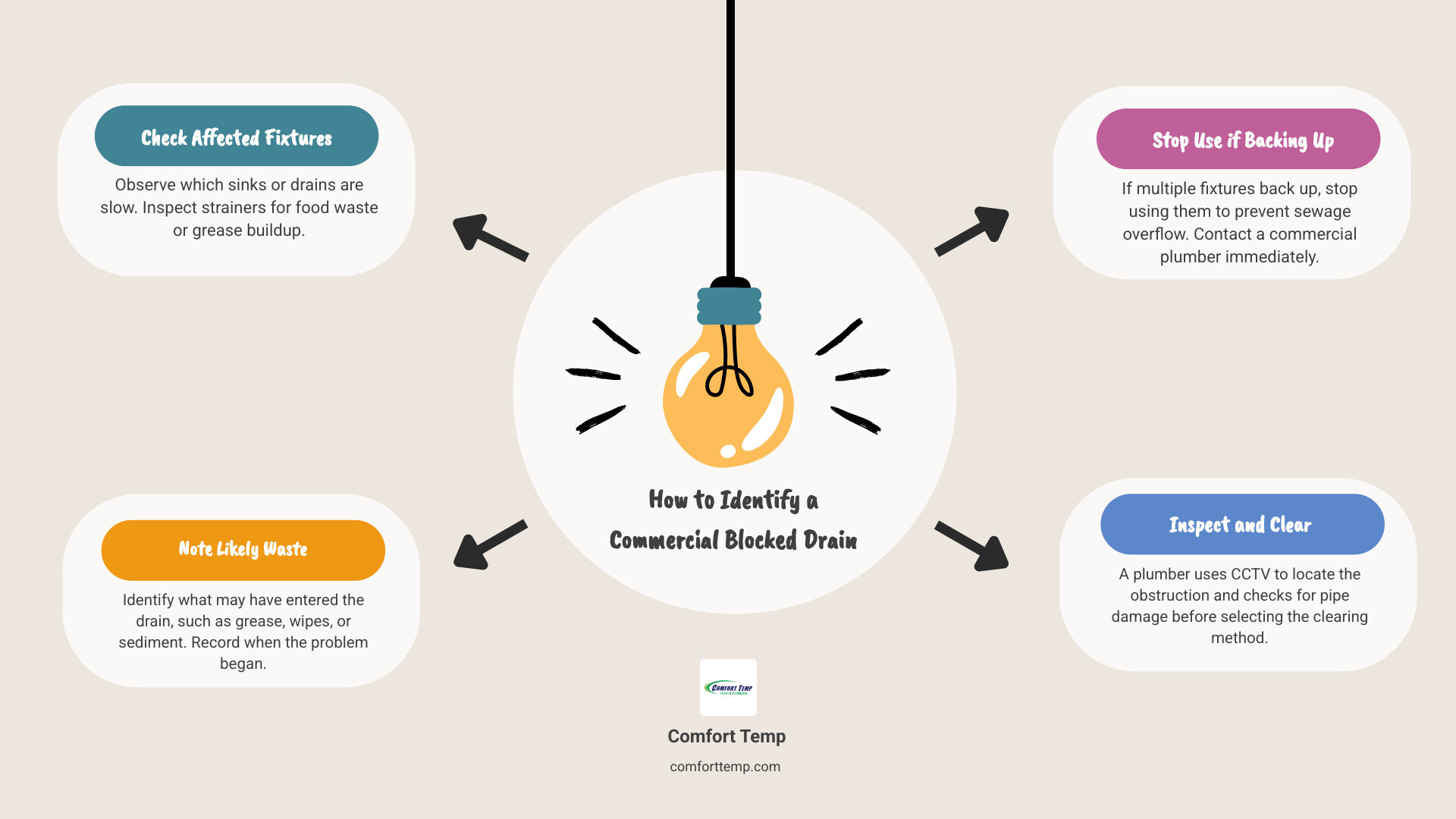
Start with the pattern. If one sink drains slowly, check its strainer and nearby fixtures for food waste or grease. If several fixtures back up at once, stop using them and call a commercial plumber. Note when the problem began and what may have entered the drain, such as grease, wipes, or sediment. A plumber can then locate the obstruction and check for pipe damage before choosing how to clear it.
Comfort Temp HVAC & Plumbing provides HVAC and plumbing services in Gainesville, Jacksonville, and Orlando. Its technicians are licensed for commercial and residential plumbing work. Residential HVAC and plumbing are available only in Gainesville; services in Jacksonville and Orlando are commercial only.
Discover more about commercial blocked drains:
Primary Culprits Behind Commercial Blocked Drains
Commercial drainage systems endure intense daily demand. Unlike residential lines, business pipe networks must handle constant flow volumes, trade effluent, harsh cleaning chemicals, and diverse particulate matter. Pinpointing what is obstructing your lines requires understanding the main materials that enter commercial waste streams. When issues arise across complex infrastructure, our comprehensive commercial drain and sewer services help identify and resolve the obstruction before it shuts down your operations.
Fats, Oils, and Grease (FOG) Accumulation
Fats, oils, and grease (commonly referred to as FOG) represent the single leading cause of commercial drain clogs, especially in food service, hospitality, and institutional facilities. When warm liquids wash down prep sinks and dishwashers, they appear harmless. However, as these emulsified lipids travel deeper into cooler subterranean lines, they rapidly congeal and coat the interior walls of your pipework.
Over time, layer upon layer of solidified grease forms dense, rock-hard encrustations. Even facilities equipped with indoor grease traps or exterior interceptors experience grease migration if the units are improperly sized, poorly maintained, or overdue for pumping. This accumulation constricts the line’s internal diameter, catching passing food particles and creating severe fatbergs that eventually halt wastewater discharge entirely.
Foreign Objects, Sanitary Waste, and Heavy Debris
High-traffic commercial restrooms and manufacturing production lines are perpetually vulnerable to foreign materials. In office parks, retail centers, and educational facilities, common culprits include:
- Non-flushable wet wipes (even those marketed as “flushable”)
- Heavy-ply paper towels and hand wipes
- Sanitary products and wrappers
- Mop strings, trash, and packaging materials
In industrial and warehouse facilities, floor drains often capture production sediment, packaging debris, silt, concrete dust, and chemical byproducts. These heavy solids do not break down in water; instead, they settle in pipe bellies and low-velocity traps, acting as physical dams. Enlisting regular professional drain cleaning removes these foreign items before they cause full-scale system backups.
Structural Pipe Failures and Tree Root Infiltration
Not every commercial blockage stems from items sent down the drain. Subsurface structural pipe damage is an equally common culprit. In older properties across North Central Florida, aging cast iron, clay, or early PVC lines can suffer from pipe shifting, ground settlement, joint displacement, and hairline cracking.
These tiny fissures release moisture and nutrients into the surrounding soil, attracting thirsty tree roots. Once root systems breach a pipe joint, they expand rapidly inside the line, creating dense, fibrous root nests that trap passing toilet paper and waste solids. If you suspect your underground lines have shifted or cracked, consulting a vetted Repiping Specialist near Gainesville, FL or scheduling prompt commercial plumbing repair is essential to diagnose and fix structural defects permanently.
Commercial vs. Domestic Drain Diagnostics and High-Stakes Risks
Diagnosing and treating commercial plumbing requires specialized knowledge and heavy-duty machinery. The physical scale, legal oversight, and financial stakes of commercial drainage vastly outpace typical residential plumbing concerns.
| Feature | Domestic Drainage | Commercial Drainage |
|---|---|---|
| Typical Pipe Diameter | 1.5 to 4 inches | 4 to 12+ inches |
| Effluent Composition | Standard household greywater/blackwater | High FOG, trade effluent, harsh chemicals, heavy solids |
| Daily Water Volume | Intermittent, low volume | Continuous, high-volume capacity |
| Diagnostic Equipment | Hand snakes, standard push cameras | Tractor crawler CCTV, motorized high-torque cutters, industrial jetters |
| Downtime Impact | Minor household inconvenience | Lost revenue, forced closures, health code violations |
| Regulatory Oversight | Basic local plumbing code | Strict health codes, EPA/FOG compliance, OSHA/RAMS standards |
Operational Downtime, Revenue Loss, and Health Violations
When a residential drain clogs, a homeowner can often shift to another bathroom for an evening. In a commercial environment, a drain backup triggers an immediate business emergency. A backed-up floor drain in a restaurant kitchen or an overflowing bank of restrooms in a corporate office leads to rapid consequences:
- Forced Health Closures: Standing wastewater poses serious biological and slip hazards, resulting in immediate local health department shutdowns.
- Immediate Revenue Loss: Closing dining rooms, retail floors, or production lines can cost thousands of dollars per hour in unrealized income and idle labor costs.
- Reputational Damage: Foul sewage odors and closed customer restrooms damage your brand reputation and result in negative online reviews.
- Structural Inventory Damage: Raw sewage backing up through floor drains can ruin commercial flooring, drywall, and valuable warehouse stock.
Key Differences in Pipe Scale, Usage Volume, and Compliance
Commercial plumbing systems rely on heavy-duty infrastructure designed to handle continuous peak-load demands. Commercial waste streams also carry specialized trade effluents that accelerate scale formation, mineral buildup, and chemical erosion.
Furthermore, commercial facilities must comply with strict local environmental mandates regarding wastewater discharge quality, grease interceptor maintenance logs, and sanitary working conditions. Addressing blockages in these environments demands expert diagnostic methodology rather than basic DIY troubleshooting.
Professional Diagnostic and Clearing Methods for Commercial Piping
Resolving severe obstructions requires an orderly, multi-stage diagnostic and mechanical process. Rather than guessing at the source of a blockage, licensed technicians utilize specialized diagnostic tools to pinpoint problems precisely.

Diagnosing Commercial Blocked Drains with CCTV Video Inspection
High-definition closed-circuit television (CCTV) pipe inspection is the gold standard for commercial drain diagnostics. Technicians insert advanced, self-leveling fiber-optic cameras or robotic crawler units into cleanouts to navigate complex pipe networks.
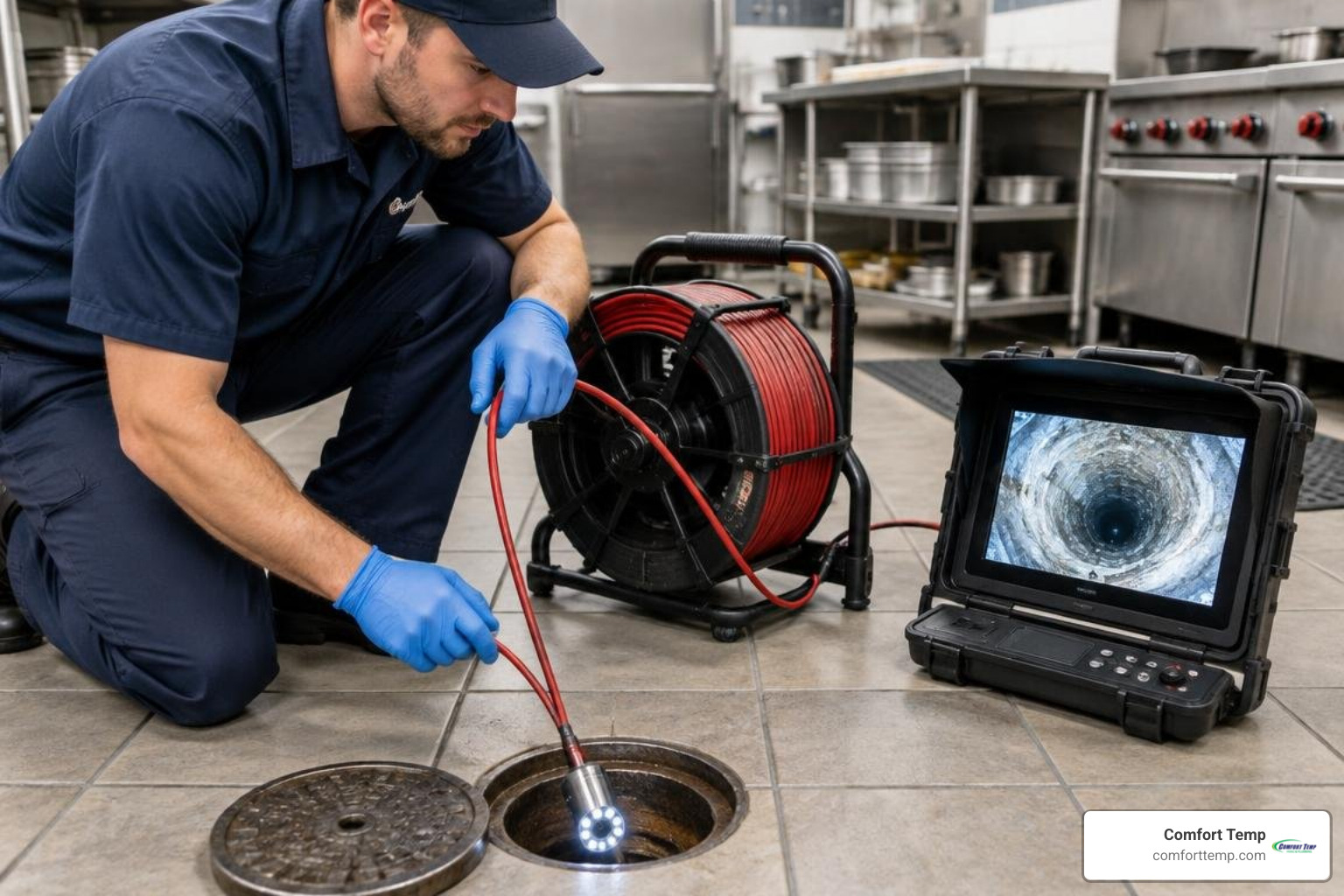
This non-invasive diagnostic method provides real-time, high-resolution video footage of your pipe’s interior. A professional CCTV survey reveals:
- The exact location and physical composition of the clog (e.g., solid grease block vs. foreign object).
- Hidden structural issues, including pipe fractures, bellies (sagging lines), collapsed sections, and misaligned joints.
- The severity of tree root infiltration or heavy mineral scale encrustation.
CCTV surveys provide transparent visual proof of the issue and produce clear documentation essential for insurance claims and municipal compliance reporting.
Clearing Severe Commercial Blocked Drains with High-Pressure Hydro Jetting
Once the obstruction is identified, commercial hydro jetting serves as the most effective clearing solution for commercial lines.

Unlike standard mechanical snakes that merely punch a narrow hole through an obstruction, industrial hydro jetters utilize specialized rotating nozzles pumping water at pressures up to 4,000 PSI. This force emulsifies thick grease accumulations, pulverizes hardened mineral scale, strips sludge from the entire 360-degree pipe circumference, and flushes debris completely out of the system, restoring lines to their original hydraulic capacity.
Electro-Mechanical Rodding and Mechanical Augers
In situations where hydro jetting is not the primary option—such as dense fibrous root intrusions or localized foreign object jams in smaller branch lines—technicians deploy heavy-duty electro-mechanical rodding machines and continuous-cable augers. Equipped with specialized expanding steel cutting heads, these motorized units slice through thick root intrusions and physically retrieve dense foreign materials, clearing the way for subsequent jetting and video verification.
Preventative Drain Maintenance and Facility Compliance Standards
Reactive plumbing repairs leave your facility vulnerable to unpredictable operational disruptions. Implementing a structured preventative maintenance plan protects your building’s infrastructure, extends plumbing lifespan, and keeps your operations uninterrupted.
Planned Preventive Maintenance (PPM) and Grease Management
A Planned Preventive Maintenance (PPM) agreement tailors service intervals to your specific commercial risk profile:
- Hospitality and Dining: Scheduled quarterly or bi-annual hydro jetting of kitchen waste lines and grease trap lateral pipes.
- Retail and Corporate: Semi-annual roof drain, parking lot gully, and restroom stack inspections.
- Industrial Facilities: Routine cleaning of catch basins, sediment interceptors, and production wash-bay lines.
These scheduled maintenance visits remove accumulation gradually, preventing emergency backups while providing documented maintenance logs required by municipal health and environmental authorities.
Contractor Compliance: RAMS, Insurance, and Documentation
Commercial properties require strict safety, insurance, and compliance standards from outside service providers. Before hiring a commercial contractor, facilities managers should consult practical guidelines such as 5 questions to ask before hiring a 24-hour commercial plumber to ensure the contractor meets site safety standards.
When evaluating a qualified Commercial Plumber near Orlando, FL, confirm they supply:
- Risk Assessments and Method Statements (RAMS): Site-specific safety protocols addressing hazard mitigation, confined space entry, and sanitation.
- Comprehensive Commercial Insurance: Robust public liability and property damage coverage.
- Written Photographic & Video Reports: Post-service CCTV verification documenting clean lines for corporate reporting and asset tracking.
Frequently Asked Questions About Commercial Drain Management
How quickly can a commercial drainage blockage be resolved?
Most straightforward commercial drain obstructions are diagnosed and completely cleared within 1 to 2 hours of a professional technician arriving on site. High-pressure hydro jetting rigs and rapid-deployment CCTV diagnostic cameras allow licensed plumbers to pinpoint the blockage location immediately and clear it with minimal downtime. Complex cases involving severe root infiltration or collapsed underground piping may require extended remediation, but initial diagnostics will establish a clear action plan right away.
How much does commercial drain unblocking typically cost?
Commercial drain unblocking costs depend on the blockage severity, pipe diameter, equipment required, and service timing. Standard daytime clearing of simple branch line clogs typically ranges between $150 and $250. Complex main line obstructions requiring industrial hydro jetting, extensive CCTV diagnostic reporting, or after-hours emergency dispatch are billed at specialized commercial hourly rates. Transparent contractors provide clear upfront quotes and diagnostic findings before beginning major work.
Is emergency commercial drain unblocking available 24/7?
Yes, reputable commercial contractors provide round-the-clock emergency support. Severe drainage emergencies frequently happen during weekend rushes or overnight operational shifts. Our commercial emergency plumbing teams operate 24 hours a day, 7 days a week, 365 days a year to clear blockages during off-hours, ensuring your business is fully operational before doors open for the next business day.
Conclusion
A commercial drain clog is an urgent operational and financial risk that demands swift, specialized attention. Identifying whether your blockage stems from accumulated kitchen grease, foreign objects, or hidden subsurface root intrusion allows you to implement the right mechanical clearing strategy without risking further damage to your building’s infrastructure.
Comfort Temp HVAC & Plumbing is your dependable partner for comprehensive commercial facility diagnostics, high-pressure jetting, and preventative drain maintenance across North Central Florida. Our team of experienced, licensed technicians provides 24/7 commercial plumbing services in Gainesville, Jacksonville, and Orlando, as well as surrounding communities including Alachua County, Orange County, and Duval County.
Our technicians are fully licensed for both commercial and residential plumbing work, bringing diagnostic expertise and industrial equipment to every project. When you need a reliable commercial service provider to restore your facility’s plumbing lines, contact our team immediately for prompt, professional assistance.