Why Commercial Hydro Jetting Stops Stubborn Drain Buildup
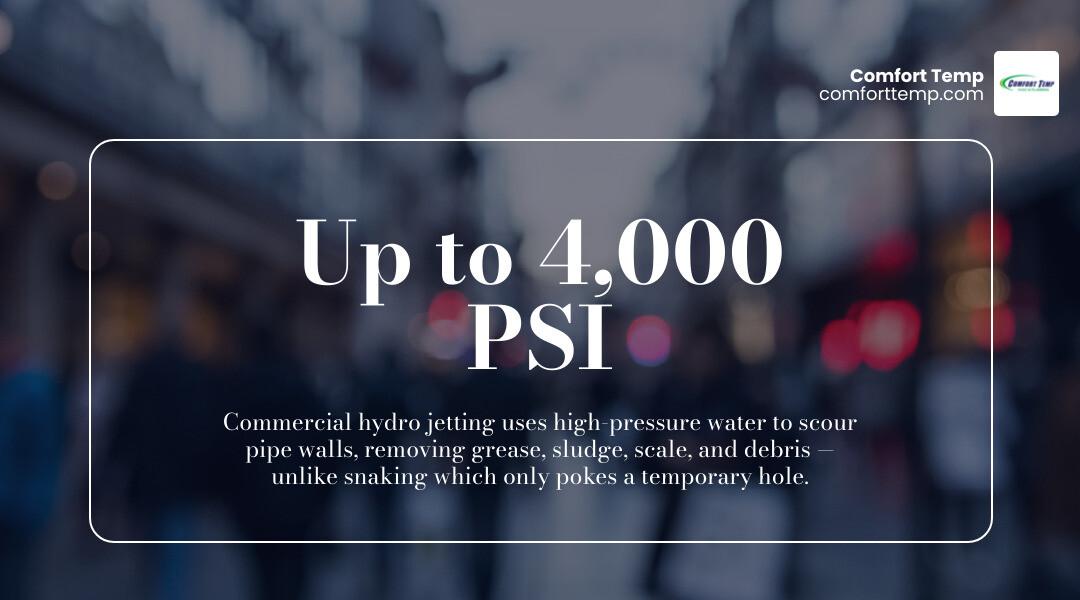
Commercial hydro jetting uses high-pressure water to clear and scour drain and sewer lines. Unlike a drain snake, which may only open a small path through a clog, jetting removes grease, sludge, scale, food debris, and other buildup from the pipe walls. The process is a specialized form of hydro-jetting that relies on water pressure rather than mechanical cutting.
For a business with recurring backups, slow drains, odors, or heavy grease use, the smart first step is a camera inspection. A licensed technician can check the pipe’s condition, locate the buildup, and select the right water pressure and nozzle for safe, thorough cleaning.
Commercial systems handle more waste, longer pipe runs, and higher traffic than most home plumbing. That makes preventive jetting especially useful for restaurants, multi-unit buildings, offices, retail properties, and industrial facilities. Standard commercial work can use water pressure up to 4,000 PSI, while specialized industrial equipment may use higher settings when the pipe and application allow it.
Comfort Temp HVAC & Plumbing provides commercial plumbing services in Gainesville, Jacksonville, and Orlando. Its technicians are licensed for commercial and residential plumbing work, helping property owners and managers address drain problems before they cause costly interruptions.
Commercial hydro jetting terms made easy:
Understanding Commercial Hydro Jetting: High-Pressure Power and Mechanics
Maintaining high-capacity sewer lines requires equipment capable of tackling extreme industrial residues. Commercial hydro jetting relies on specialized machinery delivering water at pressures up to 4,000 PSI (pounds per square inch) with flow rates typically between 6 to 18 gallons per minute (GPM) for standard commercial lines, and upwards of 40 to 60 GPM for clearing high-volume municipal or storm sewers. When dealing with complex facilities, our commercial plumbing systems must endure constant daily abuse that residential pipes never see.
Unlike garden hoses or simple pressure washers, hydro jetters use heavy-duty, steel-braided hoses attached to specialized penetrating nozzles. These hoses can navigate pipe runs reaching up to 650 feet from a single cleanout or access point. The equipment delivers a 360-degree radial blast that scours the full internal circumference of pipes ranging from 1.5 inches up to 12 inches or more in diameter, leaving the pipe interior completely cleared of obstructions.
How High-Pressure Water Jetters Clear Stubborn Obstructions
The real engineering feat of hydro jetting lies inside the nozzle head. High-performance nozzles combine forward-facing cutting jets with multiple rear-facing propulsion jets.
- Forward Jets: A high-velocity forward stream acts like a hydraulic drill bit, cutting through hardened blockages, solid grease plugs, mineral deposits, and intrusive tree roots.
- Rear Propulsion Jets: Angled backward (usually at 15 to 45 degrees), these jets produce the physical thrust that pulls the hose hundreds of feet down the line. As the technician slowly retrieves the hose, the rear jets wash debris backward toward the cleanout for extraction.
This dynamic force obliterates dense scale accumulation, limescale, uric acid crystals in high-traffic commercial restrooms, and even stubborn construction residue like mortar or concrete slurry wash-down. Because the process uses clean water without toxic chemicals, it eliminates environmental and pipe degradation hazards while restoring original drainage diameter.
Why Commercial Hydro Jetting Outperforms Traditional Snaking
For decades, standard mechanical snaking (or cabling) was the go-to drain clearing method. However, commercial property managers know that snaking high-traffic lines is often a temporary fix.
A mechanical auger punches a small 1- to 2-inch hole through the center of a soft blockage, restoring partial flow. But the corkscrew head leaves thick coatings of fats, oils, and grease (FOG) lining the perimeter of the pipe. Within weeks or months, new debris catches on the remaining sticky residue, causing another severe backup.
In contrast, high-pressure jetting washes the entire pipe wall clean, emulsifying grease and removing scale so debris has nothing to stick to.
| Feature / Metric | Traditional Mechanical Snaking | Commercial Hydro Jetting |
|---|---|---|
| Cleaning Mechanism | Rotating steel cable / cutting head | 360° high-pressure water stream (up to 4,000 PSI) |
| Wall Cleaning Ability | Leaves perimeter grease & scale intact | Completely scours inner pipe walls to bare surface |
| Long-Term Effectiveness | Short-term relief (clogs return quickly) | Long-lasting restored pipe capacity |
| Grease & Sludge Removal | Pokes hole through blockage | Emulsifies, liquefies, and flushes residue away |
| Root & Scale Management | Shreds center roots, cannot descale | Cuts fine roots flush and eliminates hard mineral scale |
| Maximum Reach | Usually 75 – 100 feet | Up to 650 feet in a single run |
| Pipe Safety | Metal blades can gouge or crack old pipes | Non-abrasive water stream calibrated to pipe condition |
For long-term system health, selecting complete scouring via professional drain cleaning over simple mechanical puncture prevents repetitive service calls.
High-Priority Facilities and Common Warning Signs
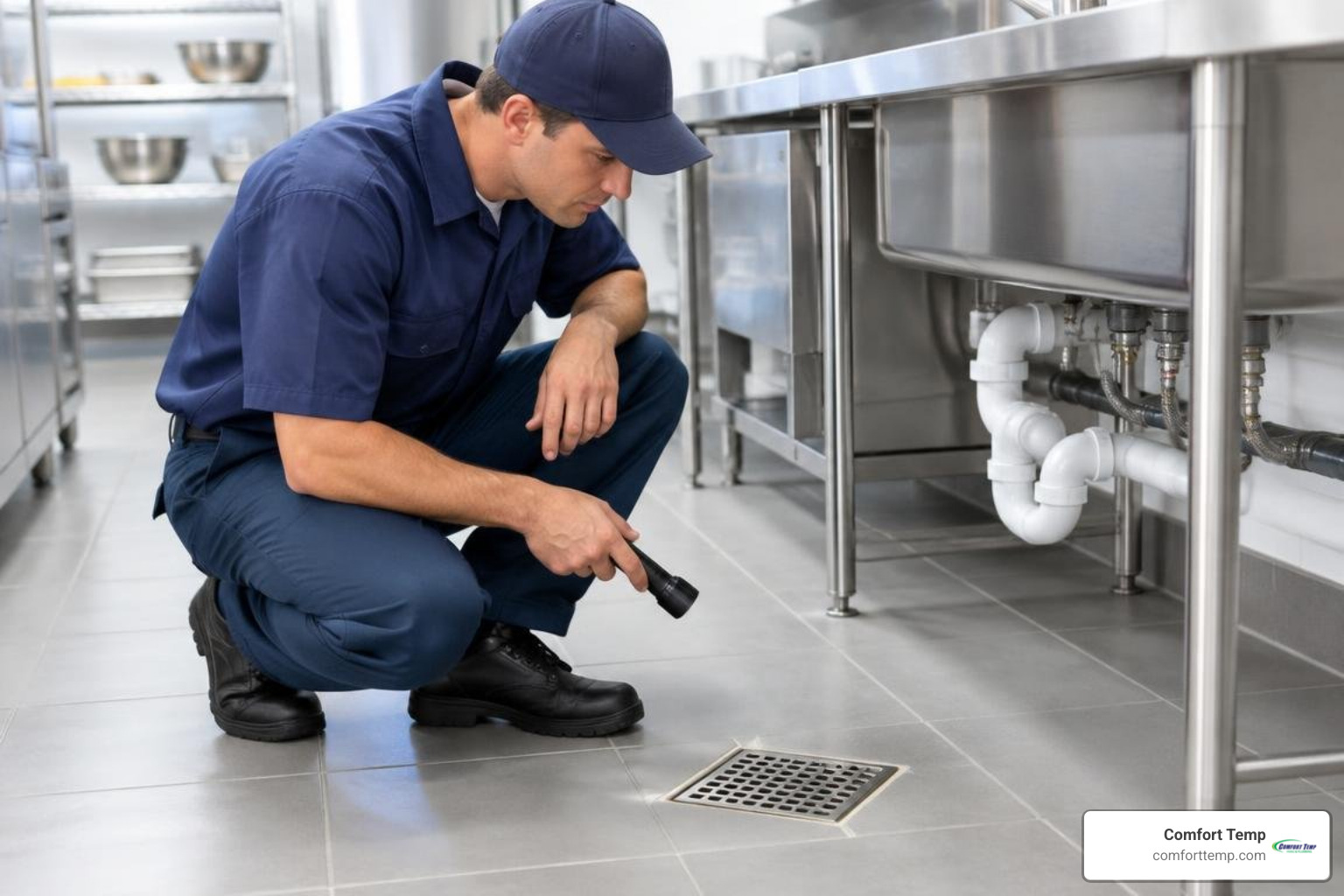
Commercial sewer lines undergo immense strain compared to residential systems. A failure at a commercial site does not just cause annoyance—it can halt operations, force business closures, and result in substantial financial losses.
Commercial Kitchens, Multi-Unit Buildings, and Commercial Facilities
Different facilities present distinct drainage demands:
- Commercial Food Service & Restaurants: Kitchens wash vast quantities of fats, oils, and grease, and food waste into the drain network daily. Even with high-grade grease traps, cooling grease coats the plumbing lateral lines, causing blockages, foul odors, and severe health code non-compliance risks.
- Multi-Family & Multi-Unit Residential Buildings: Apartment buildings, condominiums, and student housing complexes experience high wastewater volume. In these properties, tenants introduce hair, hygiene products, soap scum, and cooking oils into shared vertical stacks and horizontal mains.
- Office Buildings, Retail Strips & Hospitality: High-occupancy facilities with frequent public restroom usage suffer from paper towel jams, foreign object flushes, and heavy scale buildup across long sewer runs.
- Industrial & Manufacturing Plants: Process drains in manufacturing and food processing plants collect chemical residues, slurry, starch deposits, and heavy sediment that require regular high-PSI clearing through dedicated commercial drain and sewer services.
Critical Warning Signs Your Facility Needs Immediate Jetting
Catching drain deterioration early prevents unscheduled downtime. Watch for these operational warning signs:
- Multiple Slow Fixtures: Multiple floor sinks, toilets, or basins draining slowly across the property indicate a developing main lateral restriction.
- Persistent Foul Odors: Sewer gas or rancid grease smells rising from floor drains point to heavy organic decomposing matter stuck to the pipe walls.
- Gurgling Sounds: Trapped air bubbling through floor sinks, traps, or toilets during water discharge signals an obstructed airflow venting issue downline.
- Recurring Backups: Lines needing mechanical snaking every few months require deep high-pressure descaling.
- Unexplained Water Pooling: Water rising around floor drains during heavy dishwashing cycles or laundry operations shows flow capacity is throttled.
When drain failure is imminent, property operators often require commercial emergency plumbing support to avoid costly health code citations or structural flooding.
The Multi-Step Hydro Jetting Service Workflow
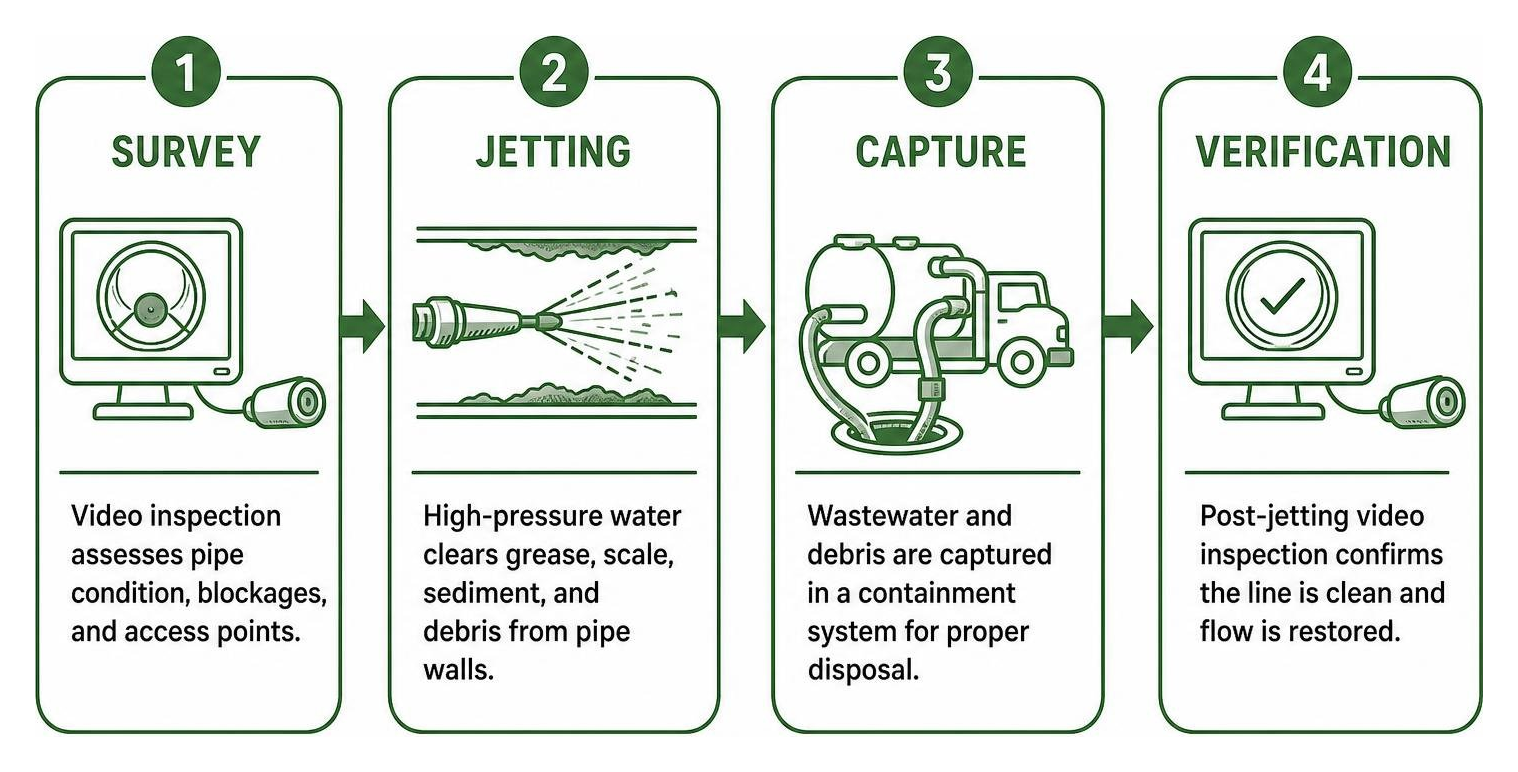
Executing high-pressure commercial water jetting demands methodical technical execution to ensure pipe safety and operational success.
Pre-Jetting Video Inspection and Infrastructure Survey
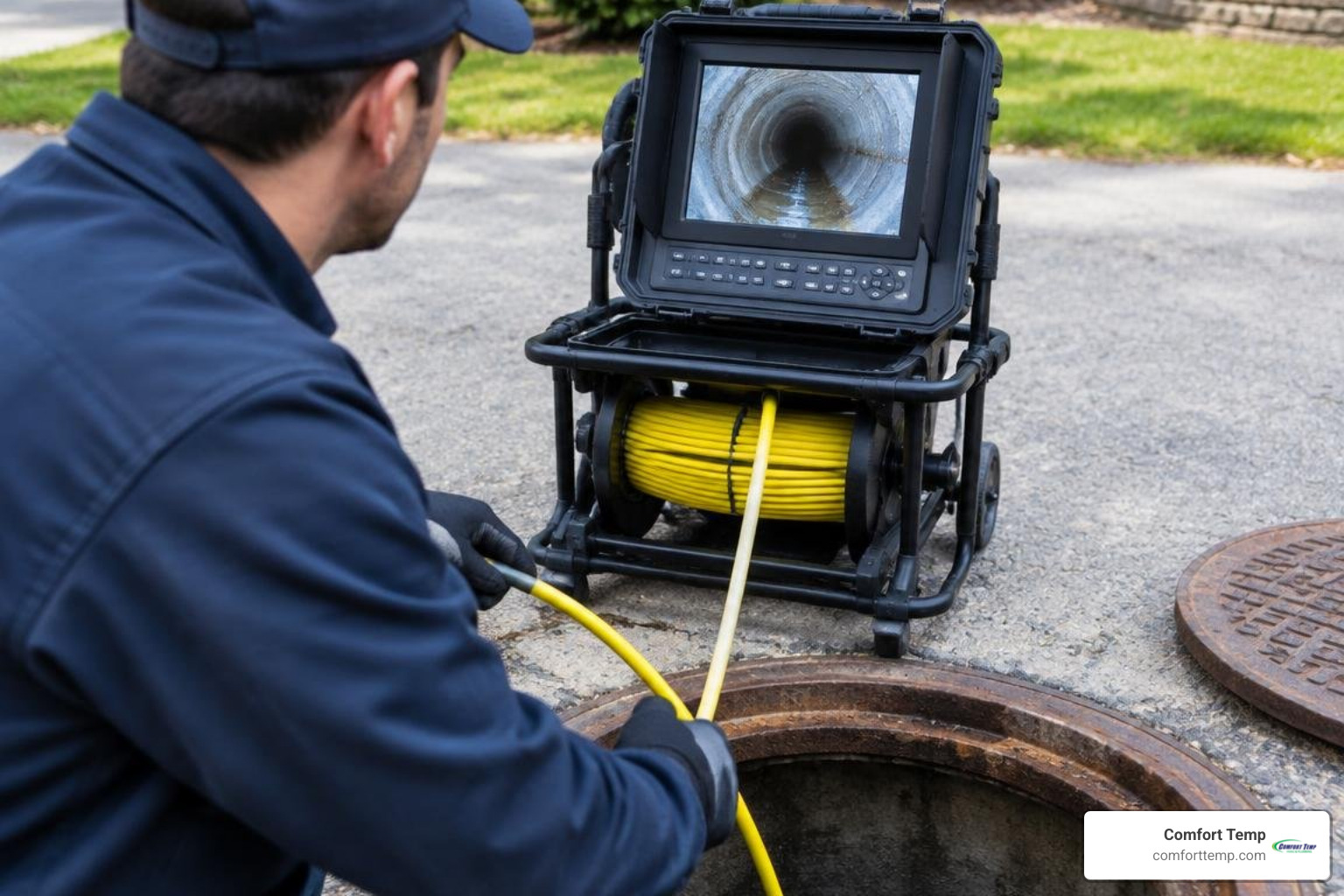
Professional commercial jetting begins with a thorough infrastructure survey. A high-resolution diagnostic sewer camera is fed into the system through existing access points, cleanouts, or manholes.
This survey identifies:
- Exact location, density, and nature of the obstruction (grease, roots, scale, collapsed line).
- The pipe material (cast iron, PVC, clay, ductile iron) and its structural integrity.
- Hidden defects such as pipe shifting, cracks, fractures, or sagged bellies.
Evaluating pipe condition before pressurizing the system prevents hydro jetting from compounding underlying structural damage.
Reverse-Pass Flushing, Debris Capture, and Post-Cleaning Verification
Once the infrastructure survey is complete, our technicians select the appropriate nozzle geometry and calibrate the water pressure:
- Access and Setup: The high-pressure hose enters through an exterior cleanout or utility room access, minimizing indoor exposure.
- Step Cleaning: In lines with heavy grease or dense sediment, the operator uses step cleaning—advancing the hose 40 to 50 feet, clearing the section, pulling it back, and repeating further down the line to prevent overloading downstream pipes.
- Debris Capture: As debris washes back toward the access point, technicians catch and remove solid waste rather than washing large masses into the municipal sewer main.
- Post-Jetting Camera Verification: A secondary video camera inspection is run through the full line length. This visual record confirms all buildup has been stripped from the pipe walls, verifies full flow restoration, and provides documentation for facility records and municipal FOG compliance.
Investment, Maintenance Frequency, and Pipe Safety
Understanding budgeting and maintenance schedules helps facility managers protect both their plumbing assets and their operational bottom lines.
Estimating Commercial Hydro Jetting Cost and Service Frequency
Commercial jetting expenses depend on pipe diameter, line length, access difficulty, and the severity of buildup.
- Standard Commercial 4-Inch Lines: Routine jetting runs approximately $400 to $950 per visit for straightforward retail and office properties.
- Restaurant Kitchen Lines with Heavy FOG: Full grease treatment and lateral scouring typically range from $400 to $800 for localized grease lines, or $1,100 to $1,800 for extensive 6-inch main runs.
- Apartment & Multi-Unit Mains: Quarterly or semi-annual maintenance on 6-inch shared lateral mains averages $500 to $1,600 per visit.
- Industrial Lines: Heavy scale removal or large process drains can range from $600 to $3,500+ depending on industrial pressure requirements and waste complexity.
A restaurant forced to close for a single day due to a sewage backup or health code violation can lose between $2,000 and $10,000 in revenue, not counting emergency remediation costs and customer churn. Every dollar spent on scheduled preventive maintenance saves an estimated $10 to $50 in avoided downtime, emergency calls, and structural repairs.
Property managers can plan these expenses using an updated commercial plumbing guide 2026 to establish predictable operating budgets.
Pipe Safety Considerations for Older Commercial Infrastructure
A common concern among property managers is whether water at 4,000 PSI will compromise aged plumbing. When executed by experienced technicians, hydro jetting is completely safe for structurally sound pipes, including aged cast iron, PVC, clay, and copper lines.
Because high-pressure water utilizes smooth fluid dynamics rather than sharp metal cutting blades, it avoids gouging or puncturing pipe walls. If a pre-service camera inspection reveals severe pipe degradation, thin-walled rusting, or collapsed joints, our technicians will calibrate down the operating pressure or recommend trenchless repair options before applying high-velocity water.
Frequently Asked Questions About Commercial Drain Jetting
Can hydro jetting damage older or cast iron commercial pipes?
No, provided the pipe maintains structural integrity and the technician inspects the line with a camera before starting. Water jetting uses no abrasive chemicals or mechanical blades. By matching the nozzle type and pressure output to the pipe’s specific material and age, a licensed professional can safely scour cast iron lines without causing damage.
How can businesses schedule jetting without interrupting daily operations?
Most commercial hydro jetting services are scheduled during off-peak hours, evenings, or weekends. Because technicians work primarily through exterior cleanouts, basements, utility rooms, or parking lot manholes, daily business operations, restaurant dining, or tenant routines can continue uninterrupted while main lines are serviced.
How often should restaurants and commercial kitchens jet their lines?
High-volume restaurants and food service operations with heavy frying menus generally benefit from quarterly or even monthly jetting to stay compliant with local Fats, Oils, and Grease (FOG) regulations. Lower-volume food establishments, such as coffee shops and delis, typically require semi-annual or annual maintenance to avoid drain line buildup.
Conclusion
Commercial hydro jetting remains the most reliable, eco-friendly, and cost-effective method to protect commercial plumbing systems from debilitating blockages. By relying on high-pressure water rather than corrosive chemicals or temporary mechanical snaking, property owners can keep their drain lines clear, extend the lifespan of their infrastructure, and protect their businesses against unexpected closures.
At Comfort Temp HVAC & Plumbing, our technicians are licensed for both commercial and residential plumbing work. We provide dependable commercial plumbing services in Gainesville, Jacksonville, and Orlando, as well as complete residential services in Gainesville. Whether your facility needs routine preventive line maintenance or a comprehensive video survey, trust our experienced team as your dedicated commercial service provider.