Whole-House Humidifier Types and Equipment Pricing
Whole-house humidifier installation costs typically range from $400 to $1,200 for standard bypass and fan-powered units, while advanced steam systems can reach up to $4,200 with dedicated electrical work. The type of technology you choose plays the largest role in your overall equipment budget. Whole-home units integrate directly into your central ductwork to treat every room simultaneously. This makes them far more convenient and capable than portable room units that require daily refills. Exploring dedicated residential air quality products helps you find equipment tailored to your property size and layout. It is helpful to understand the distinction between air purification and water purification technologies: water purification systems treat incoming plumbing lines to remove mineral sediment and liquid impurities, whereas air purification and humidification systems work directly within the HVAC ductwork to treat circulating indoor air.
Whole-house humidifiers rely on two primary methods of adding moisture: evaporative technology and steam injection. Evaporative units pass warm air over a water-soaked pad (called a water panel), while steam models boil water independently using electric heating elements or electrodes. Capacities are rated in gallons per day (GPD), ranging from 12 GPD for compact homes up to 35 GPD or more for large floor plans.
| Humidifier Type | Typical Unit Price (Equipment Only) | Total Cost Installed | Best Suited For | Key Feature |
|---|---|---|---|---|
| Bypass | $100 – $300 | $400 – $800 | Homes up to 2,500 sq. ft. | Uses furnace blower airflow; ultra-quiet |
| Fan-Powered | $250 – $600 | $840 – $2,200 | Homes 2,000 to 4,000 sq. ft. | Internal fan pushes moisture without bypass duct |
| Steam | $500 – $1,850+ | $1,200 – $4,200 | Homes 4,000+ sq. ft. / Multi-zone | Operates independently of furnace heat cycles |
Bypass Humidifiers for Budget-Friendly Humidity
Bypass humidifiers represent the most economical entry point into whole-home humidity control. These systems connect between the supply and return air plenums using a bypass duct run. When the furnace runs, warm air is pushed through the bypass duct, passes through the water panel, absorbs moisture, and circulates throughout your living spaces.
Because they contain no internal fan motor, bypass models use almost zero electricity and operate with minimal moving parts. They are exceptionally reliable and cost-effective for single-family homes under 2,500 square feet with standard duct layouts.
Fan-Powered Humidifiers for Enhanced Moisture Distribution
Fan-powered humidifiers feature a built-in electric fan that pulls warm air straight from the furnace plenum across the internal evaporative pad. Because the unit provides its own airflow, it does not require a separate bypass duct, making it an excellent choice for tight mechanical rooms or closet installations where space is constrained.
These models produce more moisture per day than bypass units of comparable dimensions. They pair especially well with modern multi-stage and variable-speed furnaces, providing steady moisture distribution during low-fire heating cycles across mid-sized homes between 2,000 and 4,000 square feet.
Steam Humidifiers for Large Homes and Precision Control
Steam humidifiers are the premium solution for comprehensive humidity management. Instead of relying on hot air evaporation, these systems use internal electrodes or heating elements inside a specialized canister to boil incoming water into pure steam.
This steam is injected directly into the supply airflow. Steam models can humidify a home even when the furnace is not actively heating, which is ideal for large multi-story properties, arid microclimates, homes with delicate woodwork, or heat pump systems that produce lower supply-air temperatures.
Comprehensive Breakdown of Humidifier Installation Cost
Understanding your overall project budget requires looking beyond the price tag of the humidifier itself. According to national installation cost benchmarks, total expenses combine equipment hardware, specialized installation supplies, labor rates, and custom duct modifications. For comprehensive home balancing, integrating whole house humidity control ensures consistent air comfort across all seasons.
Professional installation typically accounts for $100 to $900 of your total invoice, with labor averages running around $395 to $734 for standard configurations. Complex retrofits requiring dedicated electrical circuits or intricate sheet metal fabrication can push labor higher.
Factors That Influence Total Humidifier Installation Cost
Several site-specific variables dictate where your final price falls within the typical $400 to $1,200 range:
- HVAC Accessibility: Equipment mounted in cramped attics or narrow closets takes longer to fit, which increases labor time compared to spacious utility rooms.
- Ductwork Material and Layout: Cutting into rigid sheet metal plenums requires precision tools, while modifying fiberglass or ductboard systems demands extra bracing and reinforcement collars.
- Control Upgrades: Basic manual dial humidistats cost $30 to $50, whereas digital, outdoor-temperature-compensating humidistats or smart thermostat integrations range from $90 to $200.
- System Sizing: Larger homes require high-capacity units (17 to 35 GPD), which involve larger mounting frames and sturdier structural support.
Labor, Electrical, and Plumbing Requirements
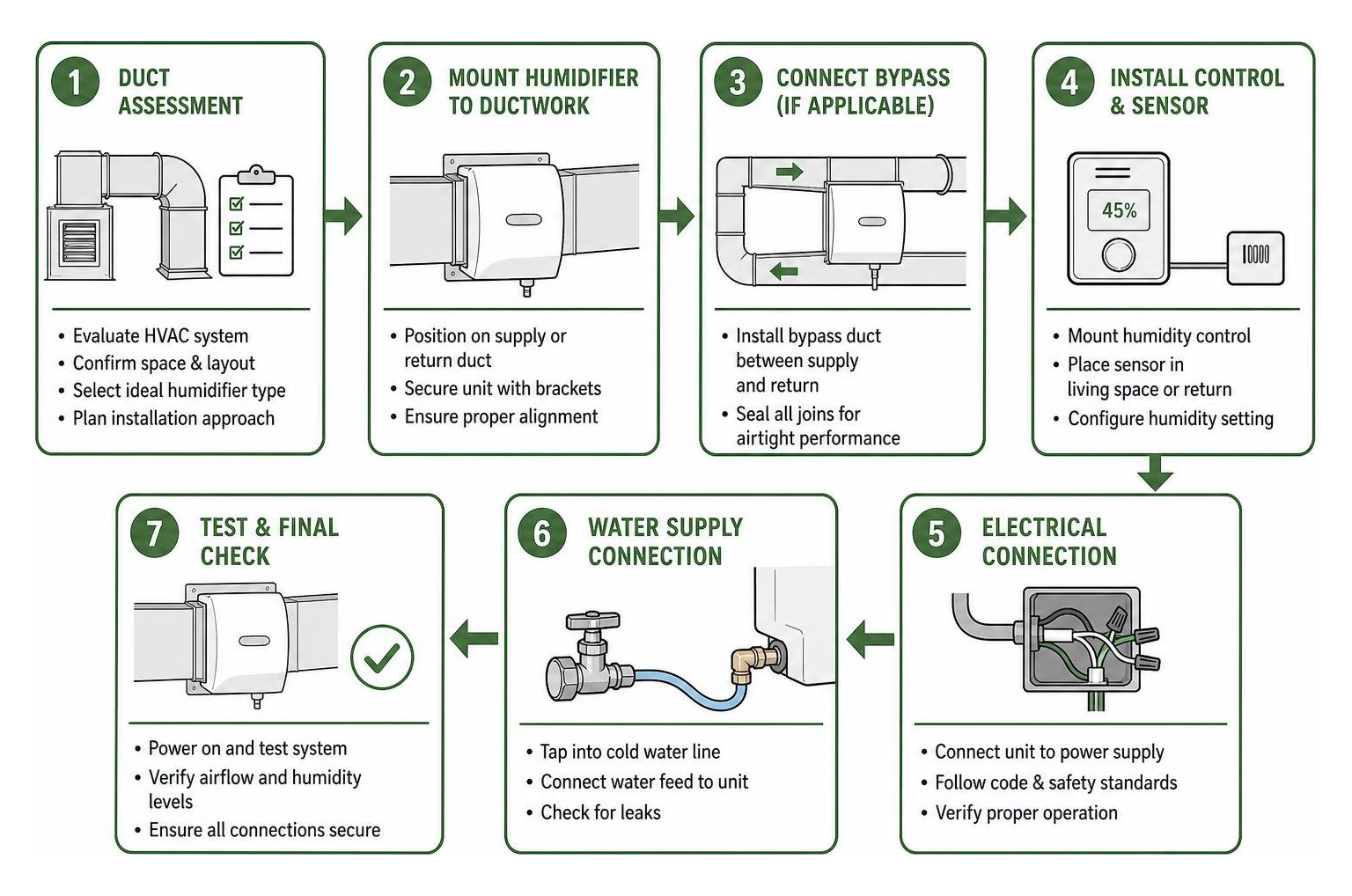
Installing a whole-home system connects three major home trades: sheet metal ducting, plumbing, and electrical wiring. A licensed technician must tap into an active cold water line, route secure continuous-drain piping to a floor drain or condensate pump, and wire 24V control circuits to the furnace board.
For high-output steam systems, an electrician or HVAC specialist must install a dedicated 120V or 240V circuit, adding $250 to $900 to the electrical scope. Adhering to professional plumbing standards protects your property against slow leaks, backflow issues, and structural water damage.
Operational Expenses, Maintenance, and Long-Term Value
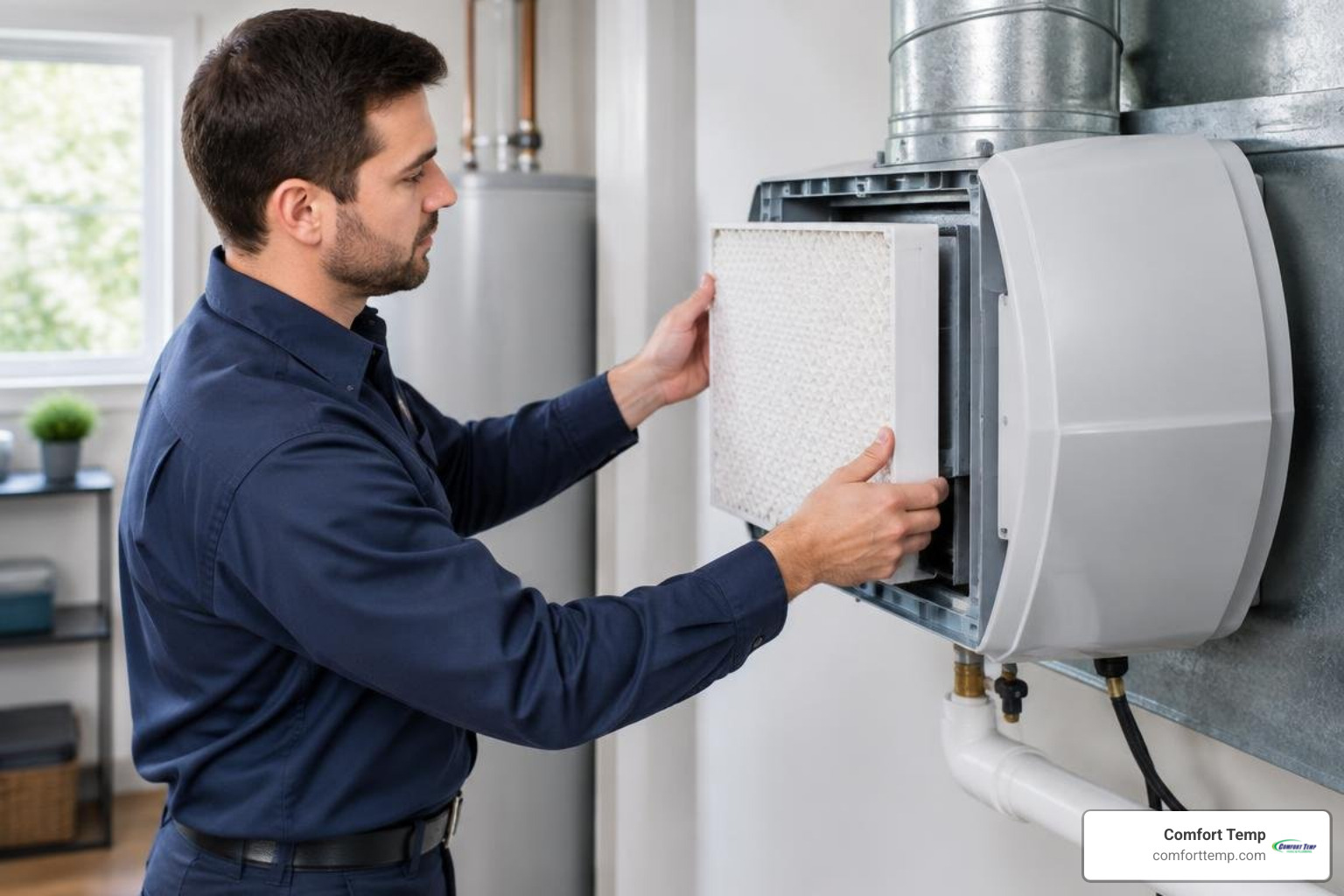
Once installed, whole-house humidifiers carry modest ongoing operating costs. Bypass units consume negligible electricity and use roughly 100 to 300 gallons of water per heating season, adding just $1 to $5 to your water bill. Fan-powered units add roughly $10 to $25 in electricity over a winter. Steam systems consume more electricity to boil water—typically $40 to $120 per season—but offer superior moisture output.
When equipment experiences component fatigue or sensor malfunctions down the road, scheduling prompt whole house humidifier repair prevents water overflow and maintains indoor balance.
Energy Efficiency and Heating Bill Reductions
Dry air accelerates moisture evaporation from your skin, making you feel several degrees cooler than the actual room temperature. By maintaining indoor relative humidity between 30% and 50%, your body retains warmth more effectively. This allows you to lower your thermostat by 1 to 3 degrees without sacrificing personal comfort.
Because each degree of thermostat setback can reduce heating costs by 2% to 4%, balancing moisture is recognized as one simple way to fix dry air inside your house while creating real savings. Typical households save between $80 and $220 annually on heating bills, helping a $600 bypass system pay for itself in three to five years.
Routine Maintenance and Hard Water Considerations
Keeping your system operating efficiently involves straightforward seasonal care:
- Water Panel Replacements: Evaporative pads collect mineral deposits and should be replaced once per season (or twice per season in hard-water areas), costing $20 to $40 per panel.
- Steam Canister Servicing: Steam cylinders should be inspected mid-season and replaced annually or biennially ($60 to $120 per canister) to clear scale accumulation.
- Seasonal Shutdown: In spring, shut the manual bypass damper, turn off the water supply valve, and clean the drain tube to keep the system clean through the summer.
Professional vs. DIY Humidifier Installation

While handy homeowners may feel tempted to purchase a boxed unit online and attempt installation themselves, whole-house systems demand multi-trade skills. Improper sheet metal cuts can cause air leaks, lower airflow velocity, and compromise furnace heat exchanger performance. Furthermore, amateur water taps using piercing saddle valves frequently develop pinhole leaks over time, risking hidden water damage behind drywall.
Reviewing static electricity humidity guidelines highlights the importance of precise sensor placement. A humidistat installed in the wrong duct location will misread relative humidity, causing excessive condensation on windows or allowing static shocks to persist.
Understanding the operational differences between a humidifier vs dehumidifier also underscores why balanced airflow is critical. Most major equipment manufacturers explicitly require installation by a licensed HVAC contractor to keep the equipment warranty valid. Professional installation ensures airtight duct transitions, leak-free soldered or press-fit plumbing lines, and reliable low-voltage control integration.
Frequently Asked Questions About Humidifier Systems
What Is the Average Humidifier Installation Cost for Whole-Home Systems?
Most homeowners invest between $400 and $1,200 for a fully installed, turnkey whole-house humidifier. Evaporative bypass units sit at the lower end of the range ($400 to $800), fan-powered units average $840 to $2,200, and comprehensive steam systems with dedicated electrical wiring range from $1,200 to $4,200.
Can Adding a Humidifier Reduce Winter Heating Bills?
Yes. Proper humidity prevents rapid evaporative cooling from your skin, making 68°F feel like 71°F in a conditioned space. This perceived warmth allows you to dial back the thermostat, cutting heating fuel consumption by 2% to 4% per degree lowered and producing measurable energy savings across the winter season.
How Does Indoor Humidity Protect Hardwood and Home Furnishings?
When indoor relative humidity drops below 30%, porous materials like hardwood floors, solid wood doors, crown molding, and musical instruments lose moisture to the surrounding air. This causes shrinkage, warping, creaking joints, and visible wood cracking. Maintaining consistent 35% to 45% relative humidity preserves the structural integrity and finish of your home’s interior woodwork.
Conclusion
Upgrading your indoor environment with a whole-house humidifier transforms winter living by eliminating static shocks, soothing dry respiratory passages, and shielding fine woodwork from shrinkage. Balancing moisture levels also makes your home feel naturally warmer at lower thermostat settings, delivering reliable comfort and seasonal energy savings.
Whether you are looking to integrate humidity control into your current setup or are considering installing a new HVAC system with built-in indoor air quality features, professional design and installation make all the difference. Comfort Temp HVAC & Plumbing is proud to provide expert service across our service areas. Our technicians are licensed for both residential and commercial plumbing work, ensuring all water lines, drainage, and mechanical components are installed safely.
For homeowners seeking residential HVAC and plumbing in Gainesville, our team delivers personalized indoor comfort solutions. In Jacksonville and Orlando, we provide commercial HVAC and commercial plumbing services tailored to business facilities. Contact Comfort Temp HVAC & Plumbing today to schedule your system consultation and enjoy balanced indoor comfort all year long.