What an Air Quality Monitor Can Tell You About Mold
An air quality monitor for mold usually tracks risk, not mold itself. Look for a device that logs humidity and temperature over time. These readings can warn you when a room stays damp enough for mold to grow. Some monitors also measure wall temperature or analyze gases linked to mold, but an alert cannot confirm that mold is present.
If readings stay high, check for leaks, improve ventilation, and control moisture. If you see or smell mold, inspect the source rather than relying on the monitor alone.
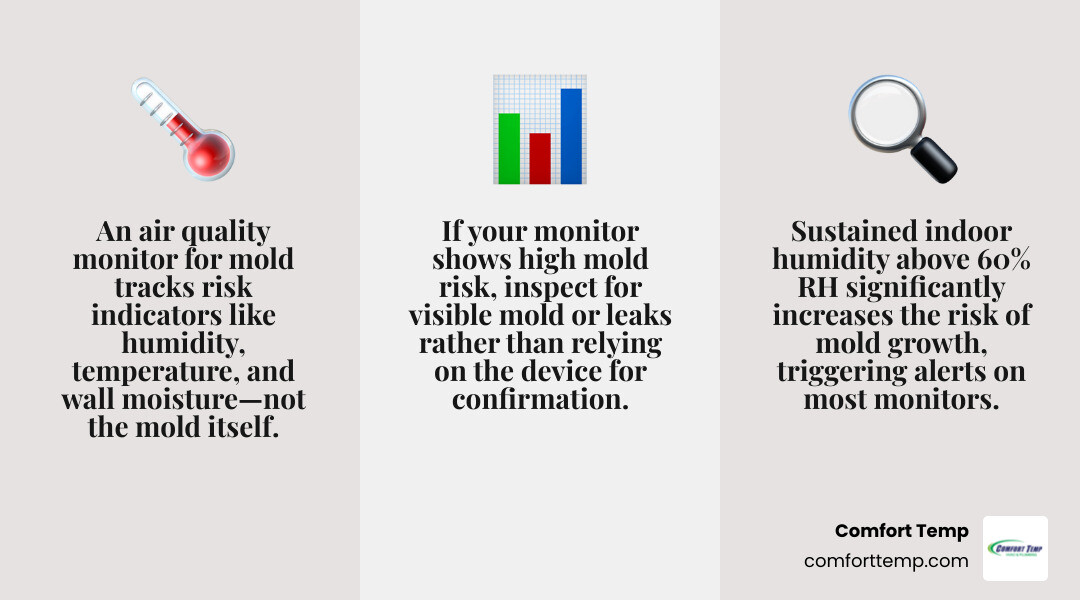
To better understand your indoor environment, you can evaluate readings with a dedicated air quality meter, set up connected air quality monitoring devices, or check specific rooms with a diy air quality test kit.
How an Air Quality Monitor for Mold Works
Understanding how indoor sensors evaluate mold risk starts with looking at the underlying physics and chemistry of indoor environments. Traditional hygrometers measure ambient relative humidity and temperature, but modern air quality monitors go much further by calculating dew points, monitoring surface temperatures, and analyzing chemical signatures in the air.
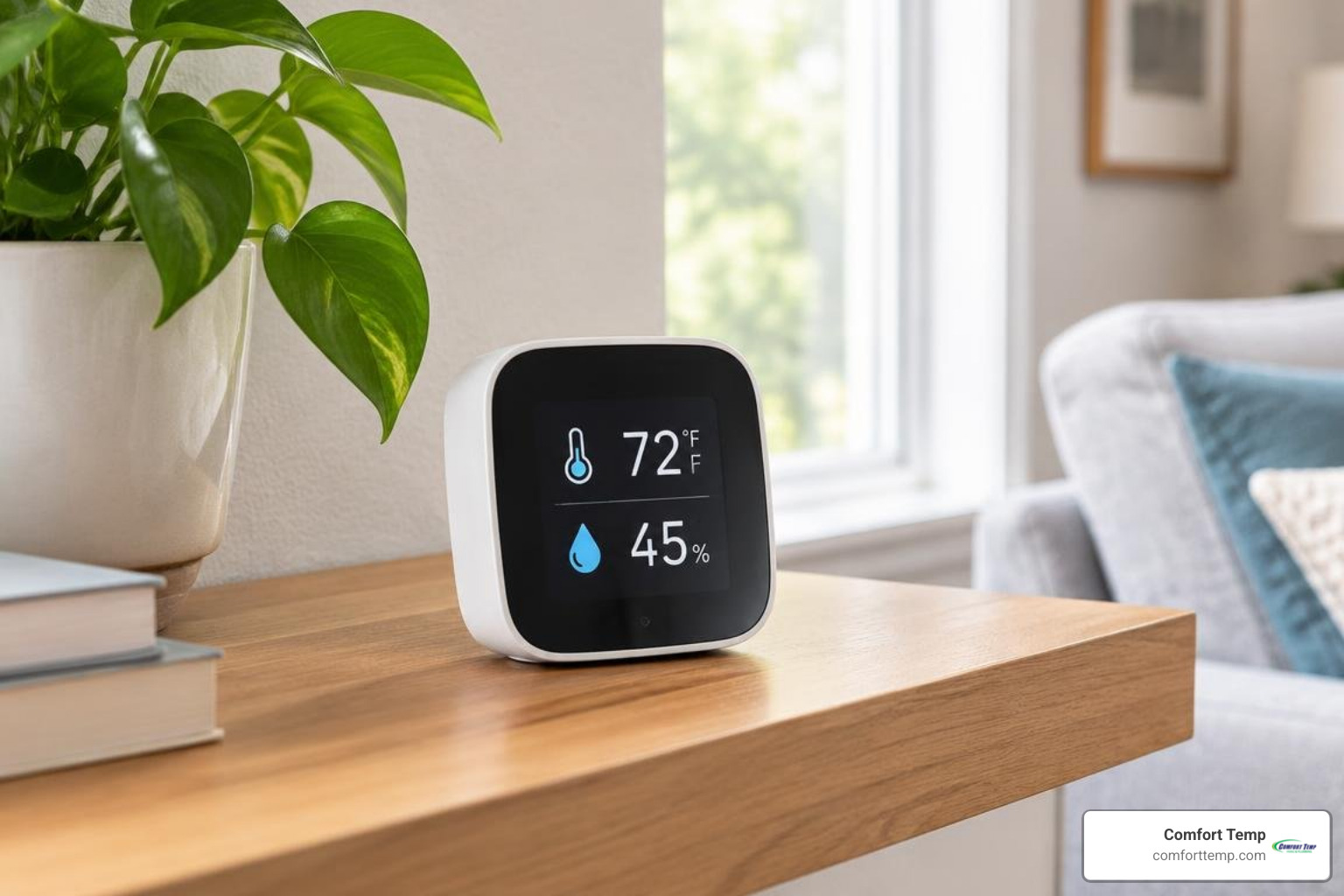
When warm, moist air meets a cool surface, condensation forms. This provides the moisture required for dormant mold spores to germinate and colonize. By tracking changes in ambient moisture levels alongside surface temperatures, smart monitors determine whether indoor surfaces have crossed the threshold into active growth conditions. State health agencies, including the Florida Department of Health, emphasize that controlling indoor moisture and maintaining indoor relative humidity below 60% are the primary defenses against indoor microbial proliferation.
Direct Spore Detection vs. Environmental Condition Tracking
A common misconception is that standard consumer monitors count physical mold spores floating through the air. Real-time optical spore identification requires specialized laboratory equipment like high-volume air impactors and microscopic analysis. Standard optical particle counters measure general particulate matter (such as PM1.0, PM2.5, and PM10), but they cannot reliably distinguish a fungal spore from harmless household dust, pollen, or cooking aerosol.
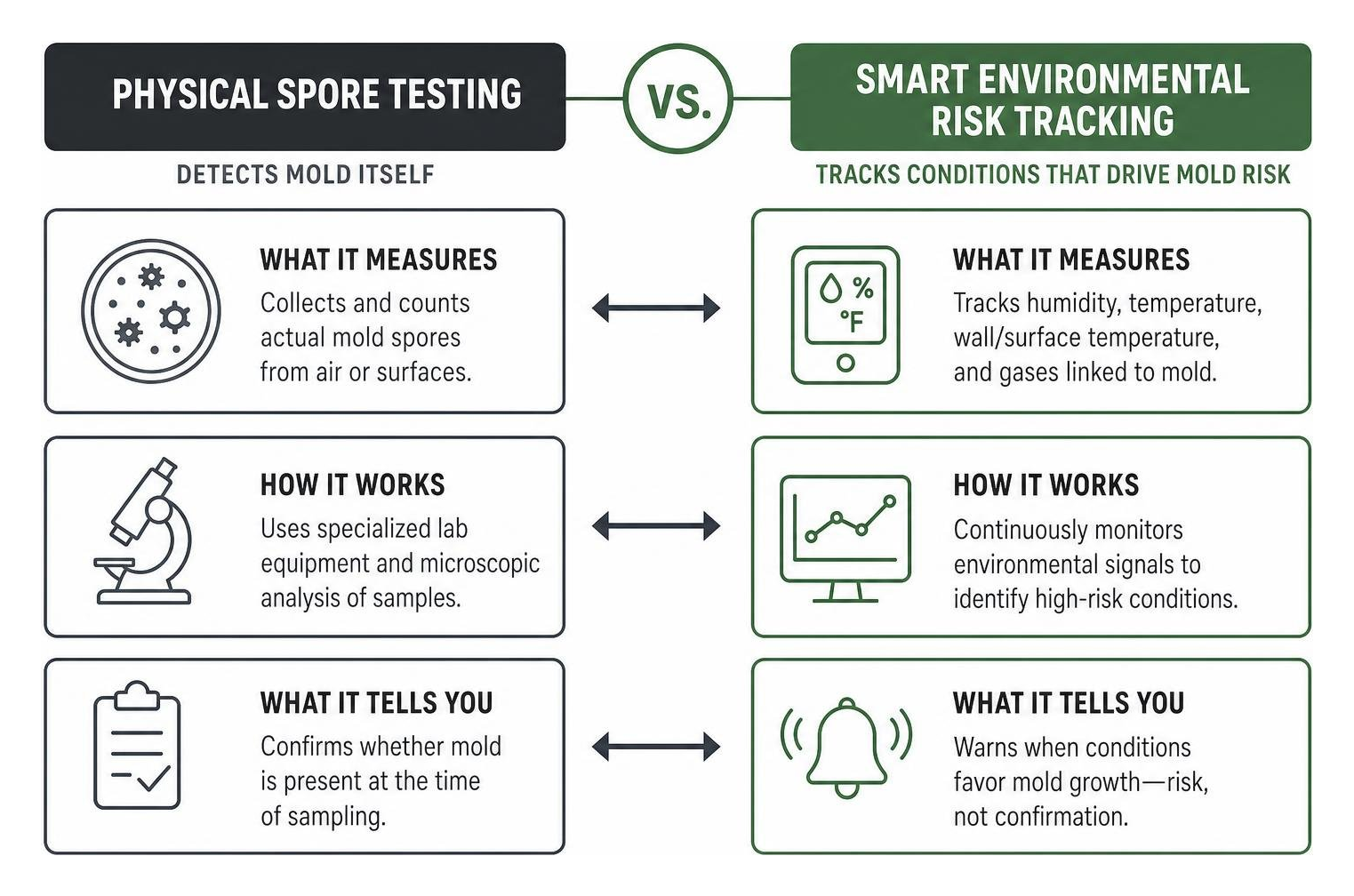
Instead of counting physical spores, an environmental monitor focuses on predictive tracking. By continuously evaluating environmental metrics, the monitor identifies high-risk conditions before visible colonies can form.
Microbial VOC (mVOC) Sensors and AI Pattern Recognition
As active mold digests organic materials (such as drywall, wood framing, or carpet backing), it produces volatile organic compounds known as microbial VOCs (mVOCs). These metabolic byproducts create that familiar, musty “mildew” smell.
Advanced monitors leverage metal-oxide semiconductor (MOS) gas sensors to detect these trace chemical compounds. Modern devices process these gas readings using artificial intelligence pattern recognition trained on lab-validated datasets. For example, specialized AI-driven monitors like AirGuard analyze signature mVOC emissions alongside temperature curves, achieving an independently validated detection accuracy of approximately 75% for identifying active microbial metabolic activity.
Key Sensor Metrics and How to Interpret the Data
Modern multi-sensor air quality devices capture multiple data streams simultaneously. Knowing how these metrics interact is critical for interpreting risk levels accurately. Learning how indoor humidity impacts air quality helps homeowners recognize when small shifts in ambient conditions can lead to hidden moisture accumulation.
| Metric | Target Safe Range | Elevated Warning Range | High Mold Risk Threshold | What It Measures |
|---|---|---|---|---|
| Relative Humidity (RH) | 30% – 50% | 51% – 59% | ≥ 60% continuous | Ambient moisture saturation in room air |
| Surface RH (at Wall) | < 70% | 70% – 79% | ≥ 80% | Moisture boundary layer on cool surfaces |
| Dew Point Spread | > 5°C (9°F) spread | 2°C – 5°C spread | < 2°C (near condensation) | Margin between air temp and dew point |
| Total VOCs (TVOC) | < 0.3 mg/m³ | 0.3 – 0.5 mg/m³ | > 0.5 mg/m³ | Total airborne volatile organic compounds |
| Particulate Matter (PM2.5) | 0 – 12 µg/m³ | 13 – 35 µg/m³ | > 35 µg/m³ | Fine respirable suspended particles |
Evaluating Dew Point and Wall Surface Moisture
Ambient humidity tells only half the story. The microclimate directly against exterior walls, room corners, and window reveals is where mold actually takes hold. When warm indoor air meets an exterior thermal bridge, the air cools rapidly at the boundary layer, causing local relative humidity to spike.
Devices like the Febris SCW use three-way measurement principles (ambient temperature, ambient humidity, and wall surface temperature) to calculate real-time dew point. For instance, in a room at 21°C (70°F) with 60% ambient relative humidity, the dew point is approximately 12.9°C (55.2°F). If an uninsulated exterior wall cools to 16°C (60.8°F), the relative humidity right at the surface of that wall reaches roughly 82%—creating prime conditions for mold growth even if the center of the room feels comfortable.
Choosing the Best Air Quality Monitor for Mold Prevention
When selecting a monitoring device, communication protocols, sensor accuracy, and data logging capabilities are key factors:
- Connectivity Standards: Wi-Fi devices offer cloud access and app alerts. Zigbee sensors (such as the Aqara TVOC Monitor) conserve power and integrate with local automation hubs. Commercial systems often utilize LoRaWAN or NB-IoT for long-range, battery-efficient property monitoring.
- Sensor Quality: High-grade monitors like the AirLab Pro use Swiss-made Sensirion sensors delivering ±10% accuracy on particulates and CO2, with ±0.3°C and ±3% RH accuracy for environmental tracking.
- Power Options: Devices like the VisiblAir Model O support Power over Ethernet (PoE) or USB-C for commercial flexibility, while battery-powered sensors provide up to a year of operation for flexible placement.
Understanding how air quality monitoring devices protect indoor spaces helps you choose the right sensor technology for your property’s specific layout.
Consumer vs. Professional Mold Monitoring Solutions
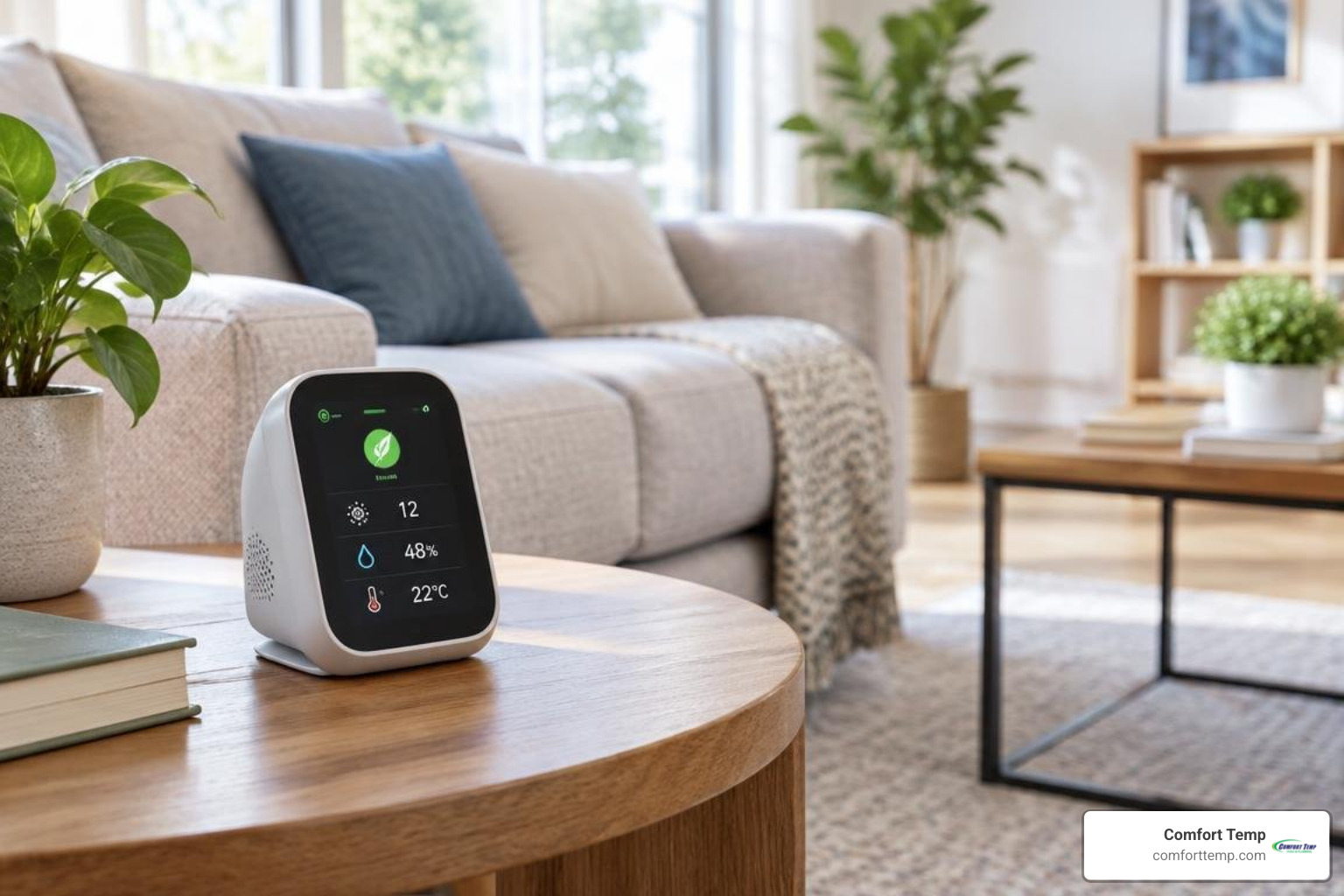
Consumer-grade monitors provide continuous convenience, giving homeowners real-time dashboards, historical trend tracking, and custom threshold alerts. They excel as early warning systems by detecting slow humidity drift or seasonal ventilation issues before visible damage occurs.
Professional solutions expand on these capabilities with precision calibration, NIST-traceable testing, and specialized building analytics. In commercial properties, facility managers rely on industrial multi-sensor arrays to document humidity compliance and verify ventilation effectiveness. Exploring proven ways to improve indoor air quality ensures that sensor data is paired with effective filtration and climate control strategies.
Smart Home Automation and Ventilation Triggers
One of the greatest benefits of modern air monitors is their ability to trigger smart home automations. Rather than waiting for a person to notice an alert, connected systems can respond immediately:
- Exhaust Ventilation: A Zigbee or Wi-Fi monitor in a bathroom can trigger an exhaust fan whenever relative humidity exceeds 60%.
- Dehumidification: Rising ambient moisture can signal a dedicated smart dehumidifier or fresh air damper to turn on.
- Cooling Adjustments: Multi-stage HVAC systems can modulate fan speeds or cycle cooling stages to prioritize latent heat removal (dehumidification) during humid weather.
Integrating an Air Quality Monitor for Mold with Whole-Home HVAC
Stand-alone monitors provide valuable local room readings, but whole-home protection requires integrating these insights with your central heating and cooling system. When sensors detect elevated moisture or poor air exchange across multiple zones, your HVAC system must respond with balanced ventilation and filtration.
If your monitoring devices reveal persistent humidity issues, scheduling professional air quality testing in Gainesville provides a comprehensive analysis of your ductwork, air handling equipment, and home envelope. A certified technician can determine whether the problem stems from an oversized cooling unit, leaky returns pulling in unconditioned attic air, or inadequate fresh air exchange.
Frequently Asked Questions About Mold Air Quality Monitors
Can an air quality monitor detect black mold directly?
No standard air quality monitor can identify specific toxic mold strains like Stachybotrys chartarum on its own. While advanced monitors detect total volatile organic compounds (TVOCs) or microbial gases (mVOCs), they cannot confirm the specific genus or species without physical tape lifts, swab samples, or laboratory culture testing performed by certified environmental professionals.
Where should I place a mold sensor in my home?
Place mold sensors at breathing height (3 to 6 feet off the floor) in high-risk rooms such as bathrooms, laundry rooms, or unconditioned utility closets. Avoid mounting sensors directly above heating registers, in front of supply air vents, or in direct sunlight, as localized drafts and radiant heat create false temperature and humidity readings.
What humidity level triggers high mold risk on air monitors?
Most monitors flag an early warning when ambient relative humidity stays above 50% for extended periods, and they trigger high-risk alerts once levels reach or exceed 60% RH. When moisture stays above 60% for 24 to 48 hours, dormant fungal spores find the moisture they need to begin active colonization.
Conclusion
An air quality monitor is one of the most effective tools for catching indoor moisture problems before they lead to structural damage or health concerns. By tracking relative humidity, dew point spreads, and microbial VOCs, these devices take the guesswork out of indoor climate management.
When your monitors indicate chronic moisture imbalances, professional HVAC diagnostics are the next step. Comfort Temp HVAC & Plumbing provides complete diagnostic, heating, ventilation, and air conditioning services across North Central Florida. Our technicians are fully licensed for both commercial and residential plumbing work, as well as complete HVAC care. We provide residential and commercial HVAC and plumbing in Gainesville, while our team delivers commercial HVAC and plumbing in Jacksonville and Orlando. To ensure your home stays balanced and healthy year-round, explore advanced indoor air quality products tailored to your system.