Understanding Filtration Technologies for Your Air Purifier Indoor Needs
When evaluating an air purifier indoor setup, it helps to understand that these devices are essentially a combination of a fan and a filter. However, the exact media inside that cabinet dictates what the machine can capture. Broadly speaking, pollutants fall into two categories: solid particulate matter (like dust, pollen, and pet dander) and gas-phase pollutants (like VOCs, fumes, and household odors).
No single filtration layer excels at removing both solid particles and gaseous odors. That is why high-performing units utilize multi-stage filtration. To understand how purifiers tackle airborne moisture versus airborne particles, you can explore our detailed comparison on Air Purifier vs Dehumidifier.
Essential Mechanics of HEPA and Carbon Filters
Mechanical filtration remains the gold standard for trapping physical airborne particles. True HEPA (High-Efficiency Particulate Air) filters are certified to capture at least 99.97% of airborne particles as small as 0.3 microns in diameter. This microscopic size represents the most penetrating particle size (MPPS), meaning larger particles and even smaller ultrafine particles are trapped with high efficiency.
When reviewing particle filters, keep these core mechanics in mind:
- Pre-Filters: These mesh or foam screens trap large debris like pet hair and carpet fibers, protecting the delicate HEPA layer behind them.
- True HEPA Filtration: Uses dense fibrous mats to trap microscopic dander, pollen, mold spores, and combustion particles.
- Activated Carbon Filters: Uses treated, porous carbon to adsorb volatile organic compounds (VOCs), chemical vapors, and smoke odors.
For gas and odor control, mechanical HEPA filters are completely ineffective. Gaseous molecules pass right through HEPA fibers. This is where activated carbon is required. Carbon acts like a chemical sponge, trapping gas molecules inside millions of microscopic pores through adsorption. For serious odor or chemical filtration, heavy pelleted activated carbon yields vastly superior results compared to thin carbon-impregnated fabric pads.
Risks of Non-Mechanical Air Purifier Indoor Systems
While mechanical HEPA and carbon filters physically trap pollutants, alternative electronic technologies rely on chemical reactions or electrical charges. Independent consumer testing organizations frequently warn against relying on non-mechanical devices like ozone generators, unsealed ionizers, electrostatic precipitators, and Photocatalytic Oxidation (PCO or PECO) units.
Many electronic air cleaners create ozone gas as a direct or secondary byproduct. Ozone is a known lung irritant that can trigger asthma attacks, cause throat irritation, and reduce lung function. Furthermore, laboratory studies reveal that PCO and PECO devices often fail to eliminate real-world household VOCs and can accidentally generate dangerous secondary pollutants like formaldehyde and nitrogen dioxide.
Sticking to mechanical True HEPA and dense activated carbon ensures your indoor air is cleaned safely without introducing harmful chemical byproducts. If you want comprehensive assistance evaluating your property’s air filtration needs, our experts offer full indoor air quality services.
Sizing and Key Features to Evaluate
An air purifier indoor unit will only perform well if its airflow capacity matches the volume of the space it is placed in. Buying a compact air cleaner designed for a desktop and placing it in a vaulted open-plan living room will yield minimal air quality improvements.
To easily select the right smart features and controls for your home, review our guide to Fresh Air at Your Fingertips with These Smart HEPA Purifiers.
Calculating Room Size and CADR for an Air Purifier Indoor Unit
Clean Air Delivery Rate (CADR) is the industry standard metric measured in cubic feet per minute (CFM). CADR indicates the volume of clean air a purifier delivers at its highest fan speed, with separate metrics for smoke, dust, and pollen. The smoke CADR is the most critical metric because smoke represents fine particulate matter (PM2.5).
To properly clean a room, an air purifier should provide at least 4 to 5 Air Changes per Hour (ACH). This means the device cycles the entire air volume of the room through its filters every 12 to 15 minutes.
| Purification System Type | Typical Coverage Area | Primary Strengths | Limitations |
|---|---|---|---|
| Compact Room Unit | 100 – 300 sq. ft. | Portable, affordable upfront, great for dorms or home offices | Limited CADR, small carbon filters |
| Large Room Unit | 300 – 600+ sq. ft. | High CADR, quiet on low speeds, excellent particle capture | Takes up floor space, higher filter costs |
| In-Duct Whole-House System | Entire Residence | Integrates with central HVAC, zero floor footprint, treats all rooms | Requires professional HVAC installation |
To calculate your CADR needs using the 5 ACH benchmark:
- Calculate room volume in cubic feet (Square Footage × Ceiling Height).
- Multiply volume by 5 (for 5 air changes per hour).
- Divide the result by 60 minutes to find the minimum required CFM (CADR).
Smart Controls, Sensors, and Noise Considerations
Most modern air purifiers feature built-in optical or laser particle sensors that adjust fan speed automatically when dust or smoke is detected. While auto-mode offers convenience, these onboard sensors only measure air in the immediate vicinity of the machine and require regular cleaning with a cotton swab to maintain accuracy.
Noise level is another vital consideration. An air purifier only works if you keep it turned on, and if a unit sounds like a jet engine on high, you will likely turn it down or switch it off completely. Consumer test labs consider sound levels below 45 to 50 decibels (dBA) suitable for peaceful daytime background operation, while sleep modes drop noise down closer to 20–25 dBA.
If you are choosing a model for a nursery or primary bedroom, sizing up to a larger capacity unit allows you to run the device on a low, quiet fan setting while still maintaining sufficient room air changes.
Long-Term Costs, Maintenance, and Optimal Placement
The purchase price of an air purifier indoor machine is only part of its true cost. Replacement filter sets and continuous electrical consumption make up the majority of the long-term investment over a device’s lifetime.
To make an informed purchasing decision for your residence, take a look at our roundup of the Best Air Purifier for Home.
Routine Maintenance and Strategic Room Placement
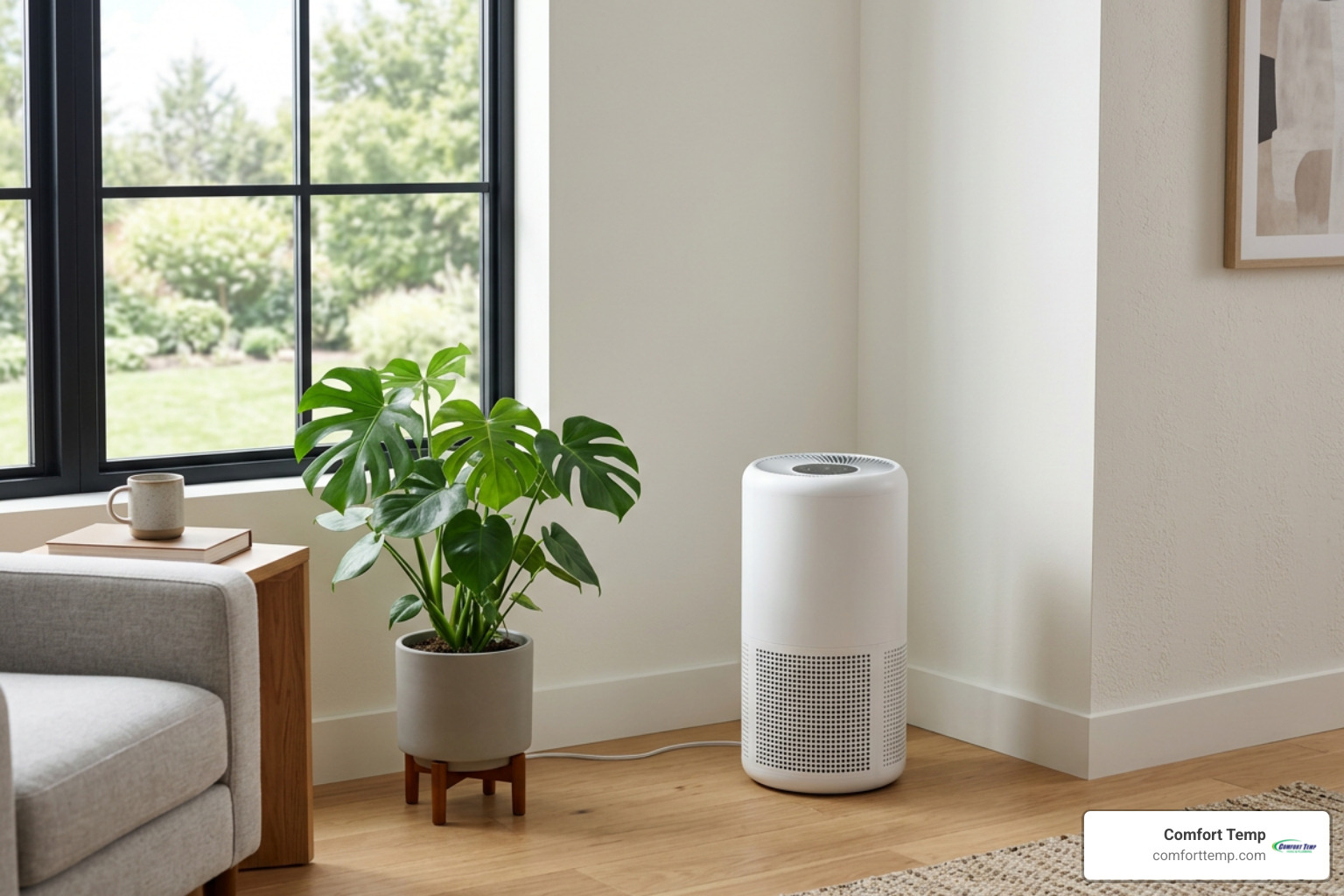
Proper placement ensures your air purifier draws air effectively from across the room:
- Maintain Clearance: Leave at least 3 feet of open space around air intakes and outlets. Avoid tucking units behind curtains or tight furniture corners.
- Target Pollution Sources: Place units near primary pollutant zones, such as bedrooms (for pet dander and dust mites) or near kitchens (to tackle cooking emissions).
- Elevate Small Units: Compact tabletop units clean air more effectively when placed on a nightstand or side table rather than on the floor.
Routine maintenance is equally critical. Most mechanical HEPA filters last between 6 and 12 months, while activated carbon layers typically require replacement every 3 to 6 months depending on local pollution levels. Cleaning or vacuuming washable mesh pre-filters every few weeks prevents large dust mats from restricting airflow, directly extending the lifespan of your expensive HEPA filter.
Evaluating Energy Consumption and Replacement Expenses
Because air purifiers work best when running continuously 24 hours a day, energy efficiency matters. Energy Star certified purifiers are roughly 40 percent more energy-efficient than standard models, helping keep continuous electrical usage manageable.
Most standard room air purifiers consume between 15 and 70 watts depending on the fan speed setting. Running a 50-watt unit continuously adds only a modest amount to your monthly utility bill, but replacing $80 to $150 filter packs twice a year adds up quickly. Always research replacement filter availability and prices before committing to a specific brand or model.
Comparing Standalone Air Purifiers to Ventilation and Whole-Home Solutions
A portable air purifier indoor unit operates much like a space heater: it provides concentrated, localized treatment for a single room. While room units work wonders for bedrooms, they do not resolve air quality issues across an entire home on their own.
To establish a holistic air quality strategy for your living space, explore our guide on Improving Indoor Air Quality: Your Guide to a Healthier Home.
Air Purification vs. Surface Cleaning and Ventilation
Air purifiers excel at capturing fine particulate matter (PM2.5) suspended in the air. However, they cannot remove heavy dust particles, pet hair, or pollen that have already settled onto carpets, drapes, and countertops.
To manage settled debris and overall indoor pollution, combine air purification with these primary indoor air quality strategies:
- Source Control: Restrict indoor smoking, minimize unvented candle burning, and keep pets out of bedrooms.
- HEPA Vacuuming & Damp Dusting: Remove heavy settled allergens from flooring and soft surfaces before they can be kicked back up into the air.
- Fresh Air Ventilation: Use exhaust fans in bathrooms and kitchens to vent moisture and combustion gases directly outside.
Integrating Portable Units with Central HVAC Filtration
For homeowners with central heating and air conditioning, integrating whole-house air filtration directly into your HVAC ductwork offers comprehensive, whole-home coverage. High-efficiency MERV 13 or media filtration installed at your air handler filters all the air circulating through your home whenever the system fan runs.
For homes in North Central Florida—including residential properties in Gainesville and across Alachua County—integrating high-efficiency media filtration into your central HVAC system ensures every room receives clean air without requiring a standalone tower unit in every hallway.
If you are exploring whole-house solutions, check out our comprehensive Whole House HVAC Air Purifier Guide 2026. For homeowners evaluating advanced whole-home options, products like the Dyson Purifier Cool TP07 offer room-specific filtration, while larger spaces may benefit from units like the Dyson Purifier Big+Quiet Formaldehyde in Prussian blue/gold | Dyson , AirDoctor 4000 Air Purifier | Advanced Filtration for Large Rooms , or compact room designs like the Blue Pure 311i Max | Air purifier for up to 387 ft² | Blueair – Blueair Global and Blue Pure 311i+ Max | HEPASilent Smart Purifier | Blueair. .
Frequently Asked Questions About Indoor Air Purification
Can an indoor air purifier help with severe allergies and asthma?
Yes. By capturing airborne allergens such as pet dander, pollen, mold spores, and dust mite debris, a True HEPA air purifier reduces the overall allergen load in your home. This can significantly reduce allergy flares and nighttime respiratory symptoms.
How often should air purifier filters be replaced?
Pleated mechanical HEPA filters typically last between 6 and 12 months. Activated carbon filters generally need replacement every 3 to 6 months because carbon pores saturate over time. Washable mesh pre-filters should be cleaned every 2 to 4 weeks.
Is water purification related to indoor air purification technology?
No. Water purification and air purification are entirely separate technologies that operate on distinct scientific principles. Water purification targets liquid media using reverse osmosis, specialized liquid filtration, or chemical disinfection to remove waterborne contaminants from drinking water. In contrast, indoor air purification utilizes mechanical fibrous filters (such as True HEPA) and gas-adsorption media (such as activated carbon) to capture airborne particles and gaseous pollutants from indoor air. Though Comfort Temp provides both plumbing and HVAC services, water purification and air purification rely on completely different systems and should not be conflated.
Conclusion

Investing in an air purifier indoor system is one of the most effective steps you can take to protect your family from airborne dust, pet dander, smoke, and outdoor seasonal allergens. By focusing on proven mechanical True HEPA filters, dense activated carbon media, and properly matched CADR ratings, you can create a noticeably cleaner, fresher indoor living space.
While room units handle localized filtration in primary living areas and bedrooms, achieving true home-wide air quality often requires a balanced approach that includes source control, proper ventilation, and integrated central HVAC air treatment.
Our team at Comfort Temp provides expert indoor air quality evaluations and HVAC services for residential homes in Gainesville and commercial properties throughout Jacksonville and Orlando. Whether you need assistance selecting room purifiers or want to install high-efficiency central air filtration, we are here to help you breathe easier.
Ready to upgrade your home’s air quality? Explore Whole-Home Air Quality Products with Comfort Temp today or call our experienced technicians to schedule a consultation!