Choose an AC Unit That Fits Your Home, Climate, and Budget
The best AC unit for your house is one that is properly sized through a professional Manual J load calculation, matches your home’s duct setup, and delivers efficient cooling in North Central Florida’s heat and humidity. For most homes, the choice comes down to a central split system, a ductless mini-split, or a heat pump that provides both cooling and heating.
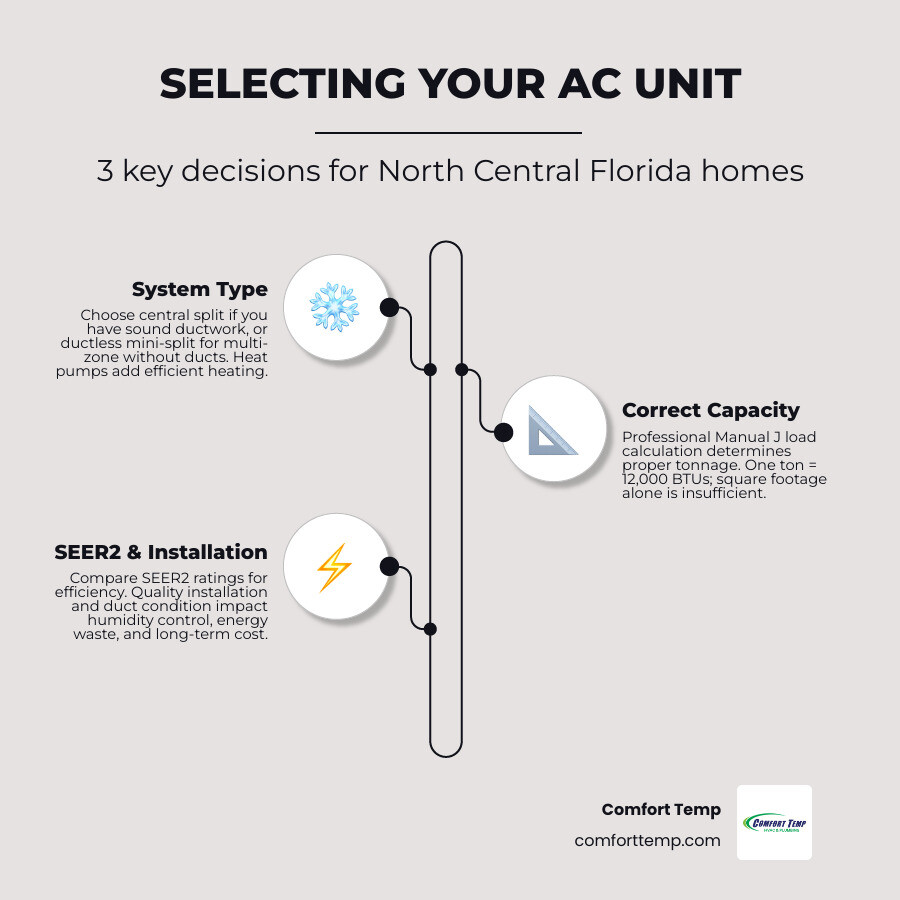
Before you compare brands or prices, focus on these three decisions:
- Choose the system type based on whether your home has sound, well-designed ductwork.
- Get the capacity right. One ton equals 12,000 BTUs of cooling, but square footage alone is not enough to select a unit.
- Compare SEER2 ratings and installation quality. Efficient equipment and properly sized ducts can reduce waste, improve humidity control, and help avoid high utility bills.
A new system is a major purchase, and the lowest equipment price is rarely the full story. Duct condition, refrigerant type, efficiency level, warranty, electrical work, and contractor workmanship all affect comfort and long-term cost. Comfort Temp provides residential HVAC services in Gainesville and can help homeowners make a clear, informed comparison.
Ac unit for house vocabulary:
Choosing the Right AC Unit for Your House: Types and Systems
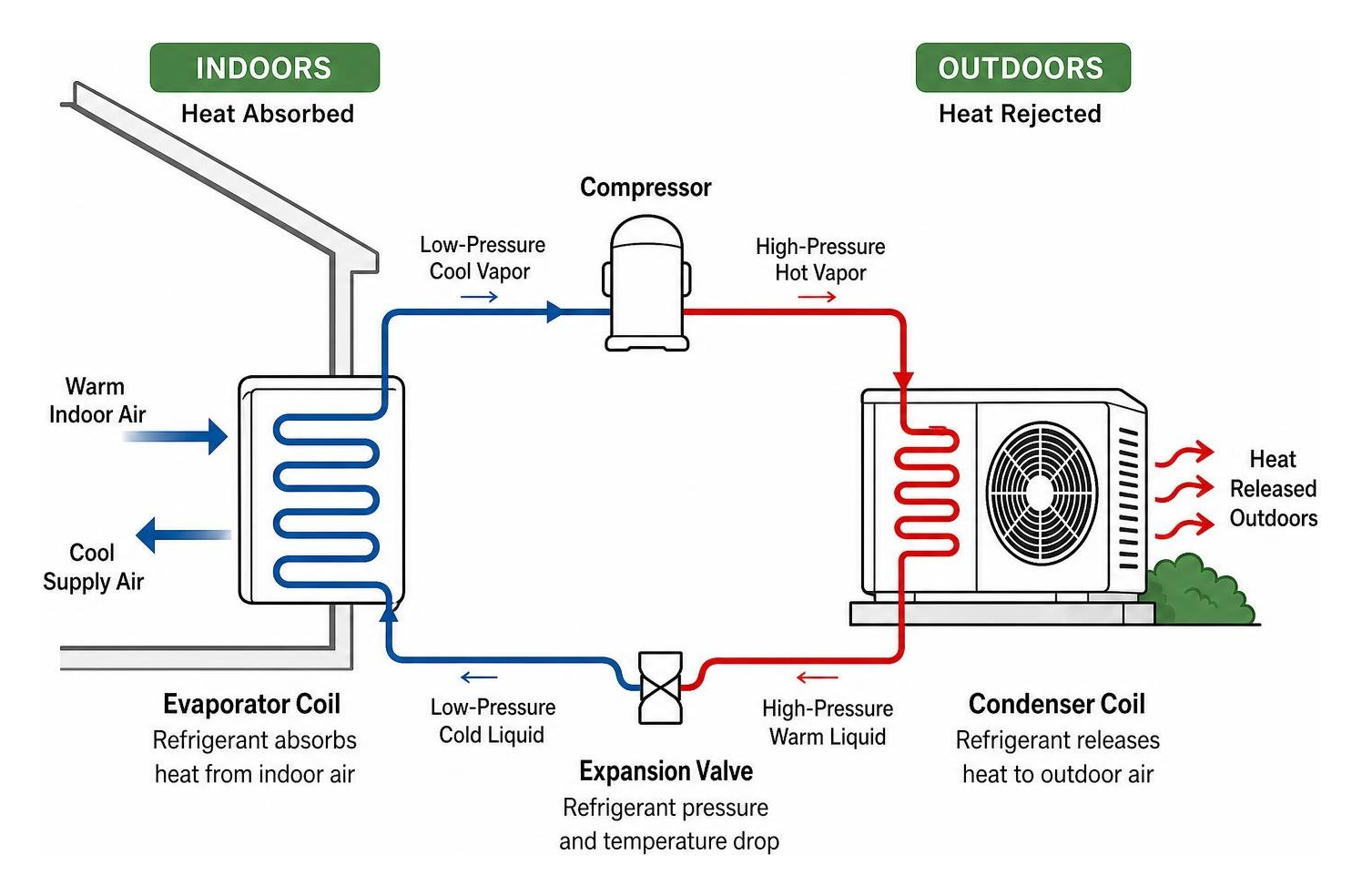
Finding the right system begins with understanding how central cooling systems work within your living space. Air conditioning is not simply about blowing cold air into a room; it is an active refrigeration cycle designed to remove heat and humidity from indoor air and release it outdoors.
In a standard split setup, an indoor evaporator coil absorbs thermal energy while an outdoor condenser unit expels that heat. The cooled air then circulates across living spaces via a dedicated network of supply and return channels. For homeowners who want a complete overview of the process, exploring how do air conditioners work and keep their cool helps clarify how temperature and moisture balance together.
Central Air Conditioning vs. Heat Pumps
A standard central cooling unit works strictly to cool your living spaces, typically pairing with an auxiliary air handler or separate heat source during colder weather. In contrast, a heat pump utilizes a specialized reversing valve that allows the refrigeration cycle to operate in reverse. During summer, it pulls heat from inside your home and dumps it outside. During winter, it extracts ambient heat from the outside air and delivers it indoors.
Because heat pumps move thermal energy rather than generating it from scratch, they operate with exceptional electrical efficiency. In regions with moderate winters, such as North Central Florida, heat pumps represent an all-in-one heating and cooling solution. When looking at long-term energy use, modern heat pump systems often offer significant operational savings compared to traditional electric resistance strip heating.
| System Type | Primary Distribution | Best Suited For | Cooling & Heating Capability | Efficiency Range |
|---|---|---|---|---|
| Central Split AC | Ducted network | Homes with existing, sound ductwork | Dedicated cooling (requires separate heat package) | 14.3 to 24+ SEER2 |
| Heat Pump System | Ducted network | Moderate climates needing year-round comfort | Reversible cooling and efficient heating | 15.0 to 22+ SEER2 |
| Ductless Mini-Split | Individual air handlers | Additions, retrofits, homes without ducts | Multi-zone independent heating and cooling | 16.0 to 28+ SEER2 |
Ductless Mini-Split Systems
If your home lacks existing ductwork, or if you are expanding your living space with a new room addition, ducted installations can be costly or structurally impractical. Ductless mini-split systems solve this challenge by pairing an exterior condenser with one or more compact indoor air handling units mounted directly to the wall or ceiling.
These configurations offer customized multi-zone climate management. Each indoor head operates independently, allowing you to cool occupied rooms without conditioning unused spaces. Modern ductless models, such as the LIVO 9,000 BTU 3/4 Ton 17 SEER Smart Home Wi-Fi Ductless Mini Split Air Conditioner with Heat Pump – 230/208V, deliver quiet, variable-speed operation and smart integration without requiring duct alterations.
Sizing and Efficiency: Matching Capacity to Your Home
Selecting an air conditioner is not a situation where bigger is always better. An improperly sized unit leads to ongoing comfort and reliability issues.
Sizing an AC Unit for Your House with Manual J Calculations
Relying solely on simple square footage rules of thumb often results in purchasing an oversized or undersized unit. Discovering why size matters when choosing your AC unit is an essential step before signing any installation contract. System capacity is measured in British Thermal Units (BTUs) and tons, where 1 ton of cooling capacity equals 12,000 BTUs per hour. For context, a standard midsize residential split system like a 4 Ton 14 SEER R-410A Residential Split System Central Air Conditioning System delivers approximately 48,000 BTUs of total cooling output.
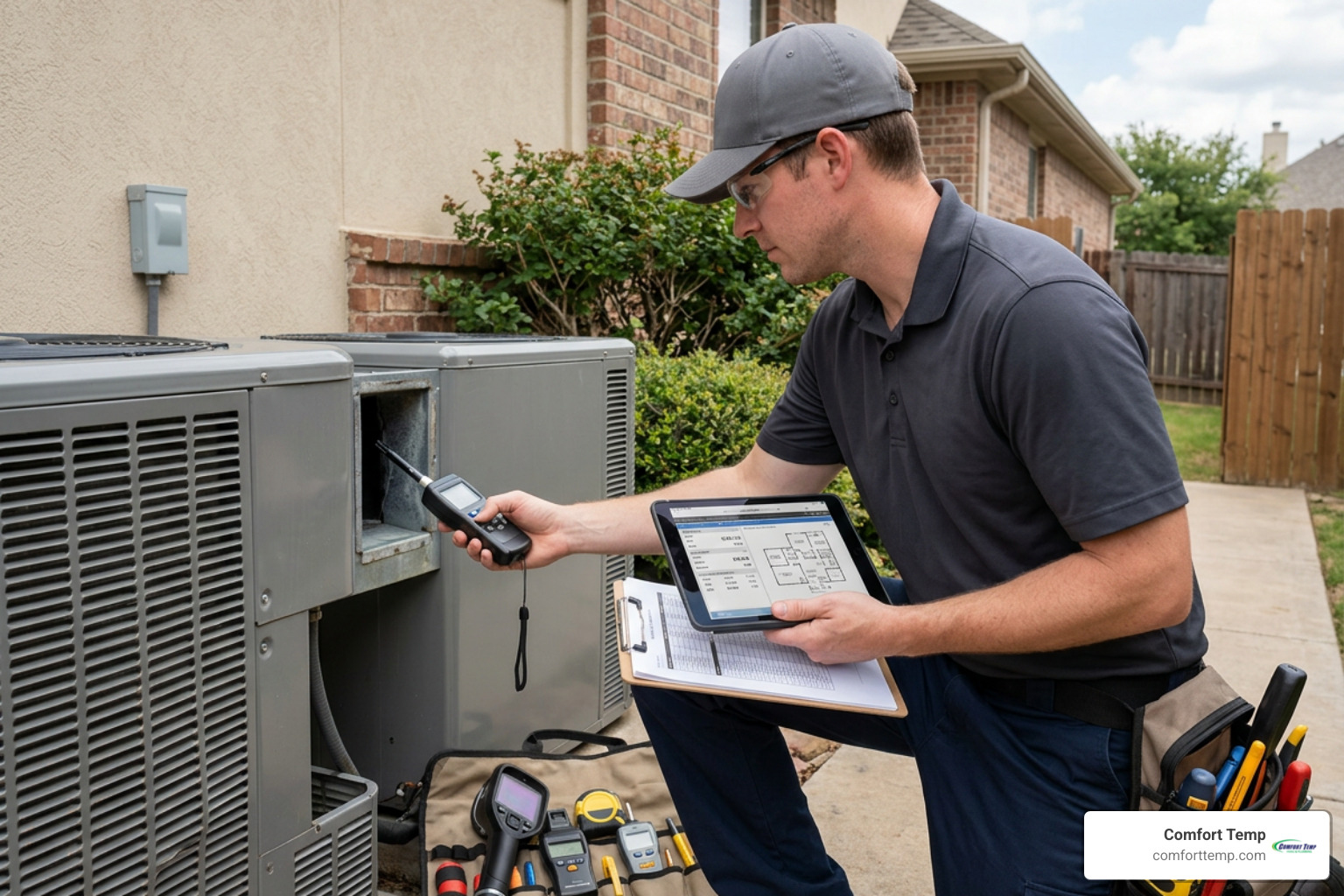
A professional technician conducts an industry-standard Manual J load calculation to evaluate:
- Total square footage and ceiling heights
- Window orientation, framing, and solar heat gain coefficients
- Quality and depth of attic and wall insulation
- Natural air infiltration and envelope tightness
- Local climate metrics and historical temperature extremes
When an air conditioner is oversized, it cools the home too quickly and shuts off before it can pull moisture out of the air. This short-cycling leaves indoor air feeling damp and clammy, strains the compressor, and increases energy consumption. Conversely, an undersized unit runs continuously on hot afternoons without ever reaching your thermostat setpoint.
Understanding SEER2 Ratings and Inverter Technology
Energy efficiency is measured using the Seasonal Energy Efficiency Ratio 2 (SEER2), which reflects total cooling output divided by total electrical energy input across a typical cooling season under updated testing pressures. As of national regulatory updates, the baseline efficiency for new residential split systems sits around 14.3 to 15.0 SEER2 depending on your geographic region. ENERGY STAR® certified equipment begins at 15.2 SEER2, with top-tier configurations exceeding 20+ SEER2.
Modern variable-capacity units employ inverter-driven compressors that adjust their output dynamically. Instead of operating purely at 100% capacity or turning off completely, an inverter modulates motor speed to meet exact cooling demands. For example, high-efficiency options include:
- Compact setups like the ACIQ 1.5 Ton 18.5 SEER2 High Efficiency Air Conditioning Split System – R454B Inverter – Multi-Positional – ACIQ-18-AC-B / ACIQ-18-AHD
- Mid-capacity solutions such as the ACIQ 2 Ton 17 SEER2 High Efficiency Air Conditioning Split System – R454B Inverter – Multi-Positional – ACIQ-24-AC-B / ACIQ-24-AHD
- Larger variable-capacity models like the ACIQ 2.5 Ton 17 SEER2 High Efficiency Air Conditioning Split System – R454B Inverter – Multi-Positional – ACIQ-30-AC-B / ACIQ-30-AHD, which can modulate between 12,000 and 30,000 BTUs across ambient outdoor conditions from 5°F to 122°F.
By running steadily at lower speeds, inverter equipment prevents harsh temperature swings, maintains lower indoor humidity, and can reduce monthly cooling bills compared to older single-stage systems. If you are comparing your options across different capacity brackets, reviewing The Ultimate Guide to Buy a New Air Conditioner Unit provides helpful baseline pointers.
Modern Refrigerants and Equipment Specifications
Air conditioning manufacturing standards continue to evolve to meet lower Global Warming Potential (GWP) mandates and higher mechanical durability requirements.

The Transition to Low-GWP Refrigerants (R-454B and R-32)
Residential cooling systems have transitioned away from older refrigerants like R-22 and legacy R-410A in favor of modern, climate-conscious compounds. Newer residential systems utilize R-454B and R-32, which substantially cut down global warming impact while maintaining high thermal heat transfer efficiency.
Choosing an air conditioner built around these modern refrigerants ensures your home remains compliant with current manufacturing standards, avoids future refrigerant supply constraints, and ensures straightforward servicing over the next decade.
Compressors, Sound Levels, and Two-Stage Performance
Compressor hardware dictates how quiet and durable your system will be. Multi-stage and two-stage compressors run on a lower, quieter capacity level during mild weather and step up to full output only during peak heatwaves. High-end equipment, such as the two-stage scroll design outlined in the ML17KC2 technical specifications, operates at sound levels as low as 73 to 75 dBA while utilizing advanced, corrosion-resistant coil designs.
Surveys indicate that quiet mechanical operation is one of the strongest indicators of overall homeowner satisfaction. Advanced coil materials and sealed compressor compartments reduce ambient operating noise, making outdoor living areas far more pleasant while protecting against environmental coil degradation.
Costs, Rebates, and Professional Installation
The overall cost of installing a new home cooling system depends on equipment capacity, ductwork condition, and required electrical modifications.
Factors Influencing the Cost of an AC Unit for Your House
When budgeting for a system upgrade, consulting an AC Installation Cost Guide helps break down equipment tiers versus physical labor requirements. The total Price for New AC Unit Installed typically encompasses:
- Equipment tonnage, compressor stage type, and SEER2 efficiency level
- Duct inspection, sealing, or necessary air distribution resizing
- High-voltage electrical disconnect upgrades and condensate drainage plumbing
- Local municipal mechanical permitting and code-compliance inspections
Understanding Residential AC Installation: How to Chill Out Without Burning Cash will help you take advantage of available financial incentives. Many high-efficiency heat pumps and air conditioners qualify for federal energy tax credits, local utility rebates, and manufacturer incentives that offset initial purchase expenses.
Evaluating HVAC Quotes and Contractor Credentials
Even the most advanced equipment will fail prematurely if installed poorly. Survey data shows that roughly 19% of central systems installed between 2009 and 2024 encountered mechanical issues, with 24% of those failing to cool properly or breaking down entirely due to installation and maintenance oversights. Furthermore, leaky or undersized ductwork can waste 20% to 30% of your system’s energy output.
When booking a professional AC Unit Installation, always verify your contractor’s credentials. Be sure to ask the following questions before signing a contract:
- Do you perform an on-site Manual J cooling load calculation before quoting equipment capacity?
- Are your installation technicians certified by organizations like NATE or HVAC Excellence?
- Will you inspect my existing ductwork for static pressure drops and air leaks?
- Does the written estimate detail all equipment model numbers, line sets, electrical work, and permit fees?
- What warranties apply to the compressor, functional components, and labor craftsmanship?
Essential Maintenance for Longevity and Performance
Routine maintenance preserves energy efficiency, prevents sudden breakdowns during peak heat, and protects your manufacturer warranty. Simple homeowner habits combined with professional seasonal inspections keep cooling systems operating smoothly.
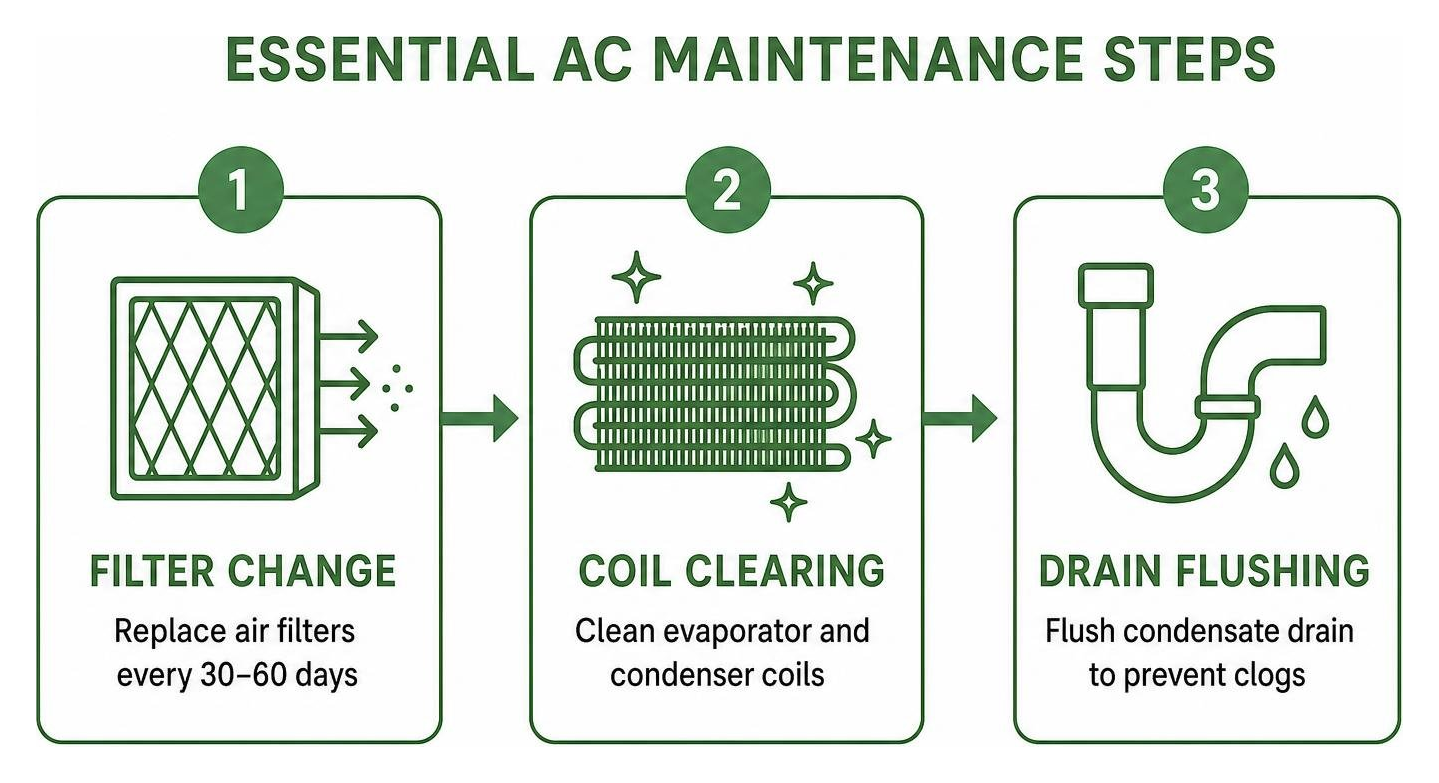
- Replace Air Filters Regularly: Check standard 1-inch filters every 30 to 60 days, or media filters every 6 to 12 months. Restricted airflow strains the blower motor and can cause the indoor coil to freeze.
- Clear Outdoor Clearances: Maintain at least 2 to 3 feet of open space around your exterior condenser. Trim back shrubs, tall grass, and hanging vines to ensure unimpeded airflow.
- Inspect the Condensate Drain: Flush the indoor drain line periodically to prevent algae buildup, drain line clogs, and water safety switch trips.
- Schedule Annual Professional Inspections: Have a licensed technician clean the evaporator and condenser coils, check electrical contactors, test system pressures, and verify proper airflow calibration.
If your system struggles to keep up, makes unusual sounds, or causes spikes in your utility bill, call Comfort Temp for skilled diagnostic service and repair support.
Frequently Asked Questions About Residential AC Systems
How long does a modern home AC unit typically last?
A well-maintained central split system or heat pump typically lasts between 10 and 15 years. In warm, humid environments where systems run frequently, annual preventive tune-ups, routine filter changes, and proper coil care are vital for reaching the upper end of that range.
Is a heat pump better than a standard central AC?
For homes in moderate climates, a heat pump is often an outstanding choice. Because heat pumps deliver both air conditioning in the summer and reverse-cycle heating in the winter, they eliminate the need for separate gas or electric furnaces while providing exceptional seasonal efficiency.
How much can a high SEER2 unit save on monthly cooling bills?
Upgrading from an older 10 to 12 SEER system to a modern 16+ SEER2 inverter system can reduce electrical consumption by 20% to 40%. Additionally, setting your programmable thermostat efficiently can lower cooling costs by about 10%, with roughly 3% saved for every degree you raise the temperature setting during hot weather.
Conclusion
Choosing the ideal cooling setup for your home comes down to matching the right equipment type, sizing the capacity accurately through a Manual J calculation, and ensuring high-quality installation. Upgrading to a modern, high-SEER2 system with low-GWP refrigerant provides lower utility bills, consistent indoor humidity management, and reliable comfort throughout the hottest months.
Homeowners in Gainesville seeking dependable residential cooling can rely on our team for complete system evaluation, sizing, and service. Contact Comfort Temp today to explore our Residential HVAC Installation services and ensure your home stays cool, efficient, and comfortable all year long.