Start With the Filter, Then Check Airflow and Power
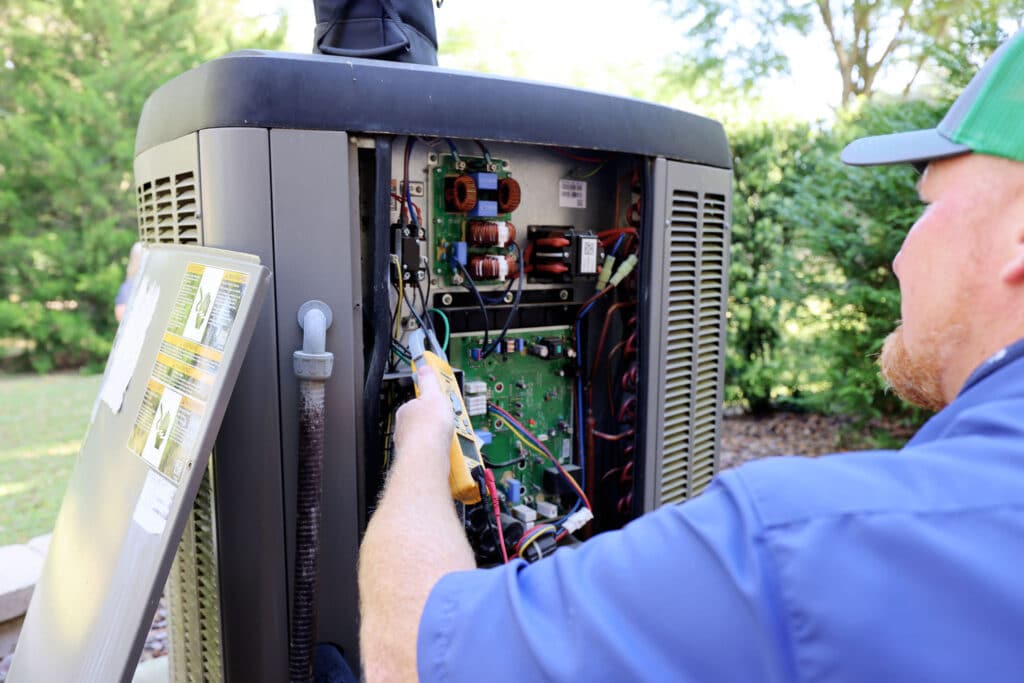
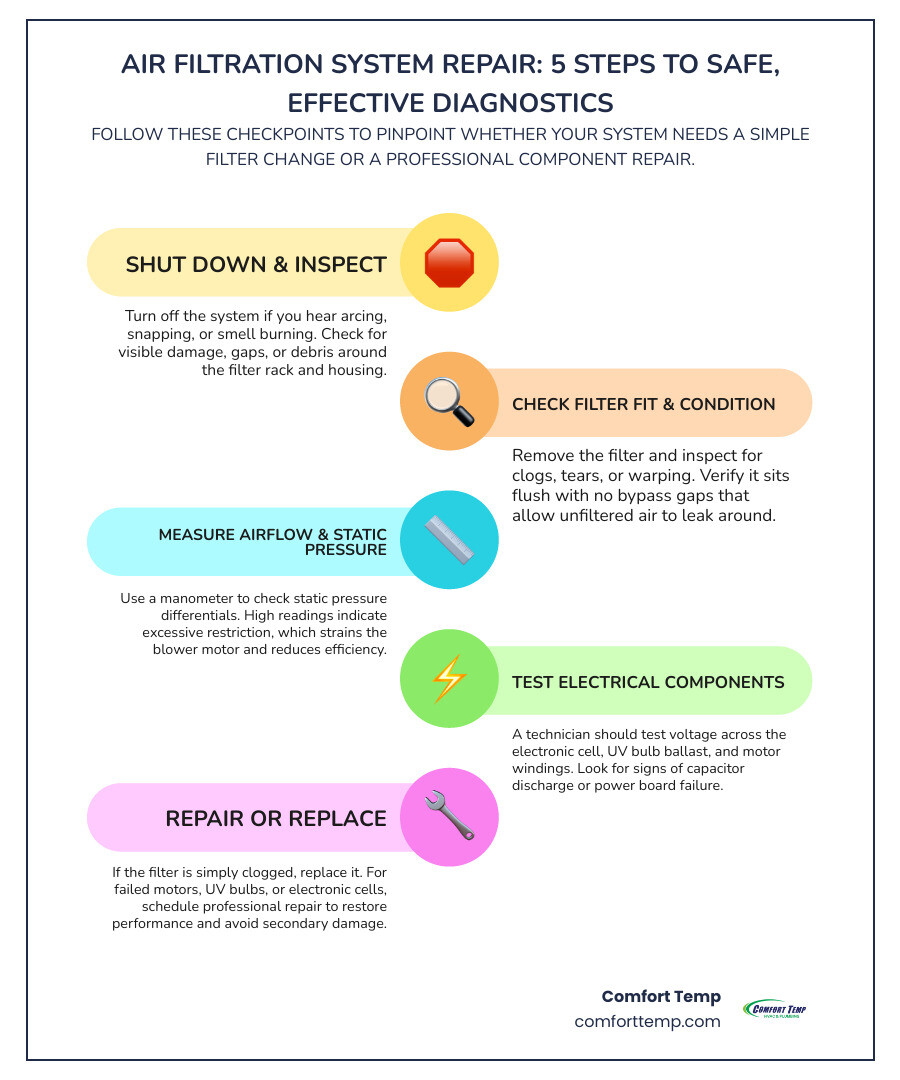
Air filtration system repair starts with a safe inspection, not a parts swap. If indoor dust returns quickly, airflow from vents drops, odors linger, or the unit makes buzzing, snapping, or grinding sounds, turn the system off if there is arcing or a burning smell. Then have a qualified HVAC technician check the filter fit, airflow restriction, electrical components, and any gaps that allow unfiltered air around the media.
A clogged filter may need simple replacement. But recurring problems can point to a failed fan motor, UV bulb or ballast, electronic air-cleaner cell, power supply, or leaking return ductwork. Ignoring the issue can raise energy use and put extra strain on the HVAC blower.
This guide explains what the warning signs mean, when repair makes sense, and what professional service should include. It covers air purification, which cleans airborne particles and pollutants, not water purification, which treats drinking water.
Air filtration system repair word list:
Warning Signs That Require Air Filtration System Repair
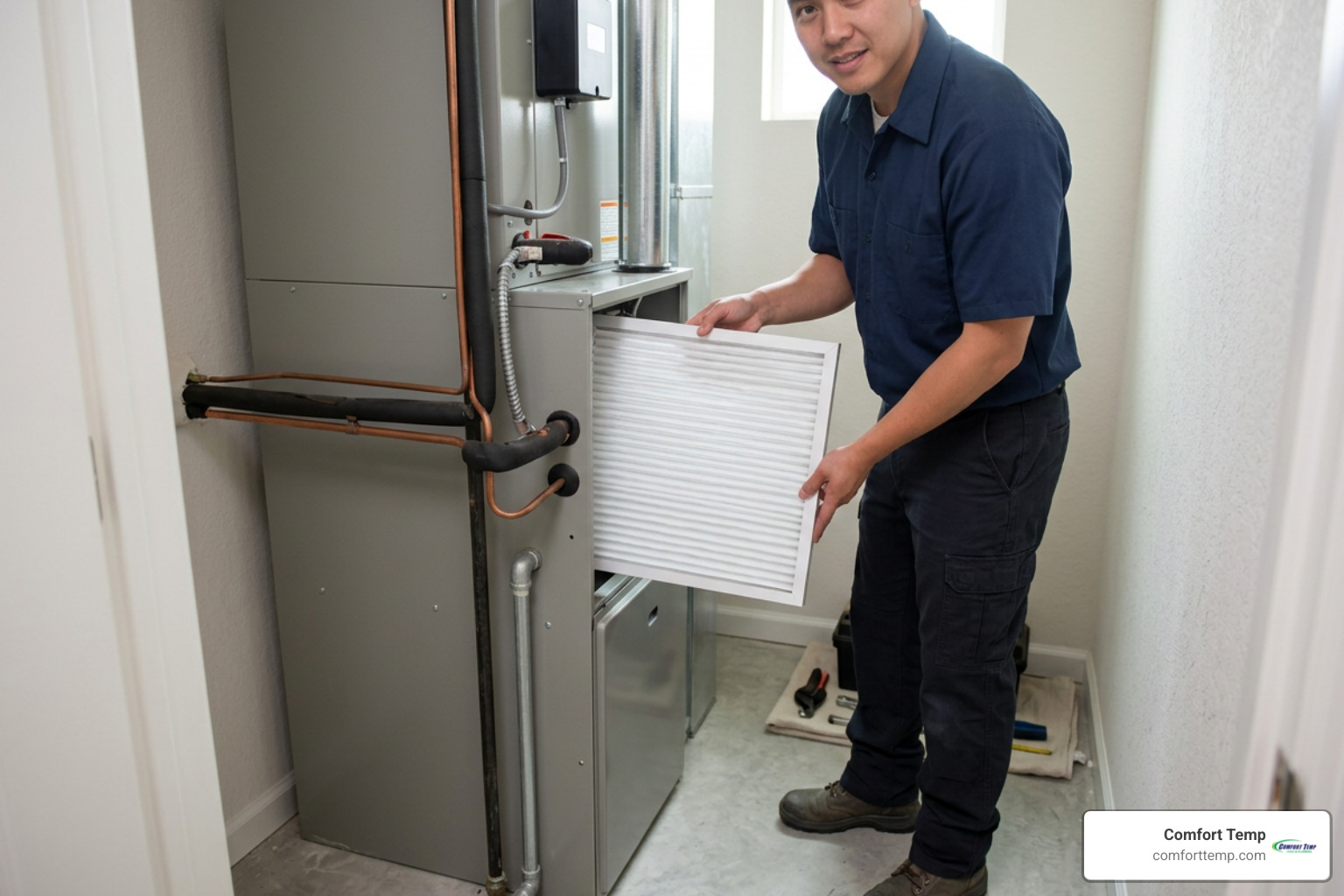
Air purifiers and whole-house filtration setups are designed to run quietly in the background, keeping living and work spaces free of airborne debris. However, when mechanical or electrical components fail, the system provides several noticeable warning signs. Identifying these early indicators prevents minor component wear from escalating into severe equipment failure or poor indoor air quality.
When an air cleaner fails to capture contaminants, microscopic irritants bypass the media and circulate through your air ducts. If family members or building occupants experience sudden indoor allergy spikes, persistent sinus irritation, morning congestion, or disrupted sleep patterns, the filtration unit may no longer be capturing fine particulates, pollen, or pet dander. For a deeper look at managing airborne irritants, see our advice on improving indoor air quality.
Dust Bypass and Symptoms Demanding Air Filtration System Repair
One of the most telling signs of a broken air cleaner is rapid dust accumulation on surfaces shortly after cleaning. If a fresh layer of fine gray or beige dust settles across furniture within hours, particulate bypass is likely occurring.
Air takes the path of least resistance. When a media filter or electronic cell is compromised, unfiltered air slips around the perimeter rather than passing through the dense filtration fibers. Common causes include:
- Warped Filter Frames: Flimsy cardboard or low-grade plastic frames can buckle under high static pressure, breaking the perimeter seal.
- Degraded Cabinet Gaskets: Foam rubber seals inside the filter housing dry out, crack, or tear over time, leaving substantial air gaps.
- Improperly Sized Media: Installing a filter that is even a quarter-inch too small leaves open channels along the top or sides of the rack.
- Dust Puffs from Vents: Visible puffs of dust exiting supply registers when the blower motor kicks on indicate that trapped dust is breaking free and bypassing the cabinet entirely.
Adhering to proven ventilation unit maintenance guidelines ensures filter frames remain rigid and cabinets remain airtight.
Unusual System Sounds and Electrical Arcing
Modern air filtration units should operate with little more than a gentle hum. Auditory anomalies indicate physical wear or electrical breakdown:
- Loud Snapping or Popping: Electronic air cleaners (EACs) naturally produce an occasional snap when incinerating large particles. However, rapid, continuous snapping points to warped collector plates, broken ionizing wires, or an insulating layer of caked-on dust that causes high-voltage electrostatic arcing.
- High-Pitched Whistling: Whistling or howling sounds indicate severe static pressure imbalances. The blower is pulling air through tiny gaps in the cabinet because the main filter media is heavily impacted.
- Grinding or Squealing: Independent fan filter units or motorized bypass purifiers feature internal motors. High-pitched squealing or metal-on-metal grinding points to failing internal bearings, unaligned blower wheels, or motor failure.
- Excessive Vibration: Rhythmic rattling or vibration indicates that the blower wheel is unbalanced or loose on its motor shaft, requiring immediate mechanical alignment.
Root Causes of Air Filtration Failure Across Different Climates
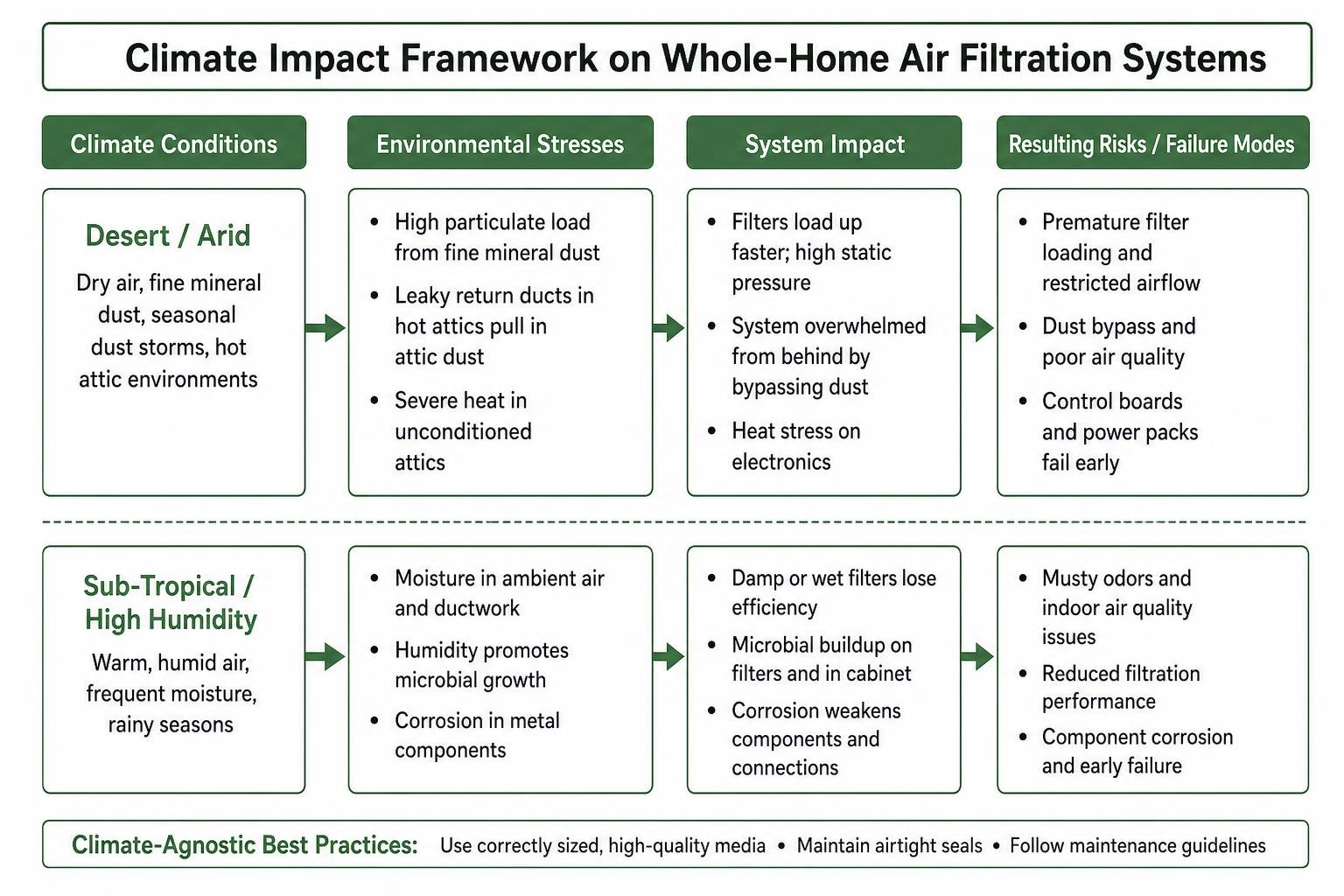
Air filtration systems operate under varying environmental stresses depending on regional climate conditions. A system in an arid region encounters entirely different failure modes than one operating in sub-tropical moisture.
Desert Dust and Heavy Particulate Overload
In dry, arid regions, fine mineral dust and seasonal dust storms place extreme particulate loads on filtration hardware. High-MERV pleated media filters can become completely impacted with fine dust in a fraction of the manufacturer’s recommended timeframe. When media becomes caked with fine silt, system static pressure skyrockets.
Furthermore, leaky return ductwork located in hot attic spaces creates a vacuum that pulls fine attic dust directly into the system, overwhelming the filter housing from behind. The severe thermal stress of unconditioned attics can also cook sensitive electronic control boards and power packs on whole-home air cleaners, leading to premature component failure.
High Humidity and Biological Growth Risks
In humid environments like Florida—from Gainesville down through central communities like Micanopy and Archer—moisture introduces biological risks to air filtration hardware. If you are noticing muggy air alongside dirty filters, learning how to check indoor humidity is an important diagnostic step.
When relative indoor humidity remains high, moisture saturates the dense fibers of pleated filters. Damp filter media acts as a breeding ground for mold spores, mildew, and bacterial colonies. As air passes through saturated media, musty odors are pushed throughout the building.
Additionally, excessive moisture causes dust particles to adhere to electronic collector plates in thick, sticky sheets. This insulating layer shorts out ionizing wires, reduces particle charging capabilities, and risks biological slime accumulation on nearby evaporator coils.
Identifying Component Breakdown: Simple Maintenance vs. Complex Repairs
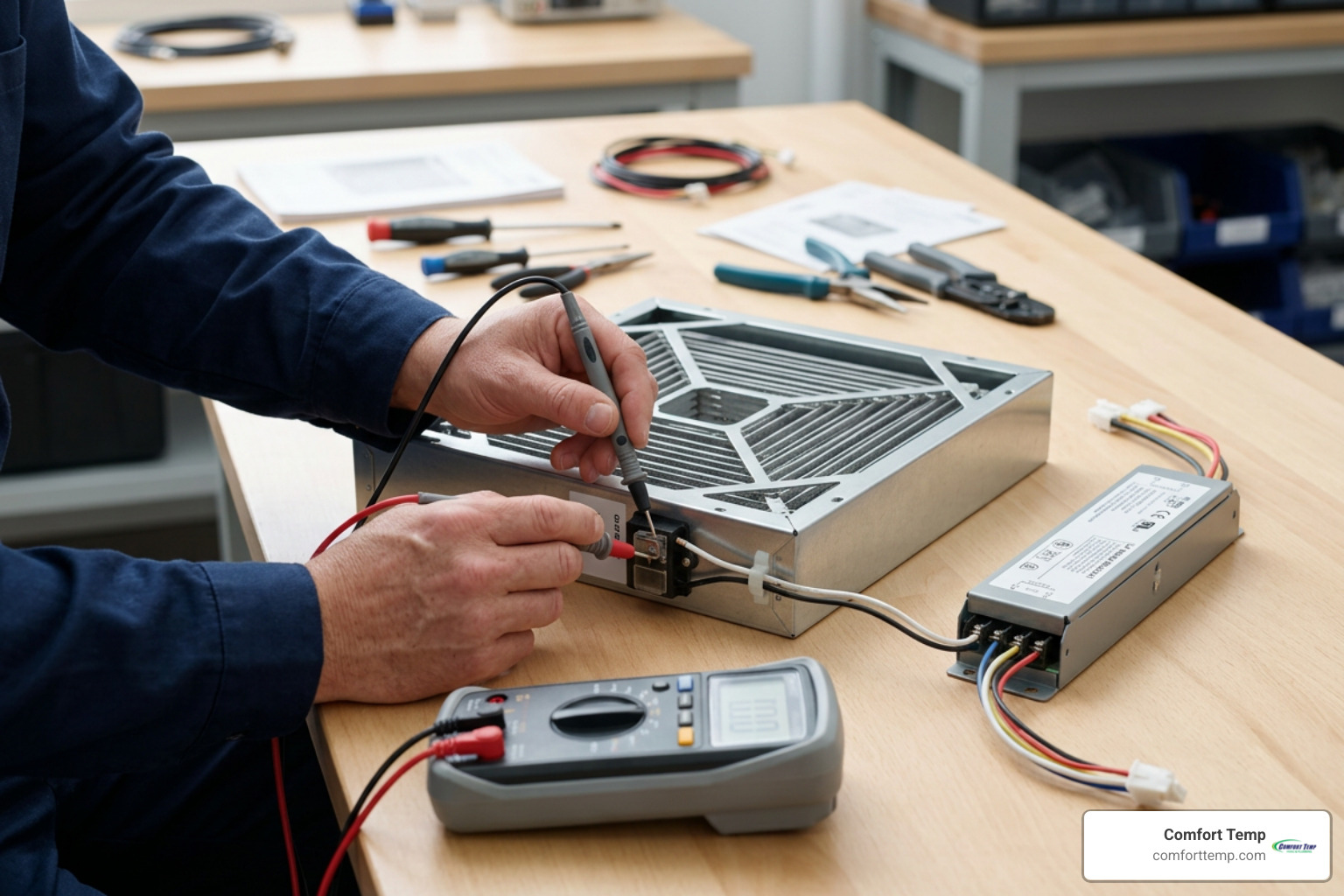
Understanding whether your filtration equipment needs simple routine maintenance or a dedicated component repair saves time and prevents unnecessary equipment replacement. While swapping a dirty disposable filter is straightforward, complex electrical and mechanical failures require systematic diagnostic testing. For broader system troubleshooting, check the ultimate guide to common HVAC issues.
Air Filtration System Repair for Electronic Cells, Motors, and UV Bulbs
Advanced residential and commercial air purifiers use specialized components that wear down or fail over time:
- Electronic Air Cleaner (EAC) Cells: These systems use high-voltage ionizing wires (typically 4,000 to 8,000 volts DC) to give incoming particles a positive electrical charge, which are then captured on grounded negative collector plates. Over time, ionizing wires snap or corrode, and ceramic insulators crack. If deep cleaning does not restore performance or the status lights show a fault, the internal power board or individual cell wires require replacement.
- Germicidal UV-C Lamps and Ballasts: UV air purifier bulbs lose their germicidal effectiveness after 12 to 24 months of continuous operation, even if they still appear to be glowing blue. The UV-C sanitizing wavelength degrades, leaving the lamp unable to neutralize viruses, bacteria, or mold spores. Additionally, the electronic power ballast that drives the lamp can overheat and burn out, requiring electrical replacement.
- Dedicated Fan Motors: Integrated HEPA bypass systems and cleanroom fan filter units rely on independent fan motors. As outlined in standard industrial testing and maintenance procedures, proper clearance between the venturi ring and blower wheel (often precisely 0.06 inches) must be maintained to avoid motor overheating and bearing damage. Ventilation fan motors typically have a service life of 8 to 10 years, though modern standard motors may experience bearing wear in 4 to 5 years under heavy run cycles.
Whole-Home HVAC Systems vs. Standalone Air Purifiers
Understanding the structural differences between portable standalone air purifiers and whole-building integrated systems helps determine repair feasibility and cost-effectiveness. Exploring a whole house HVAC air purifier setup illustrates how duct-mounted systems treat the entire building envelope compared to single-room portable units.
| Filtration System Type | Typical Repair Cost Range | Most Common Failure Points | Repair vs. Replace Threshold |
|---|---|---|---|
| Standalone Portable HEPA Unit | $50 – $200 | Fan motor bearings, control knob/PCB, loose power cord | Replace if repair estimate exceeds 50% of the unit’s retail price (units under $150). |
| Portable Ozone / Ionizer Unit | $39.99 – $319.99 | Ceramic ozone plates, high-voltage transformer, fan | Repair if replacement ozone plates ($25–$50) or fan swaps restore factory output below 0.05 ppm. |
| Duct-Mounted Media Cleaner | $75 – $250 | Cabinet door latch, internal alignment tracks, frame seals | Repair cabinet seals and racks; housing rarely requires complete replacement. |
| Whole-Home Electronic Cleaner | $145 – $450 | Solid-state power supply board, ionizing wires, contact pins | Repair if replacing a single power board or cell components resolves arcing. |
| HVAC Germicidal UV System | $80 – $300 | Burnt-out UV-C lamp, electronic ballast, door interlock switch | Repair by replacing the lamp on a 1–2 year cycle and swapping faulty ballasts. |
Standalone ozone generators require careful calibration. The Food and Drug Administration (FDA) and OSHA maintain strict safety thresholds, limiting indoor ozone output to below 0.05 parts per million (ppm). If an ozone plate degrades or its transformer malfunctions, ozone production can become erratic, requiring professional service or immediate retirement.
The Hidden Costs of Delayed Air Purifier and Filtration Repairs
Postponing air filtration repairs leads to secondary mechanical problems that far exceed the cost of the initial repair. When air cleaner components fail, the primary cooling and heating equipment shoulders the damage, which can lead to situations requiring emergency HVAC repair.
Energy Consumption and Blower Motor Strain
When an air filter becomes severely impacted or an electronic cleaner’s airflow baffles get choked with debris, the HVAC blower motor must overcome extreme static resistance.
A clogged or broken filter system can cause the blower motor to work twice as hard. This restricted airflow increases electrical draw, causing monthly utility bills to rise.
More critically, the indoor blower motor relies on the return airstream to cool its internal windings. When starved of air, the motor experiences severe thermal stress, leading to capacitor failure, bearing seizure, and premature motor burnout. While a professional filter service or simple repair is economical, replacing an entire blower motor costs significantly more.
Indoor Air Degradation and Respiratory Health
Beyond mechanical strain, a malfunctioning air purification system allows fine particulates to recirculate indefinitely. Dust mites, volatile organic compounds (VOCs), pet dander, and biological contaminants build up within sealed interior spaces.
For building occupants with asthma, allergies, or underlying respiratory conditions, this results in increased medical visits, reliance on medications, persistent headaches, and disrupted sleep. Restoring proper filtration eliminates these circulating irritants, creating a healthy, breathable environment.
Preventative Maintenance Protocols to Protect Indoor Air Quality
Consistent preventative maintenance extends the operating lifespan of both your air purification equipment and your central HVAC system. Adhering to the basics of HVAC preventative maintenance keeps your equipment running reliably year-round.
- Quarterly Prefilter Cleaning: For systems equipped with washable foam prefilters, vacuum or hand-wash them with mild detergent every 3 to 6 months. Ensure the prefilter is completely dry before reinstalling it into the cabinet.
- Deep Cleaning Electronic Cells: Remove aluminum EAC collector cells every 1 to 3 months. Spray them down with an approved non-abrasive detergent or specialized cell cleaner, rinse thoroughly with warm water, and allow them to dry for 24 hours before restoring power.
- Scheduled UV-C Lamp Replacement: Replace germicidal lamps every 12 to 24 months. Even if the lamp emits a visible glow, its microscopic microbial neutralizing power drops significantly past this operating threshold.
- Cabinet and Duct Sealing: Inspect the exterior filter access doors and perimeter duct joints annually. Replace damaged neoprene or foam gaskets to ensure zero unconditioned air bypasses the filter rack.
- Professional Airflow and Static Pressure Checks: Have an HVAC technician measure total external static pressure across the air cleaning cabinet during your seasonal tune-up to confirm your system is breathing comfortably.
Frequently Asked Questions About Air Filtration System Repair
How do I know if my electronic air cleaner needs repair or just cleaning?
If your electronic air cleaner is making continuous snapping sounds or the performance indicator light remains off or red, start with a thorough cleaning. Turn off power at the breaker, remove the cells, spray them with a specialized degreasing cleaner, rinse them thoroughly, and allow them to dry completely for at least 24 hours.
If you reinstall the clean, dry cells and the unit continues to arc loudly, trips the circuit breaker, or fails to illuminate the operational status light, an internal component has failed. Common repairs include replacing snapped ionizing wires, broken ceramic insulator bushings, bent collector plates, or a burned-out high-voltage solid-state power supply board.
Why do UV air purifier bulbs need replacement if they still glow?
UV-C germicidal lamps operate using an internal mercury vapor arc that produces ultraviolet light at a specific germicidal wavelength (approximately 253.7 nanometers). Over time, the specialized quartz glass solarizes and the internal phosphors degrade.
After 12 to 24 months of continuous use (roughly 9,000 to 18,000 hours), the lamp’s output of germicidal UV-C energy drops below the level required to disrupt microbial DNA, even though the bulb continues to emit a visible light. To maintain active sterilization against mold spores, bacteria, and viruses, replace the bulb according to the manufacturer’s time schedule rather than waiting for it to burn out completely.
What are the safety risks of attempting DIY repairs on air filtration systems?
Attempting DIY repairs on air filtration equipment carries several notable safety hazards:
- High-Voltage Electrical Shock: Electronic air cleaners step up standard household voltage to between 4,000 and 8,000 volts DC. Internal power supply capacitors can store dangerous electrical charges even after power is disconnected at the wall or breaker.
- Eye and Skin Damage from UV Radiation: Germicidal UV-C light causes photokeratitis (corneal burns) and skin damage within seconds of direct exposure. Technicians use specialized interlock switches and protective shielding to test these units safely.
- Uncontrolled Ozone Generation: Improperly wired or damaged ionization and ozone plates can generate elevated levels of ozone gas, irritating the lungs and throat.
- Static Pressure Imbalances: Installing incorrect replacement motors or improper filter media can choke system airflow, potentially causing evaporator coils to freeze or heat exchangers to crack.
Because of these electrical and mechanical risks, complex diagnostic testing and component repairs should always be handled by trained, licensed professionals.
Conclusion
A properly functioning air filtration system protects both your indoor health and your central heating and cooling equipment. From capturing microscopic seasonal allergens and persistent dust to shielding blower motors and cooling coils from debris accumulation, dedicated filtration is an essential component of modern indoor comfort.
When your system exhibits signs of distress—such as continuous electrical snapping, reduced vent airflow, dust puffs at startup, or lingering odors—prompt diagnostic attention prevents costly collateral damage. If your whole-house air cleaner or commercial filtration equipment requires service, our experienced team provides 24/7 emergency response and comprehensive diagnostics to restore your indoor air quality quickly and safely.
To explore whole-home indoor air solutions or schedule an air cleaner inspection for your Gainesville residence, explore our full range of residential air quality products. Whether you need commercial HVAC and plumbing in Jacksonville or Orlando, or residential HVAC and plumbing service in Gainesville, our licensed technicians are ready to help. Reach out to Comfort Temp today to schedule your comprehensive air filtration diagnostic.