Fix Dry Air in Your Apartment With Better Humidity Control
If your apartment feels dry, measure the humidity first, then aim for a steady indoor level of 30% to 50% relative humidity (RH). Readings below 30% often lead to dry skin, chapped lips, static shocks, scratchy throats, and irritated sinuses.
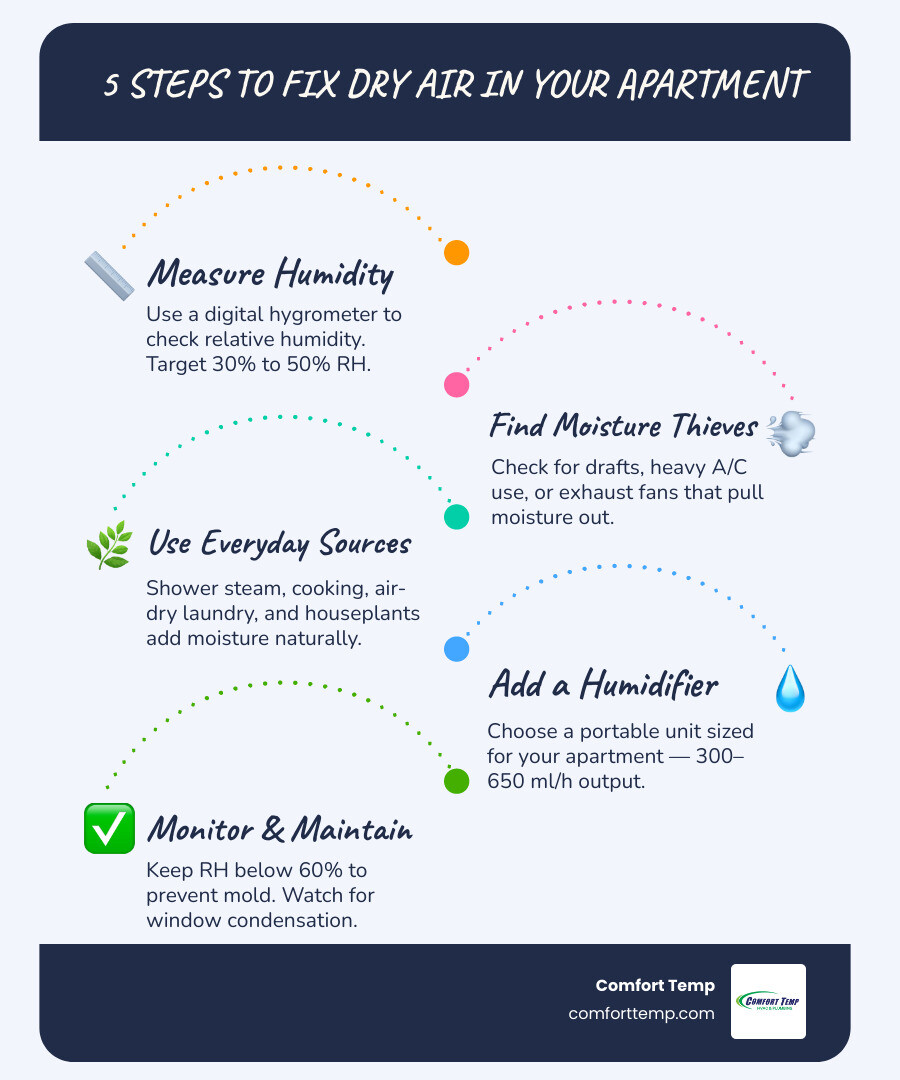
A simple five-step approach is to:
- Check RH with a digital hygrometer.
- Look for drafts, heavy air conditioning use, or exhaust fans that remove moisture.
- Use everyday moisture sources carefully, such as shower steam, cooking, laundry, and plants.
- Choose a properly sized portable humidifier if needed.
- Watch for window condensation and keep RH below 60% to reduce mold risk.
Cold outdoor air and indoor heating can make winter air especially dry. Air conditioning can also remove moisture during Florida’s warmer months. In a compact apartment, the goal is not to add as much moisture as possible. It is to create a comfortable, stable balance without damp windows or musty odors.
Basic dry air apartment vocab:
1. Measure Your Indoor Humidity and Identify Warning Signs
Before adjusting your thermostat or purchasing new appliances, establishing an accurate baseline measurement is essential. Indoor moisture fluctuates across seasons and throughout daily routines, meaning sensory cues should always be verified with hard data.

Physical Symptoms of a Dry Air Apartment
When indoor relative humidity drops below the recommended 30% threshold, your living space and your body begin to show noticeable signs. Low humidity accelerates evaporation from exposed surfaces, including human skin and mucous membranes.
Common physical symptoms include:
- Frequent static electricity zaps when touching metal doorknobs, light switches, or pets
- Chapped lips, flaking facial skin, and cracked knuckles or heels
- Waking up with a scratchy, parched throat or a sandpaper sensation in your mouth
- Irritated nasal passages, morning congestion, and sudden nosebleeds
- Increased vulnerability to seasonal respiratory irritants and airborne viruses
Low moisture levels also affect interior furnishings. Wood is a hygroscopic material, meaning it constantly absorbs and releases water vapor to maintain balance with surrounding air. Persistent low humidity pulls moisture from wooden structures, causing gaps in hardwood floor planks, rattling cabinet doors, and creaking or cracked furniture. Learning all about humidity levels in your home helps protect both personal wellness and personal property.
Using a Digital Hygrometer for Accurate Readings
Relying solely on physical sensations can lead to guesswork. A compact digital hygrometer provides continuous, accurate data so you know your exact relative humidity.
For the most reliable measurements:
- Place the hygrometer on a central shelf or side table at waist or chest height.
- Keep the monitor away from exterior doorways, unsealed window frames, direct sunlight, and HVAC supply registers.
- Avoid placing the device directly inside kitchens or bathrooms where temporary steam creates false spikes.
- Check and record readings twice daily—once in the morning and once in the evening—for several days to establish your baseline.
Understanding how to check indoor humidity allows you to target the healthy 30% to 50% relative humidity range. As highlighted in research on indoor relative humidity and heating, tracking numbers rather than relying on guesswork ensures you apply the correct moisture solutions.
2. Identify the Sources of Dry Air Apartment Issues
Indoor air dryness stems from an interplay between ambient weather conditions, ventilation habits, and mechanical cooling or heating systems. Identifying these underlying mechanisms helps prevent recurring environmental imbalances.

Heating, Air Conditioning, and Ventilation Factors
Indoor climate systems play a significant role in ambient moisture levels:
- Cooling cycles and dehumidification: During warmer seasons in areas like Gainesville, cooling systems run frequently. Understanding how do apartment air conditioners work helps explain this effect: cooling equipment lowers indoor temperatures by pulling air across an evaporator coil, which condenses and drains away airborne moisture. Prolonged or oversized cooling cycles can strip excessive humidity from compact living spaces.
- Winter heating mechanics: In cooler weather, heating systems warm incoming air. While heating does not physically destroy water molecules, raising the air temperature expands its moisture-holding capacity, which drives relative humidity downward. In spaces with electric forced-air systems, indoor RH can plummet to 15% to 20% without supplemental moisture.
- Overuse of exhaust fans: Kitchen range hoods and bathroom exhaust fans quickly clear unwanted odors and heavy steam. However, running these fans continuously pulls conditioned, humidified air out of the apartment, forcing drier air to replace it.
Air Drafts and Building Envelope Leaks
Building envelope leaks allow conditioned indoor air to escape while drawing in dry outdoor air. Unsealed gaps around window sills, loose patio sliders, and worn weatherstripping on entry doors accelerate moisture loss through the stack effect. As demonstrated in research on building air leaks and indoor dryness, unsealed thermal boundaries force environmental systems to work harder, compounding moisture loss.
If air drafts or system cycling seem abnormal, calling a specialist or Comfort Temp to evaluate system airflow and residential ventilation performance can help pinpoint the issue.
3. Daily Habits to Support Balanced Indoor Moisture
For minor dryness, simple lifestyle adjustments and passive humidification techniques can introduce moisture without requiring immediate mechanical intervention.
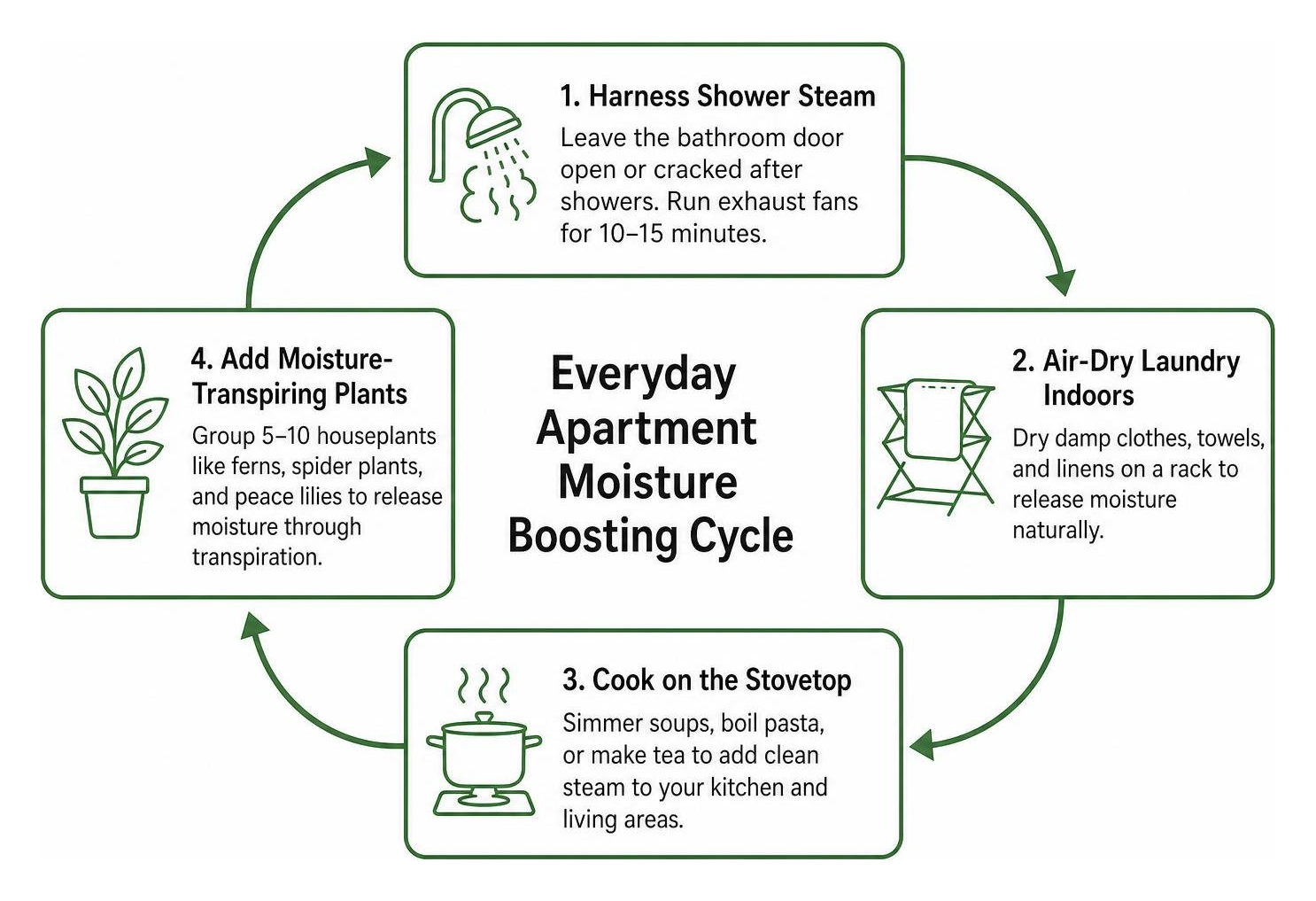
Helpful everyday habits include:
- Harnessing shower steam: Leave the bathroom door cracked or wide open after taking a warm shower to let steam disperse across adjoining living areas. Run exhaust fans for only 10 to 15 minutes to manage heavy moisture without stripping ambient humidity.
- Air-drying laundry indoors: Set up a folding drying rack in your living room or bedroom for damp clothing, towels, and linens. As fabrics dry, water evaporates smoothly into the room.
- Cooking on the stovetop: Simmering soups, boiling pasta, or making tea on the stovetop releases clean steam into your kitchen and open living zones. Cover pots only partially when you want to release gentle moisture into the space.
- Introducing moisture-transpiring plants: Plants absorb water through their root networks and release water vapor into the air through transpiration. Grouping 5 to 10 houseplants—such as Boston ferns, spider plants, and peace lilies—in a single room noticeably supports ambient moisture.
- Setting out decorative water dishes: Placing wide, shallow bowls of water on shelves or near warm airflow paths facilitates passive evaporation throughout the day.
Monitoring humidity in your home ensures these daily habits deliver balanced moisture without causing excessive localized dampness.
4. Humidifier Options and Safe Operation for Apartments
When natural methods are not sufficient to keep indoor RH above 30%, adding a dedicated portable humidifier provides reliable, adjustable moisture control.
Ultrasonic, Evaporative, and Steam Humidifier Comparison
Choosing the right equipment depends on maintenance preferences, room layout, and water quality.
| Humidifier Type | Operating Method | Primary Advantages | Main Considerations |
|---|---|---|---|
| Ultrasonic | High-frequency vibrating diaphragm creates a micro-fine mist | Extremely quiet; energy-efficient; compact footprint | Can disperse mineral “white dust” if used with hard tap water |
| Evaporative | Internal fan blows air through a moistened wick filter | Naturally self-regulating; cannot over-saturate air; traps minerals | Requires periodic wick filter replacements; moderate fan noise |
| Steam Vaporizer | Internal heating element boils water to release warm steam | Bacteria-free output; zero mineral dust; highly effective | Higher energy draw; warm surface requires clearance from pets |
Understanding the difference between air purifier and humidifier is essential when planning room comfort. While an air purifier utilizes mechanical filters to capture airborne particulates and allergens from indoor air, a humidifier introduces water vapor to regulate humidity levels. It is also important to recognize that air purification and water purification are separate technologies: water purification treats and filters liquid to remove minerals or contaminants before use, whereas air purification processes circulate and clean the surrounding breathing air.
Sizing, Placement, and Mold Prevention Guidelines
Apartments feature compact footprints, making proper equipment sizing critical to avoid rapid over-saturation:
- Studio apartments (300–500 sq ft): A unit with an output rating of 300 to 500 ml/h is generally sufficient.
- One-bedroom apartments (500–750 sq ft): Look for a capacity rating of 400 to 650 ml/h for balanced coverage.
- Two-bedroom apartments (750–1,100 sq ft): A unit rated between 600 and 900 ml/h provides consistent moisture.
Place portable humidifiers in a central, elevated location—such as a sturdy side table or low shelf—at least two to three feet off the floor. Keep the unit away from interior drywall, wooden cabinetry, and sensitive electronics. Leave interior bedroom doors open to promote even air circulation.
Balancing humidifier vs dehumidifier needs ensures your space stays within safe parameters, as persistent relative humidity levels above 60% create prime conditions for mold spores and dust mites.
5. Equipment Maintenance and Indoor Air Quality Optimization
Humidifiers require consistent sanitation to prevent mineral scale accumulation, bacterial growth, and bio-aerosol dispersion.
Recommended maintenance practices:
- Daily water changes: Empty remaining water from the reservoir every 24 hours, rinse thoroughly, and refill with fresh water.
- Use distilled or demineralized water: Using distilled water in ultrasonic units prevents mineral white dust from settling onto furniture, television screens, and home office electronics.
- Weekly vinegar rinses: Disassemble the tank and base weekly. Soak components in undiluted white vinegar for 20 to 30 minutes to dissolve mineral scaling, then scrub gently with a soft brush and rinse clean.
- Disinfect regularly: Sanitize the unit every two weeks using a dilute hydrogen peroxide or manufacturer-approved cleaning solution, followed by a thorough water rinse before reassembly.
Maintaining Healthy Levels to Eliminate Dry Air Apartment Discomfort
Achieving lasting indoor air quality requires maintaining a stable, moderate humidity level. Keeping around 40 percent humidity in house environments offers comfortable breathing while preventing heavy moisture accumulation on cold exterior surfaces.
Regularly check windowpanes on chilly mornings. If you notice persistent beads of condensation along the glass, lower your humidifier’s output setting by 5% to 10% to prevent moisture pooling around window frames and sill joints.
Frequently Asked Questions About Apartment Humidity
What is the ideal humidity level for an apartment?
The ideal indoor humidity level for an apartment is between 30% and 50% relative humidity. This target protects respiratory health, eases sinus discomfort, eliminates static electricity, and prevents wooden furniture from shrinking or cracking, all while keeping moisture below the mold-growth threshold.
Can running an air conditioner cause dry indoor air?
Yes. Air conditioners cool indoor spaces by pulling warm air over cold evaporator coils, condensing airborne moisture and draining it away. Prolonged cooling cycles or oversized units can continuously extract moisture, leading to dry indoor conditions.
What are the risks of over-humidifying a small space?
Over-humidifying a compact apartment elevates relative humidity beyond 60%, leading to window condensation, moisture accumulation behind furniture, dust mite proliferation, and mold spore growth. Sizing equipment properly and monitoring with a digital hygrometer helps avoid these risks.
Conclusion
Managing indoor humidity transforms your apartment into a comfortable, healthy living environment. By monitoring your baseline levels with a digital hygrometer, adjusting everyday moisture habits, and operating properly sized, well-maintained equipment, you can eliminate dry indoor air while protecting your space from excess condensation.
When you need professional help assessing your indoor climate or optimizing system airflow, our team provides trusted residential HVAC and plumbing services in Gainesville. For larger commercial properties, we deliver dedicated commercial HVAC and plumbing services across Gainesville, Jacksonville, and Orlando. Contact Comfort Temp today to explore our complete range of residential indoor air quality products and restore balanced comfort to your home.