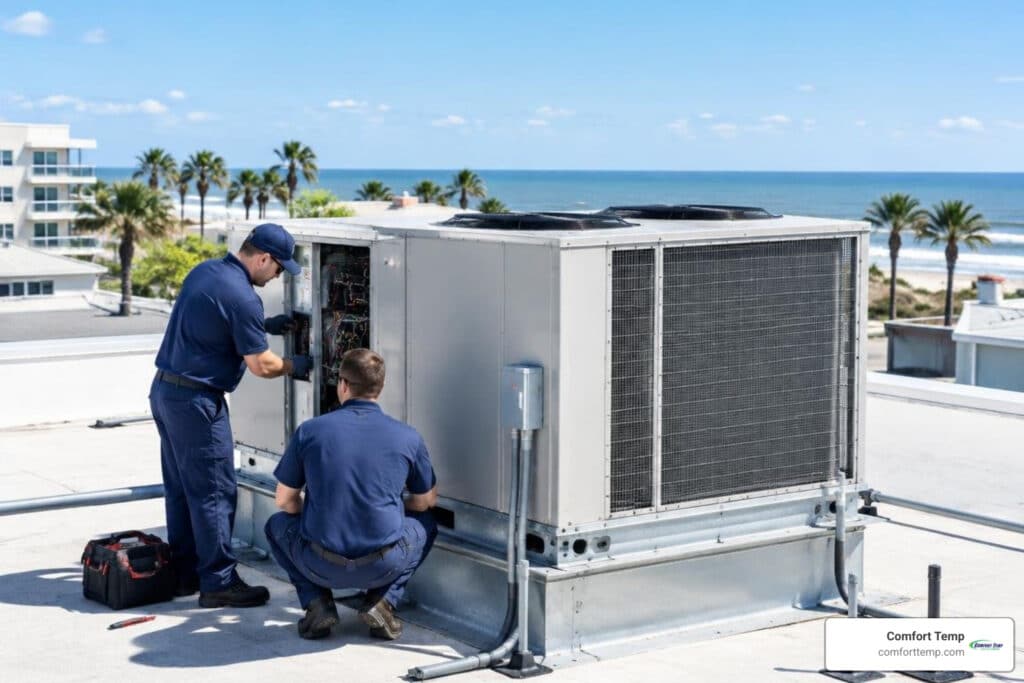
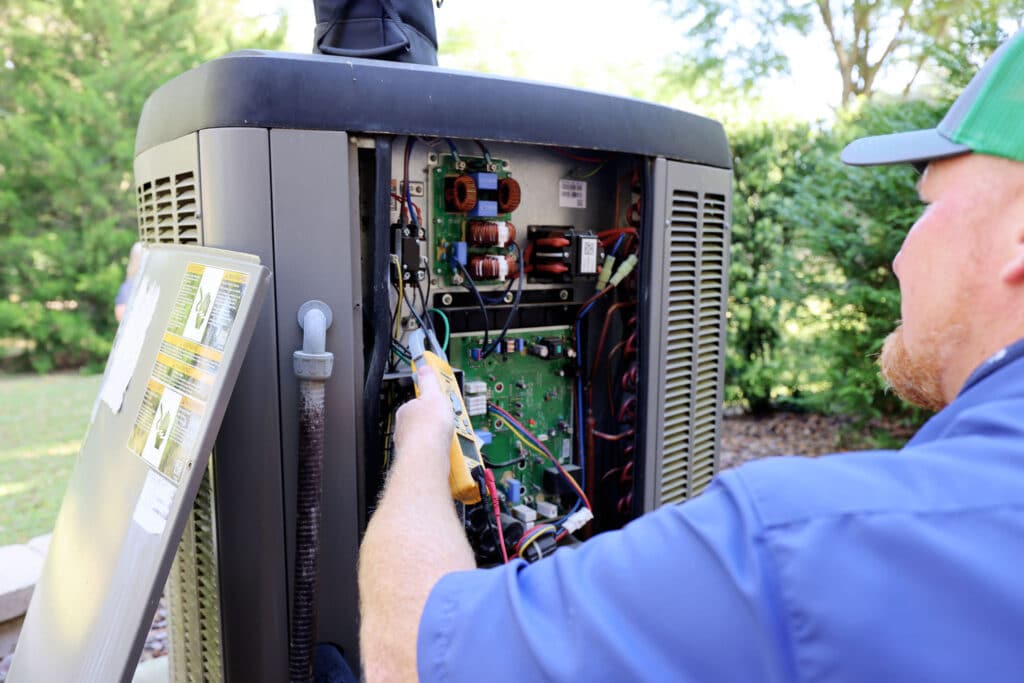
When Your AC Struggles in the Florida Heat: A Guide to HVAC Repair in Putnam County
HVAC repair in Putnam County is often urgent — Florida’s brutal summer heat and high humidity put enormous strain on home cooling systems, and a breakdown can make your home uncomfortable within hours.
Here’s a quick overview of what Putnam County homeowners most commonly need:
| Situation | What You Likely Need |
|---|---|
| AC blowing warm air | Refrigerant check or thermostat diagnosis |
| AC not turning on | Capacitor, contactor, or electrical issue |
| Weak airflow | Filter replacement or blower motor inspection |
| Ice on the unit | Evaporator coil or refrigerant problem |
| Water pooling near the unit | Clogged condensate drain |
| System over 10–15 years old | Replacement evaluation |
This guide walks you through the most common cooling problems in Putnam County, how to know when to repair versus replace, what counts as an HVAC emergency, and how local factors — like lakefront humidity, mature tree debris, and storm-related power surges — affect your system.
If your AC is already failing right now, skip ahead to the emergency section — or call a certified technician immediately.
Common Summer Cooling Issues Requiring HVAC Repair in Putnam County
As we navigate the peak heat of July 2026, air conditioners across North Central Florida are working overtime. Running a cooling system almost continuously in high humidity inevitably leads to mechanical wear and tear. When systems are pushed to their limits, several common issues emerge that require professional HVAC repair in Putnam County.
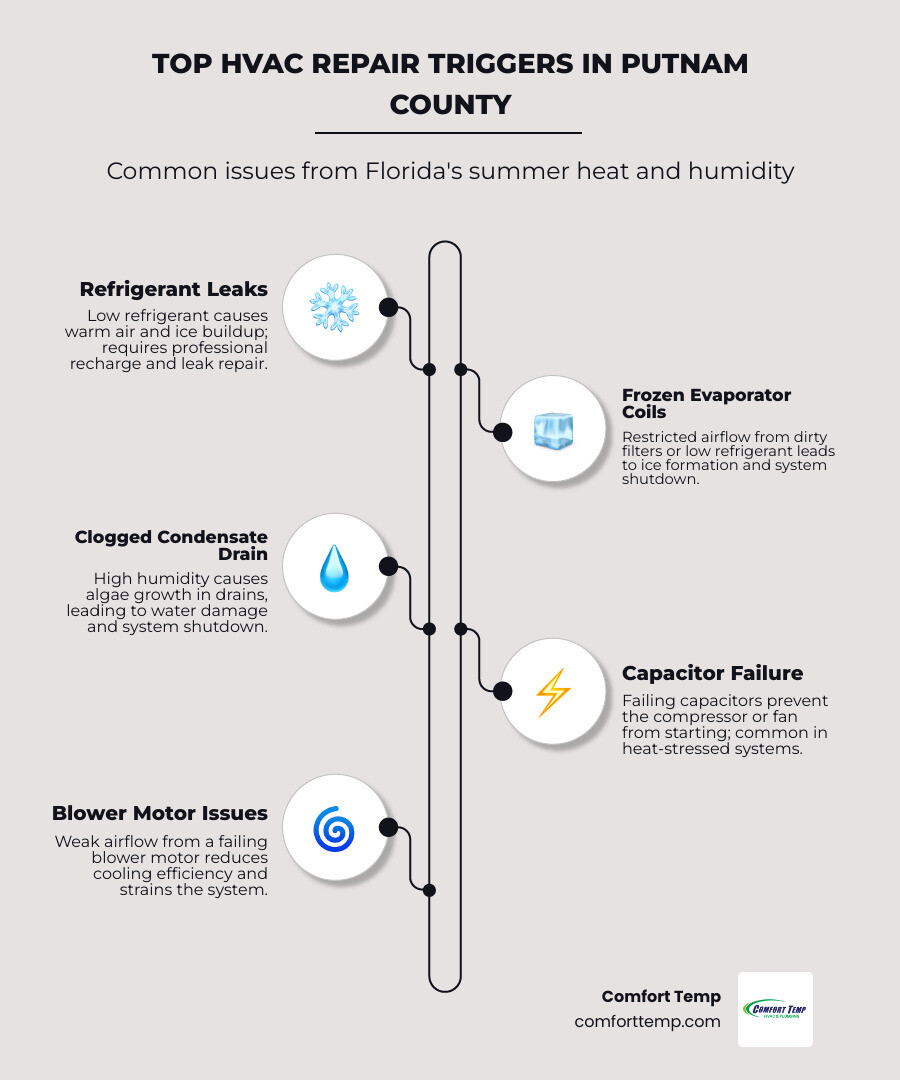
One of the most frequent complaints we encounter is system short-cycling. This occurs when your air conditioner turns on and off rapidly without ever completing a full cooling cycle. Short-cycling not only leaves your home humid and warm, but it also places immense stress on the compressor, drastically shortening its lifespan and spiking your monthly utility bills.
Another major culprit during the summer months is a refrigerant leak. Contrary to popular belief, air conditioners do not “consume” refrigerant; it circulates in a closed loop. If your system is low on refrigerant, it means there is a leak somewhere in the copper lines or coils. Low refrigerant levels cause pressure drops, which often lead directly to frozen evaporator coils. When ice builds up on the indoor coil, it acts as an insulator, completely blocking heat transfer and forcing warm air out of your supply registers.
Additionally, clogged condensate drains are incredibly common in our humid climate. As your AC dehumidifies the air, moisture drips into a drain pan and flows outside. However, the warm, damp environment inside the drain line is a perfect breeding ground for algae and mold. Without regular clearing, this sludge builds up, causing the drain to back up and overflow. This can trigger your system’s safety float switch to shut the unit down entirely, or worse, cause water damage to your ceilings and floors. If you are experiencing any of these issues, scheduling a professional Air Conditioning Repair is the safest way to get your system back in peak shape.
Common Causes of AC Airflow Restrictions
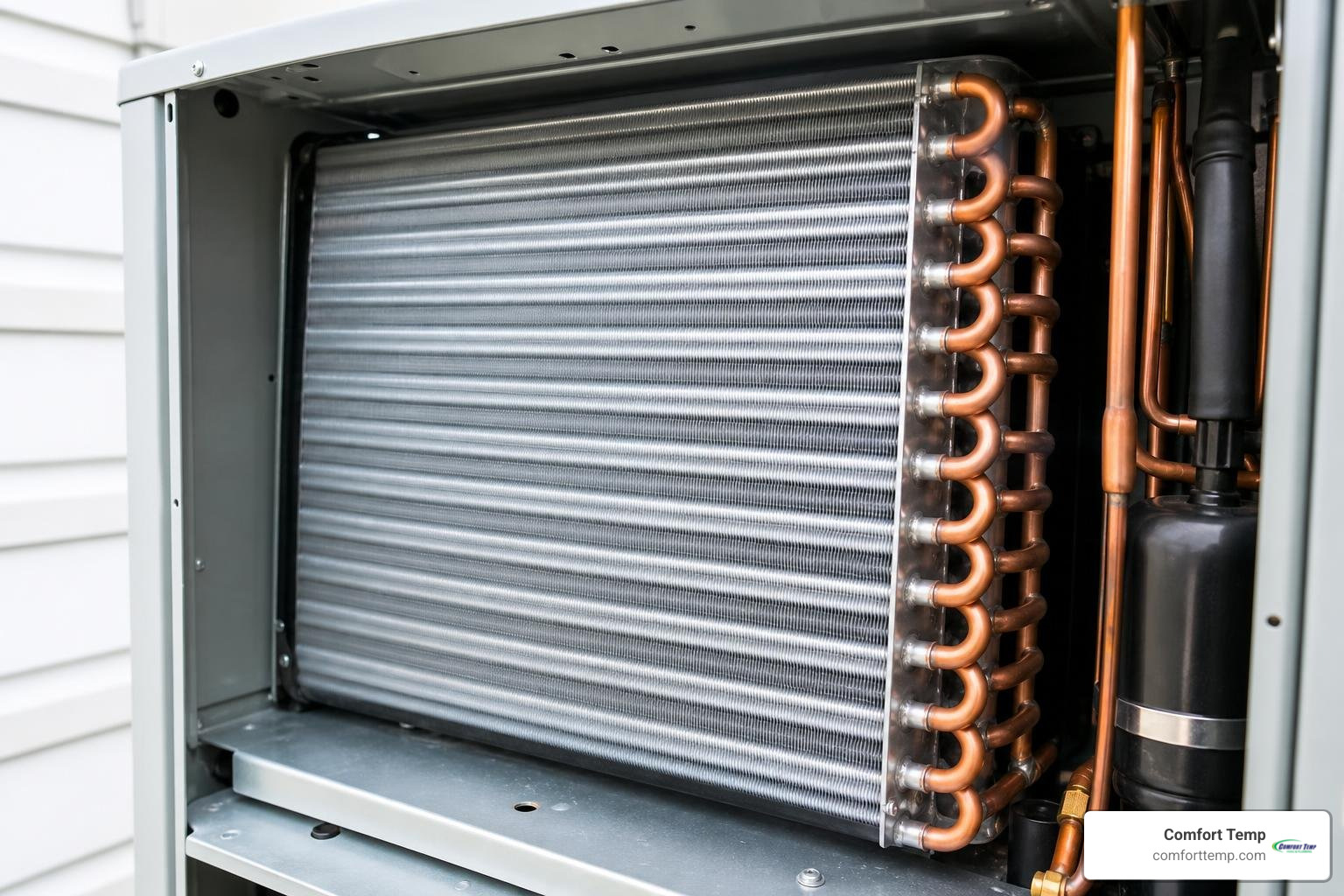
Good airflow is the lifeblood of any central cooling system. When air cannot flow freely through your system, heat exchange fails, efficiency plummets, and components overheat. The most common cause of restricted airflow is a heavily soiled air filter. In Florida, where air conditioners run almost constantly, filters can clog with dust, pet dander, and pollen in as little as 30 days.
Blocked supply registers or return grilles also choke the system. Homeowners sometimes close registers in unused rooms, thinking it saves energy, but this actually disrupts the system’s pressure balance and restricts necessary airflow.
The most severe airflow restriction comes from a failing blower motor. If the fan motor is burnt out, has worn bearings, or suffers from electrical failure, it cannot push conditioned air through your home. Identifying the exact bottleneck in your system requires professional diagnostic services. A certified technician can measure static pressure and check electrical currents to pinpoint the issue before it causes permanent damage to your compressor.
Why Professional Calibration Beats DIY Troubleshooting
In the age of online video tutorials, it can be tempting to try troubleshooting your AC on your own. However, modern air conditioning systems are highly complex machines that combine high-voltage electricity, delicate electronic controls, and pressurized chemical refrigerants.
Attempting DIY repairs poses serious electrical safety risks. A standard residential condenser unit runs on 240 volts of electricity—more than enough to cause severe injury. Furthermore, modern smart thermostats and variable-speed systems utilize complex low-voltage wiring networks that are easily ruined by a single misplaced wire.
There are also strict federal and state refrigerant handling regulations to consider. It is illegal for unlicensed individuals to purchase or handle chemical refrigerants due to their environmental impact. Only EPA-certified technicians have the specialized tools, gauges, and training to safely locate leaks, evacuate systems, and recharge refrigerants. Relying on certified technician expertise ensures the job is done safely, legally, and correctly, while keeping your valuable manufacturer warranty fully intact.
Repair vs. Replacement: Making the Right Choice for Your Florida Home
When your air conditioner begins to falter, you face a critical financial decision: should you pay for another repair, or is it time to invest in a brand-new system? Navigating this choice requires looking at the age of your equipment, its recent performance, and the long-term financial benefits of upgrading.
Generally, a residential air conditioning system in Florida has a realistic lifespan of 10 to 15 years. Because our systems run for thousands of hours each year—far more than units in northern states—coils corrode faster and mechanical parts wear out sooner. If your system is approaching or has passed the decade mark, continuing to sink money into repairs is often a losing proposition.
Newer systems must adhere to strict SEER2 (Seasonal Energy Efficiency Ratio 2) energy efficiency standards. Upgrading from an old, inefficient unit to a modern SEER2-compliant system can slash your monthly utility bills by up to 30% or more. If you notice your energy bills steadily rising even after repairs, your old system is likely working twice as hard to do half the job. For homeowners weighing these choices, our team provides comprehensive Residential HVAC Repair and transparent replacement evaluations to help you make the best financial decision.
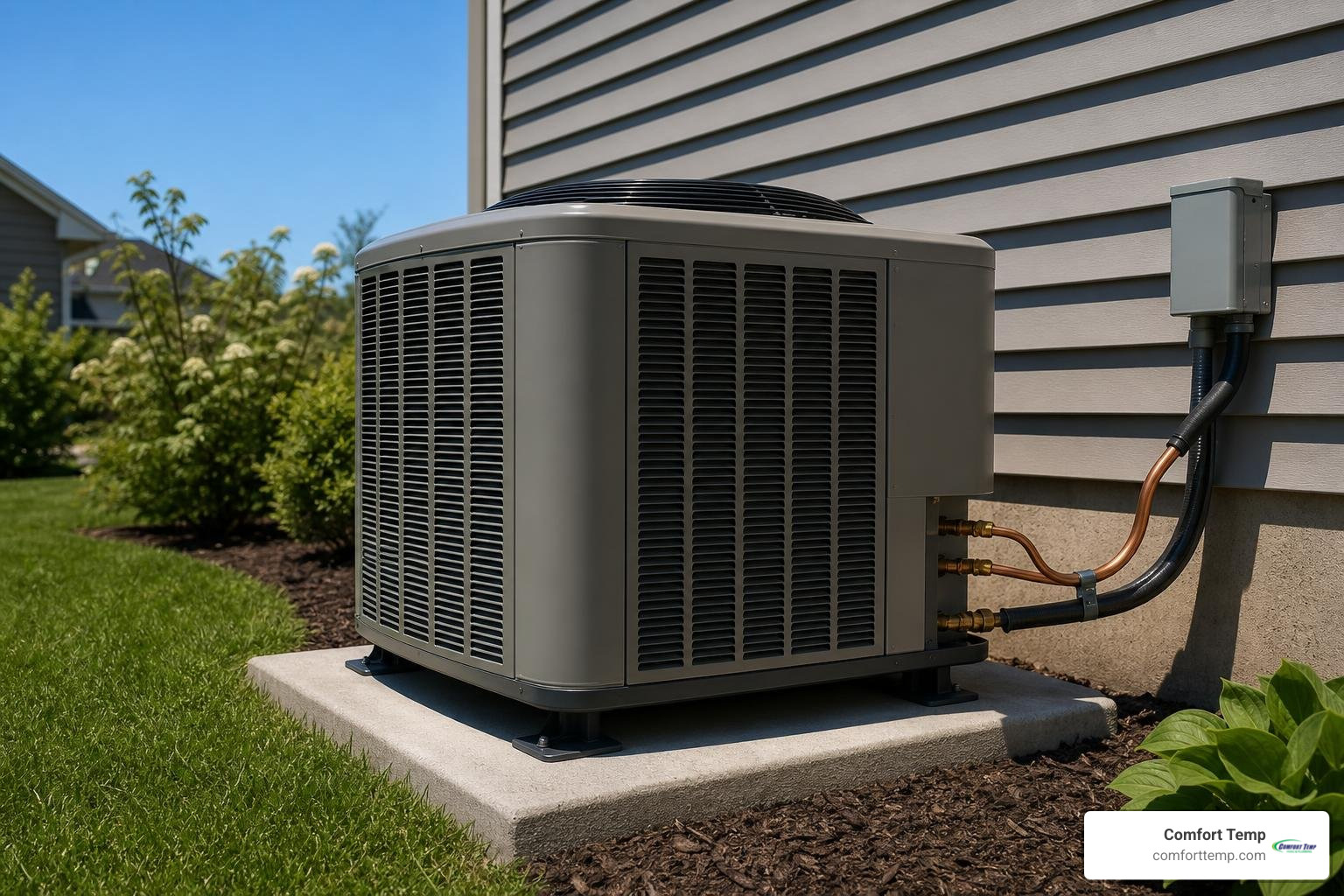
To help visualize this decision, consider the following comparison:
| Factor | Choosing HVAC Repair | Choosing System Replacement |
|---|---|---|
| Upfront Cost | Low to moderate | Higher initial investment |
| System Lifespan | Extends life of current unit temporarily | Provides 10–15 years of worry-free cooling |
| Energy Bills | Remain unchanged or continue to rise | Drop immediately due to SEER2 efficiency |
| Warranty | Limited warranty on new parts only | Comprehensive multi-year manufacturer warranty |
| Reliability | Risk of secondary component failures | Maximum reliability with zero wear and tear |
When to Choose HVAC Repair in Putnam County
Opting for a repair is usually the smartest and most economical choice if your air conditioner is less than 10 years old and has been relatively reliable. Many common air conditioning issues are caused by minor, easily replaceable electrical components.
For example, a failed dual run capacitor is one of the most common service calls we receive. This small, cylinder-shaped part stores electrical energy to start and run the compressor and fan motors. Capacitors degrade over time due to heat, but replacing them is quick and affordable. Similarly, resolving contactor wear—the switch that controls electrical flow to your outdoor unit—is a routine fix. Clearing out a clogged condensate line or repairing a minor wiring connection are also straightforward repairs that can instantly restore your system’s performance without requiring a major capital investment.
When to Invest in a Full System Replacement
On the other hand, certain major failures make a full system replacement the only logical choice. A major compressor failure on an out-of-warranty system is rarely worth repairing. The compressor is the heart of your AC, and replacing it is highly labor-intensive and expensive.
Another deciding factor is the type of refrigerant your system uses. If your AC was installed before 2010, it likely runs on R-22 (Freon). R-22 has been phased out entirely due to environmental regulations, meaning sourcing this refrigerant for repairs is incredibly expensive and will only become more difficult.
Frequent, back-to-back system breakdowns are another clear sign that your unit is on its last legs. If you are calling for repairs multiple times a season, those costs quickly add up to the price of a down payment on a new system. Lastly, if you are planning major structural home renovations or additions, your existing system may no longer be sized correctly to cool your modified living space, making a new, properly engineered system necessary.
Recognizing HVAC Emergencies in the Florida Heat
During a typical North Central Florida summer, a broken air conditioner is far more than a simple inconvenience—it can quickly escalate into a genuine health and safety emergency. Knowing how to identify the signs of an HVAC emergency allows you to take swift action to protect your home and family.
If your system goes down during an extreme heatwave, indoor temperatures can climb past 85 degrees within a few hours. This rapid indoor temperature spike is particularly dangerous for infants, elderly residents, and individuals with pre-existing health conditions.
Other clear signs of an emergency include strong electrical burning smells coming from your vents or outdoor unit, which indicate failing wiring or overheated motors. Loud screeching, metal-on-metal grinding, or heavy clanking noises also signal severe mechanical failure that requires immediate attention. If you experience any of these critical situations, do not hesitate to contact our team for rapid Emergency HVAC Repair services.
The Dangers of Delayed HVAC Repair in Putnam County
Postponing necessary cooling repairs in a humid environment like Putnam County can have severe consequences for your property. Without the dehumidification provided by a running air conditioner, indoor relative humidity can quickly surpass 70%. This creates the absolute perfect environment for rapid indoor mold growth on drywall, furniture, carpeting, and inside ductwork, which can cost thousands of dollars to remediate and cause severe respiratory issues.
Furthermore, prolonged exposure to indoor temperatures above 85 degrees carries significant heat exhaustion risks, especially for vulnerable family members and pets. There are also electrical fire hazards to consider; if a failing component is drawing too much electrical current and fails to trip the breaker, it can overheat nearby wiring and ignite a fire.
While homeowners in other parts of the country might look to regional guidelines to understand local codes, Florida residents must ensure their local technicians adhere to strict Florida building codes and professional HVAC Mechanic Standards to handle high-voltage and high-pressure systems safely in our unique coastal environment.
What to Do While Waiting for an Emergency Technician
If your air conditioner has failed and you are waiting for a technician to arrive, there are a few important steps you should take to keep your home safe:
- Shut down the system: Turn your AC completely off at the thermostat. If the system is short-cycling, freezing up, or experiencing electrical issues, keeping it “on” can cause further, more expensive damage to the compressor or blower motor.
- Check the circuit breakers: Check your main electrical panel to see if the AC breaker has tripped. If it has, flip it back once. If it immediately trips again, do not force it back on. This indicates an electrical fault, and repeatedly resetting it can cause an electrical fire.
- Keep the indoor air contained: Keep all windows and exterior doors closed to trap whatever cool air remains inside. Close your blinds, drapes, or shades to block out radiant heat from the sun.
- Prioritize hydration: Ensure your family members and pets stay well-hydrated. Drink plenty of water and move to the coolest room in the house, typically on the ground floor or away from direct sunlight.
- Avoid DIY electrical troubleshooting: Never attempt to open the electrical panels on your indoor or outdoor units. Leave the testing to a licensed professional with the correct diagnostic equipment.
Localized Solutions for Putnam County Communities
Putnam County, Florida is a beautiful region defined by its historic river towns, sprawling lakes, and heavily canopy-covered residential lots. However, these unique geographical and environmental features also present specific challenges for residential cooling systems.
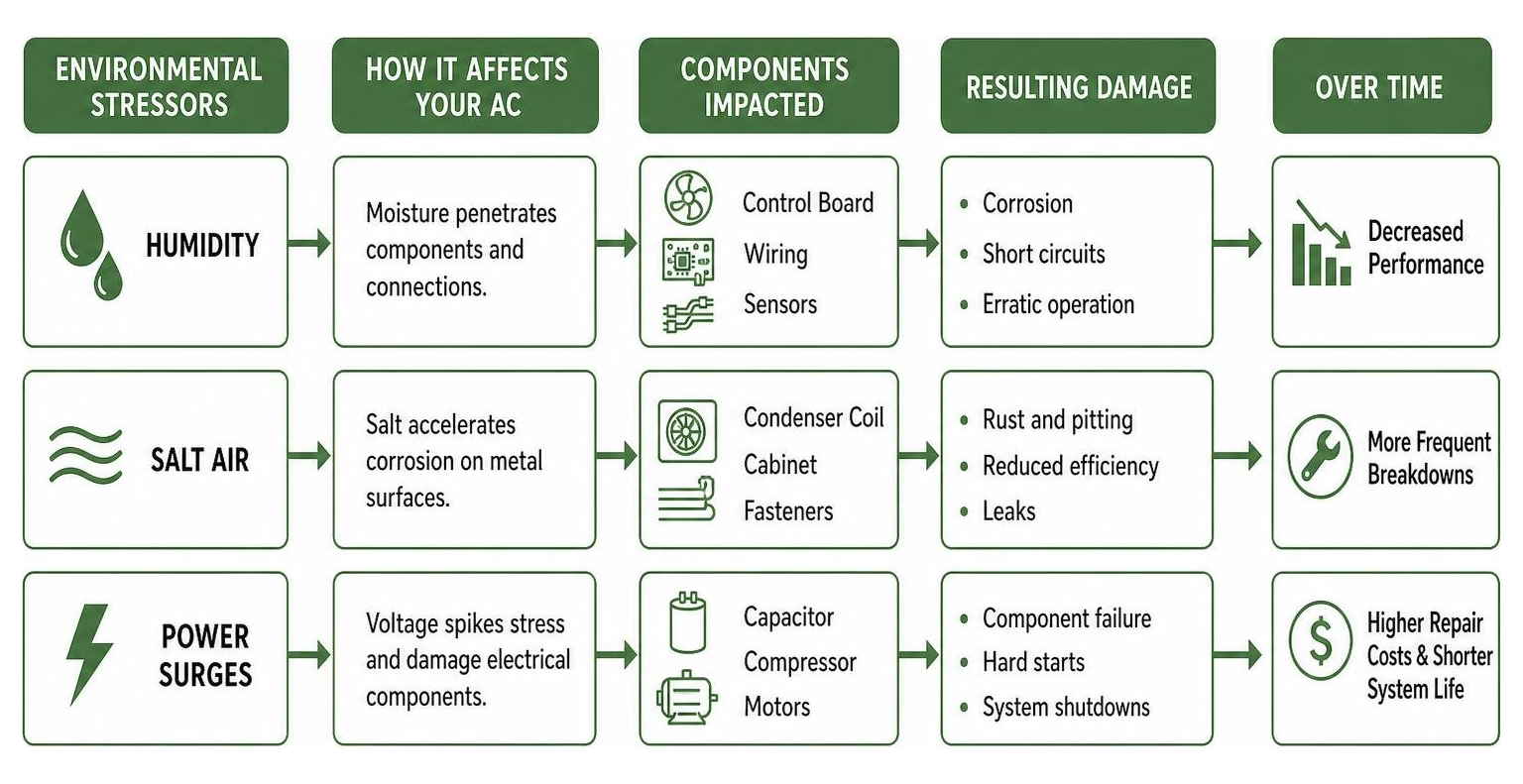
From coastal salt air corrosion along the waterways to high groundwater tables and frequent summer thunderstorms that cause power outages, your AC system has to fight a multi-front battle. This is why standard, cookie-cutter cooling solutions don’t always work here. Homeowners need localized expertise to ensure their systems are protected against local environmental stressors. Integrating proper surge protection and standby generator systems can keep your home safe and cool when summer storms roll in.
To understand how our local environment impacts your system, review this process diagram:
Reliable Cooling Services in Palatka
Palatka is famous for its gorgeous historic homes and its close proximity to the wide St. Johns River. While these historic properties have unmatched charm, they also present unique challenges for modern air conditioning. Many older homes in Palatka feature plaster walls, tight crawl spaces, and outdated electrical systems that were never designed to handle the electrical load of a modern, high-capacity central AC unit.
Before installing or upgrading a system, our technicians carefully evaluate historic home electrical compatibility to ensure your panel can safely handle the load. Additionally, living near the river means dealing with intense riverfront humidity challenges. High humidity levels mean your AC has to work much harder to pull moisture from the air. We specialize in configuring systems with advanced dehumidification settings and highly efficient drainage solutions tailored specifically for riverfront properties. If you need local expertise, we provide dedicated Palatka HVAC Services to keep your historic or modern home perfectly comfortable.
Keeping Homes Cool in Interlachen
Interlachen is a haven of beautiful lakes, but living in a lakefront community means dealing with constant, heavy moisture. This constant humidity places an extra latent load on your air conditioner, meaning the system must spend a significant amount of energy simply removing water from the air before it can effectively lower the indoor temperature.
Furthermore, the sandy, dry soil characteristic of many Interlachen neighborhoods means that wind and lawn mowers kick up a substantial amount of fine sand and dust. This airborne debris quickly clogs outdoor condenser coils and indoor air filters, choking system airflow. We focus heavily on lakefront moisture control configurations and robust sand and dust filtration needs to protect your equipment from premature wear. To schedule a specialized consultation or repair, explore our Interlachen HVAC Services.
Prompt AC Solutions in Melrose
Melrose is known for its stunning, heavily wooded residential lots shaded by massive live oaks and towering pines. While this natural canopy provides excellent shade, it also poses direct threats to outdoor AC equipment. Falling leaves, pine needles, twigs, and pollen constantly blanket outdoor condenser units, clogging the delicate aluminum fins and trapping heat inside the system.
Additionally, heavily forested areas are highly susceptible to falling tree branches during summer thunderstorms, which can sever power lines and cause severe voltage fluctuations. These power surges can instantly fry expensive control boards and compressors. We help Melrose homeowners implement effective wooded lot debris protection strategies and install robust voltage surge protection devices directly onto their AC electrical disconnects. For prompt, expert assistance in this area, check out our Melrose HVAC Services.
Frequently Asked Questions about Putnam County AC Services
How often should I schedule AC maintenance in Florida?
Because air conditioners in Florida run for the majority of the year, we strongly recommend scheduling professional maintenance at least twice a year. A spring tune-up prepares your system for the brutal summer heat, while an autumn checkup ensures everything is running efficiently after months of heavy use. Regular maintenance is the single best way to prevent unexpected breakdowns and extend your system’s lifespan.
What are the signs of a refrigerant leak in my air conditioner?
The most common signs of a refrigerant leak include your AC blowing warm air, a noticeable hiss or bubbling sound coming from the indoor or outdoor unit, and ice building up on the copper refrigerant lines or the indoor evaporator coil. You may also notice a sudden, unexplained spike in your monthly utility bills as the system runs constantly to try and reach the set temperature.
Why is my AC blowing warm air during the summer?
An AC blowing warm air can be caused by several different issues. First, check your thermostat to ensure it is set to “Cool” and the fan is set to “Auto” rather than “On” (which blows air continuously even when the cooling cycle is off). If the settings are correct, the warm air could be due to a tripped outdoor breaker, a failed compressor capacitor, a severe refrigerant leak, or a completely clogged air filter blocking heat transfer.
Do you offer both air purification and water purification systems?
Yes, we provide solutions for both, but it is important to understand that air purification and water purification are entirely separate technologies. Air purification is an HVAC service that focuses on cleaning the air you breathe by removing airborne dust, pollen, and mold spores using specialized filters and UV lights within your ductwork. In contrast, water purification is a plumbing technology designed to filter contaminants, minerals, and impurities from your home’s water supply. While both contribute to a healthier home environment, they rely on completely different systems and engineering.
Conclusion
When the Florida summer heat is at its peak, having a reliable, highly efficient air conditioning system is essential for your comfort, health, and peace of mind. From handling routine wear and tear like failed capacitors and clogged drain lines to addressing complex local challenges like riverfront humidity, sandy soil, and storm-related power surges, keeping your cooling system in top shape requires professional care.
If your system is struggling, blowing warm air, or making unusual noises, don’t wait for a complete system breakdown to take action. Comfort Temp HVAC & Plumbing is proud to serve our neighbors throughout North Central Florida. Our Gainesville location specializes in providing premier residential cooling and plumbing solutions tailored to the unique needs of surrounding communities in Putnam County.
Whether you need a quick diagnostic check, an emergency repair, or a complete SEER2-compliant system replacement, our team of experienced, certified technicians is ready to deliver the high-quality service you deserve. Contact us today to schedule your appointment and explore our Comfort Temp HVAC & Plumbing Gainesville Services to keep your home cool, safe, and comfortable all summer long.