The Best Way to Dehumidify a House Starts With Humidity Control
The best way to dehumidify a house is to measure indoor humidity first, fix any water sources, and use the right level of mechanical moisture removal. For one damp room, a properly sized portable dehumidifier may be enough. If humidity stays high throughout the home, a whole-home dehumidifier paired with your air conditioning system is usually the more reliable solution.
Aim for 30% to 50% relative humidity. Run kitchen and bathroom exhaust fans, vent the dryer outdoors, repair plumbing leaks, and keep your A/C system maintained. If indoor humidity remains above 60%, act quickly: damp surfaces can support mold growth within 24 to 48 hours.
Too much moisture makes a home feel sticky, fogs windows, encourages musty odors, and can damage wood, paint, and drywall over time. It may also worsen respiratory symptoms for people sensitive to mold and other allergens.
Comfort Temp HVAC & Plumbing provides residential HVAC and plumbing in Gainesville. Its technicians are licensed for both commercial and residential plumbing work. HVAC and plumbing services are also available for commercial properties in Jacksonville and Orlando.
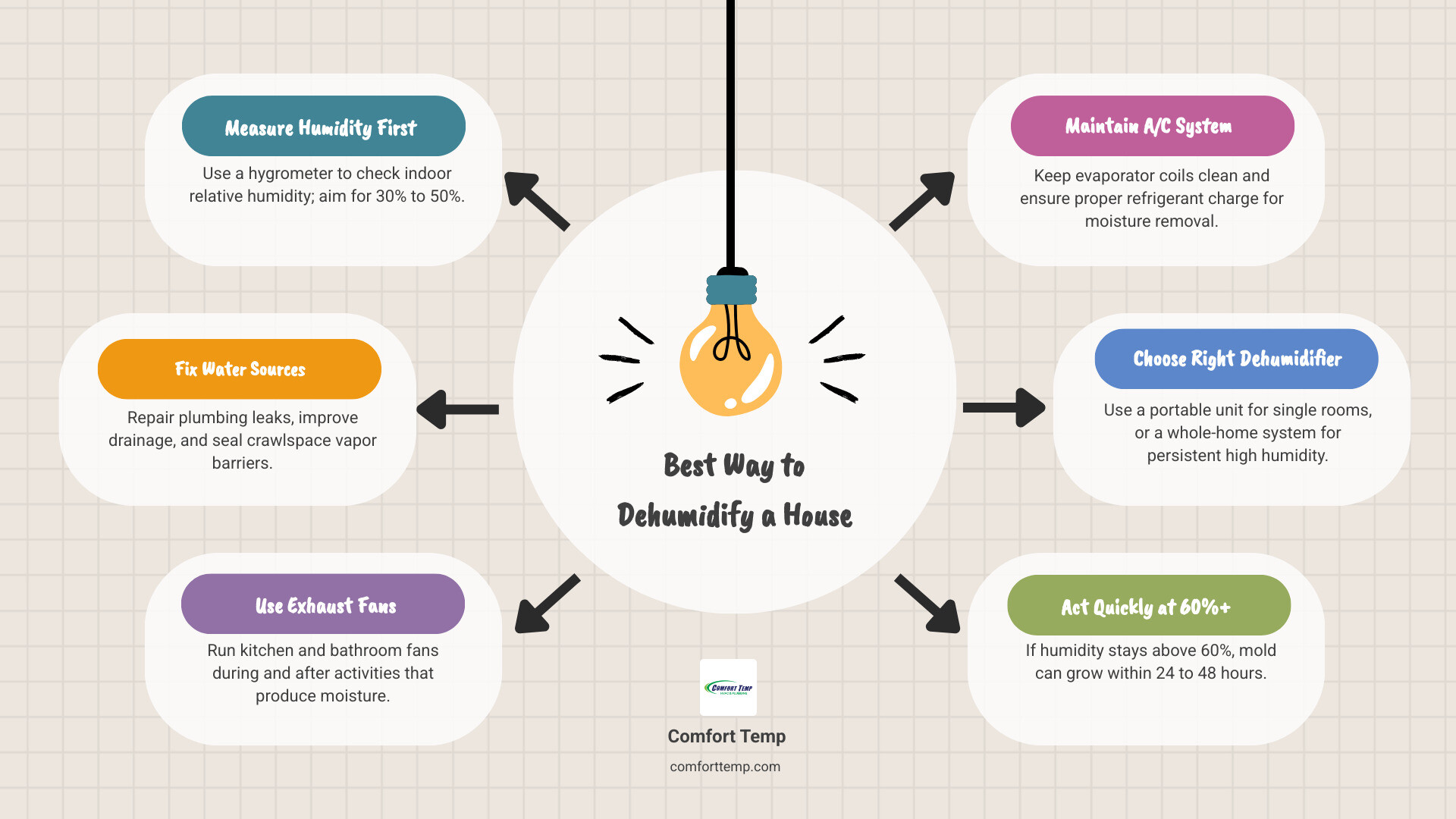
Best way to dehumidify a house terms to remember:
Understanding Indoor Moisture and Ideal Humidity Levels
Relative humidity (RH) refers to the percentage of water vapor present in the air relative to the maximum amount of water vapor the air can hold at its current temperature. Because warm air can hold significantly more moisture than cool air, rising indoor temperatures combined with heavy outdoor moisture make indoor air feel heavy and muggy.
The Environmental Protection Agency (EPA) recommends keeping indoor relative humidity between 30% and 50%. A study from the Building Science Corporation found that sustained humidity levels of 70% or higher cause severe long-term structural degradation in residential buildings. Furthermore, medical research published in Environmental Health Perspectives highlights that keeping relative humidity between 40% and 60% optimizes our immune system defenses and minimizes the survival of airborne viruses.
Tracking your home’s moisture begins with an inexpensive digital hygrometer. You can learn more about how to check indoor humidity by placing sensors in bedrooms, living spaces, and laundry areas to identify moisture variations. By identifying acceptable levels of humidity across different seasons, you can make informed adjustments before indoor air quality deteriorates.
Health and Structural Risks of Unchecked Moisture
When relative humidity climbs above 60%, damp indoor surfaces become breeding grounds for biological pollutants. Mold spores begin colonizing within 24 to 48 hours on damp drywall, carpet, and ceiling tiles. High humidity also allows dust mite populations to explode, worsening conditions for anyone suffering from seasonal allergies or asthma.
A landmark study from the U.S. Institute of Medicine linked damp indoor environments directly to upper respiratory tract symptoms, chronic coughing, and wheezing. Beyond the medical risks, excess water vapor condenses inside wall cavities, causing structural framing to rot, hardwood floors to buckle, and interior paint to blister. Practicing proactive strategies for managing humidity in your home prevents these expensive structural repairs while protecting the air your family breathes every day.
Evaluating the Best Way to Dehumidify a House: Whole-Home vs. Portable Systems
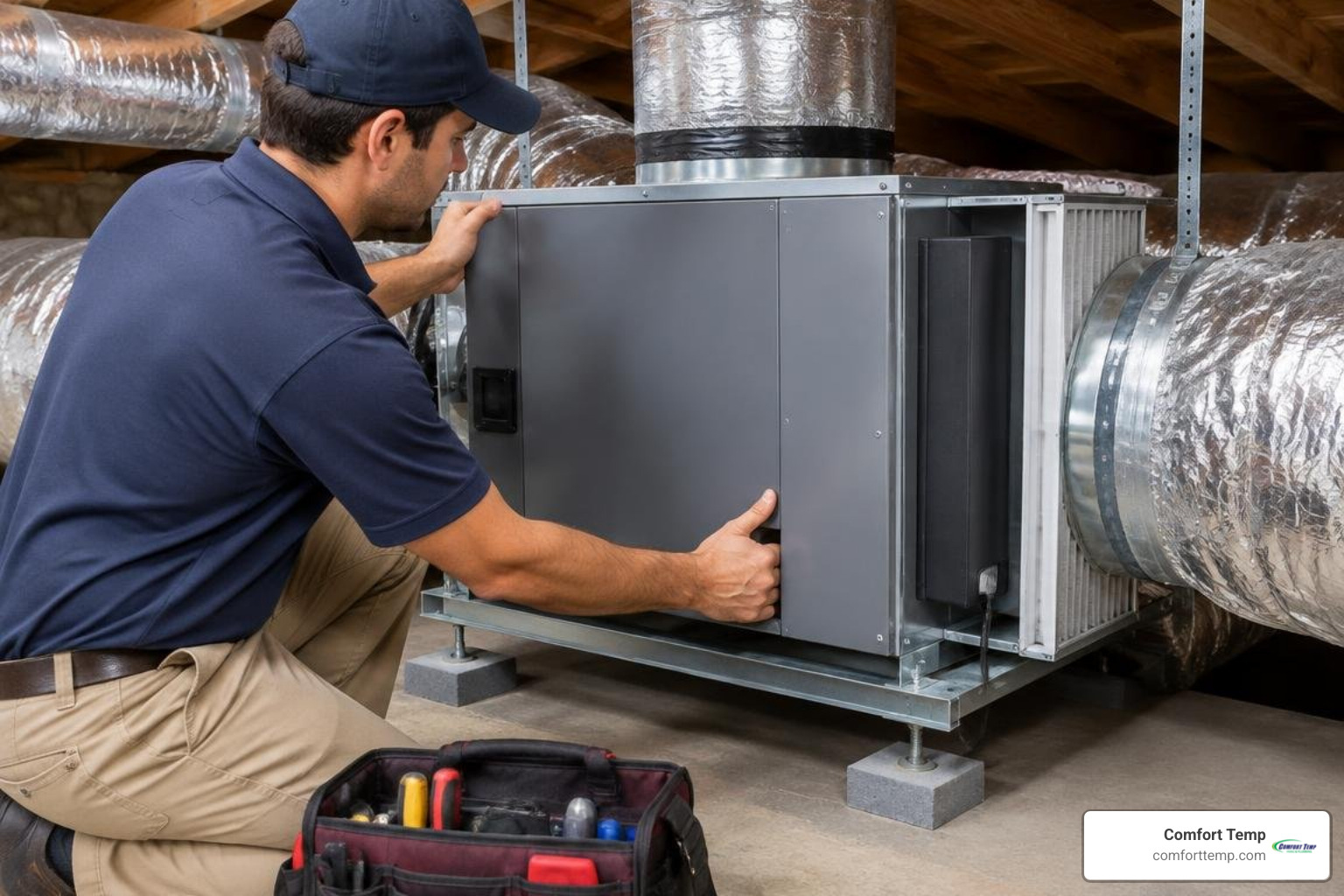
When selecting mechanical dehumidification, homeowners generally choose between portable units and whole-home ducted systems. Choosing the right setup depends on whether your moisture problem is isolated to one closed room or spread across your entire floor plan.
To make an informed purchase, homeowners often consult resources like the HVAC Base guide on dehumidifier sizing and IEF standards to understand how extraction capacity and energy ratings impact long-term performance. You can also explore our detailed guide on comparing dehumidifier options to evaluate upfront costs and maintenance needs.
| Feature | Portable Dehumidifier | Whole-Home Dehumidifier |
|---|---|---|
| Moisture Removal Capacity | 20 to 50 pints/day | 70 to 150+ pints/day |
| Coverage Area | Single room (200–800 sq. ft.) | Entire home (1,500–4,000+ sq. ft.) |
| Installation | Plug-and-play | Professional ducted HVAC installation |
| Drainage Method | Manual water bucket or gravity hose | Dedicated condensate drain line or pump |
| Equipment Lifespan | 3 to 5 years | 10 to 15 years |
| Operating Sound | Noticeable compressor and fan noise in room | Quiet, centralized operation away from living areas |
| Energy Efficiency (IEF) | 1.8 to 3.5 L/kWh | 2.0 to 2.8+ L/kWh (high volume per watt) |
Why HVAC Integration Is the Best Way to Dehumidify a House in Humid Climates
For homeowners dealing with year-round outdoor humidity, installing a dedicated whole-home system is the most efficient and hands-free choice. These heavy-duty units connect directly to your central HVAC ductwork, pulling humid air from return ducts, removing pints of water per hour, and delivering crisp, dry air through every supply register.
Whole-house units extract between 70 and 150 pints of moisture per day while operating at high Integrated Energy Factor (IEF) ratings. Because they integrate directly with your central air distribution, they treat your entire living area simultaneously without requiring you to carry and empty heavy water tanks twice a day. A properly installed ducted unit has an expected operational lifespan of 10 to 15 years—roughly three times longer than standard portable units. Investing in professional whole-house humidity control ensures consistent, automated protection for your furnishings and building materials.
Is a Portable Unit the Best Way to Dehumidify a House with Isolated Moisture?
If your moisture challenges are strictly limited to an isolated utility area, a portable compressor dehumidifier is a practical temporary option. Modern 20- to 50-pint portable units pull air across internal refrigerant coils to condense moisture into an internal bucket or through a continuous gravity drain hose.
When evaluating room-specific equipment, reviewing third-party benchmarks like the AirCareGuide whole-house dehumidifier ratings helps clarify how different capacity classes perform under real-world loads. It is also important to recognize the mechanical air purifier vs dehumidifier differences: while air purifiers capture airborne particles like pollen and dust using HEPA media—completely distinct from water purification systems designed to filter plumbing and drinking water—dehumidifiers remove dissolved water vapor to stop mold spores from growing in the first place.
Simple Everyday Habits to Lower Indoor Humidity Naturally

Mechanical systems work best when you minimize the moisture your household adds to the air each day. Everyday activities like cooking, showering, and drying clothes introduce several gallons of water vapor into your living space daily.
Adopting simple daily routines provides immediate relief. Reviewing our actionable steps to lower humidity in house can help you identify everyday habits that quietly raise indoor moisture levels.
- Cover Pots and Pans: Always place tight-fitting lids on boiling pots and pans to keep cooking steam from migrating into adjacent rooms.
- Shorten Showers: Keep hot showers under 10 to 15 minutes, and lower the water temperature slightly to cut down on steam generation.
- Relocate Houseplants: Houseplants release moisture into the air through transpiration. Consolidate your plants in a well-ventilated sunroom rather than grouping them in bedrooms or living areas.
- Vent Appliances Outside: Verify that your clothes dryer vents entirely to the outdoors without kinks, blockages, or disconnected flex ducts.
Improving Airflow and Mechanical Ventilation
Trapped, stagnant air allows indoor humidity to build up quickly. Running mechanical exhaust fans in bathrooms during showers and for 20 minutes afterward pulls heavy steam outside before it can settle onto drywall. Similarly, using range hood exhaust fans while boiling liquids carries hot vapor away from your living spaces.
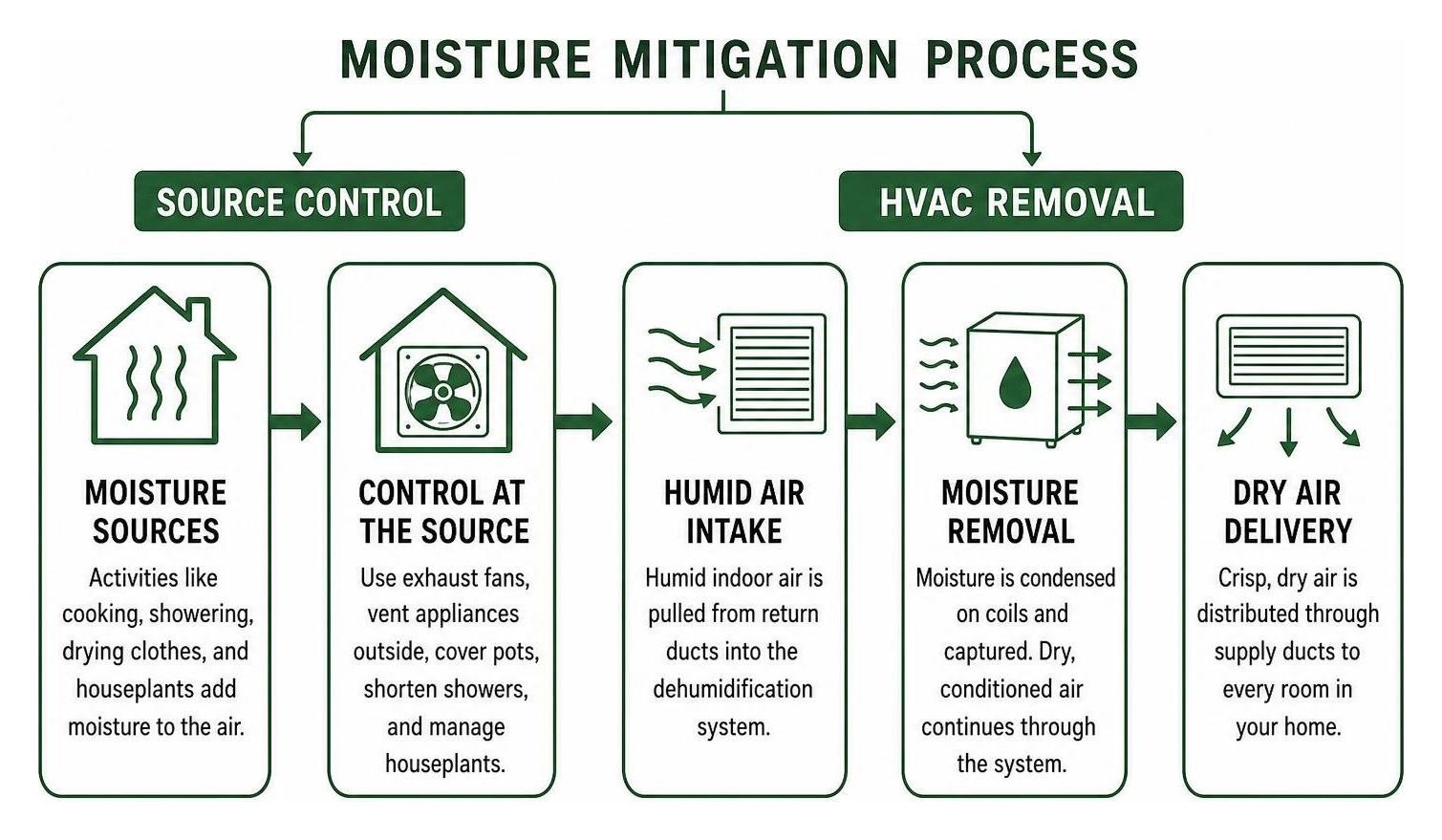
Ceiling fans help evaporate surface condensation by circulating air continuously, though they should be turned off when rooms are unoccupied to save electricity. For comprehensive air management, homes benefit from whole-house mechanical ventilation systems that bring in filtered outdoor air while exhausting stale, humid indoor air in a balanced, energy-efficient cycle.
Eliminating Hidden Indoor Moisture Sources
If your indoor humidity remains stubbornly elevated despite proper ventilation, hidden moisture intrusion could be the culprit. Hidden plumbing leaks behind walls, under sinks, or around water fixtures continuously feed moisture into your air.
Checking crawlspaces for ripped or missing vapor barriers, ensuring outdoor soil grades slope away from your foundation, and scheduling regular condensate drain line cleanings prevent water from seeping into structural materials. Homeowners can benefit from measuring and identifying home moisture indicators early to stop hidden plumbing and drainage problems before they cause rot and fungal growth.
Optimizing Your Air Conditioning System for Moisture Removal
Your central air conditioner plays a major role in home dehumidification. When warm air passes over your system’s cold evaporator coil, water vapor condenses into liquid water and drains away through a dedicated condensate line. This process balances sensible cooling (lowering the actual air temperature) with latent heat removal (extracting moisture vapor).
To maximize latent cooling, your cooling equipment must run long enough to pull air across the chilled coils multiple times. Oversized air conditioners cool living spaces too quickly and shut off before extracting adequate moisture—a problem known as short cycling. Modern systems with variable-speed blowers run at lower speeds for longer cycles, pulling significantly more moisture out of the air while maintaining consistent temperatures.
Regular maintenance also plays a critical part in air quality. Keeping coils clean and scheduling seasonal tune-ups improves overall cooling efficiency while improving indoor air quality across every room in your home.
Frequently Asked Questions About House Dehumidification
What is the most cost-effective way to dehumidify an entire house?
The most cost-effective approach combines daily moisture prevention with an ENERGY STAR-rated whole-house dehumidifier. A dedicated whole-home system consumes between 500 and 700 watts and operates only when humidity exceeds your setpoint, adding roughly $15 to $40 per month to your electric bill during humid months. Because dry air feels naturally cooler, you can comfortably raise your central A/C thermostat by 2 to 3 degrees, offsetting dehumidifier power consumption with lower cooling costs.
Do I need a dehumidifier if my air conditioner runs constantly?
Yes, especially during mild, rainy periods known as “shoulder seasons.” In spring and autumn, outdoor air is often saturated with humidity even when outdoor temperatures are mild (68°F to 75°F). Because your thermostat does not call for heavy cooling, your air conditioner rarely cycles on, leaving indoor air feeling clammy and damp. A dedicated dehumidifier regulates indoor humidity independently of your cooling settings, keeping your home comfortable without overcooling your living space.
What indoor relative humidity level should I set on my dehumidistat?
Set your dehumidistat between 45% and 50% relative humidity. This target keeps air comfortably crisp, stops window condensation, inhibits dust mites, and keeps moisture below the 60% threshold where mold growth begins. Setting your unit below 40% in the summer causes equipment to run continuously without noticeable comfort benefits.
Conclusion
Maintaining balanced indoor air quality protects both your family’s respiratory health and your home’s structural integrity. Managing humidity requires a complete approach: monitoring moisture levels with a hygrometer, reducing everyday household steam, repairing hidden leaks, and choosing the right mechanical dehumidification equipment for your layout.
When you need professional help assessing your indoor climate or installing whole-home equipment, Comfort Temp HVAC & Plumbing is ready to help. Our team provides residential HVAC and plumbing in Gainesville, with technicians who are licensed for both commercial and residential plumbing work. For commercial properties, we also provide trusted commercial HVAC and plumbing in Jacksonville and in Orlando.
Explore our professional indoor air quality products and whole-home solutions or contact our experienced technicians today to create a healthy, comfortable, and moisture-controlled home.